|
|||
 |
|||
|
|||
|
|||
|
|||
|
|
||||||||||||||||||
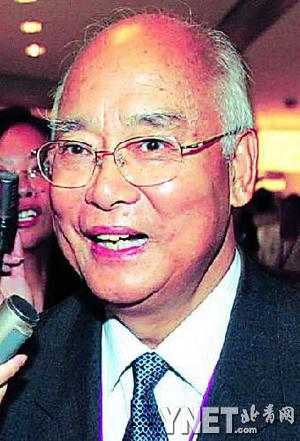
Olympic veteran hopes for unique GamesBy Lei Lei (China Daily)Updated: 2006-12-01 09:49 He Zhenliang, chairman of the International Olympic Committee (IOC) Culture and Olympic Education Commission, shared his over 50 years' sports career with China Daily reporter Lei Lei.
You didn't major in sports at university. How did you get involved in sports? I graduated from University of Aurora in Shanghai where I majored in electrical engineering. In 1950, I was transferred from the university to the International Relations Department of the Central Committee of the Communist Youth League of China. The Committee was in charge of sports affairs in China at that time. When the new China took part in the Olympic Games for the first time in 1952, I was selected as a French interpreter for the delegation. That was my first Olympic Games experience. At the end of 1952, when our country was preparing for the first five-year plan in the following year, I switched back to my engineering job. In 1953, the National Sports Commission (now called the State General Administration of Sport) was founded. Although I was involved in some of the international relations related to sports, I still felt I was far from sports. At the beginning of 1955, He Long, minister of the National Sports Commission, wanted to strengthen his commission and wrote to my leader, asking for me. I did not want to go there at first, but I had to obey. I could say that I didn't choose sports, but sports chose me. You have been involved in Beijing's bid for the Olympic Games twice. When Beijing didn't succeed in winning the Games in 1993, you said you would not agree that "Beijing failed." Why? China was reinstated in the International Olympic Committee (IOC) in 1979, and China's first full participation in the Olympic Summer Games was in 1984, the 23rd Games. Compared with countries that have a long history of Olympic participation, we were not at the same starting line. The Australians had bidden for the Games three times. Beijing lost to Sydney by only two votes. We achieved that at our first bid, so we couldn't call it a failure. Also, after the voting, many people said to me that China did not succeed because many IOC members made a mistake. We got lots of supporters at our first bidding, so we did not fail. We started the first bidding by the end of 1990, and at that time, the rest of the world was not very familiar with China. Under such circumstances, Beijing received support from nearly half of the voters, so we did not fail. Through the first biding, more people got to know China's strength and its enthusiasm towards the Olympics, which was a great success. When Beijing bid for the Olympics for the second time, you decided to join the bidding through your own initiative. Why did you want to participate of your own accord? The Olympic Movement is a noble cause. It is a bridge between people from different countries and creates friendship among young people from all over the world. Therefore, I think China should contribute to such a cause and the best way to do it is to host the Olympic Games. It was great pity that Beijing didn't succeed at the first bid. Since 1908, when the Tianjin Youth magazine raised the question to the Chinese people: When can China host an Olympic Games, it said hosting the Olympic Games has been a dream for Chinese people for nearly 100 years. As an IOC member, to help with the realization of the dream for China is my honour and task. A photo still shocked me even today. It was shot of us when we lost to Sydney in 1993. The surprised expressions and depressed feelings on the faces of some senior sports staff of China broke my heart. I fell short of people's expectations. When Beijing started its second bidding, although I was retired from my administrative position, I was still an IOC member and I could also make my own contribution. If I couldn't do it, then who? This sense of mission told me I couldn't disappoint my country again, so I volunteered to join the bidding work. I said that no matter what position I was appointed to in the bidding committee or whether I held any position at all, I would try my best for the bidding. The final results were worth my efforts. The secretary-general of IOC said he had witnessed how I built up the great wall to the Olympics for Beijing. I did my best. What were the differences between the two bidding experiences? At the first bidding, we had to make great efforts to let more people know that China is capable enough to host an Olympic Games. At the second bidding, because of the rapid development of China, no one asked whether China could host an Olympic Games. What we had to persuade others was that the significance of hosting an Olympic Games in China was much more than in other countries. It was a unique opportunity for IOC, China, as well as the whole world. IOC could spread its Olympic spirit to a large extent and China could take the opportunity to further develop its economy and improve people's living standards. What are your most memorable experiences from the two bids? As the saying goes, "A just cause enjoys abundant support," especially in the second bidding. At that time, many friends said to me "do not waste time to persuade me, turn to persuade others. Just tell me what I could do for Beijing." It moved me very much. Therefore, the success of the bidding was not only because of the staff of the bidding committee or several Chinese IOC members, but it also depended on the efforts of many friends. They did the lobbying for us. China realized its long-term Olympic dream. When the Beijing Games raises its curtain, what is your biggest wish? My biggest wish at that time is not only to show a high-standard Olympic Games with distinguished features, but also a unique Games to the world. After many years, when people think of the Beijing Games, they will come up with the idea of a tremendous Olympic Games. Not only the organization, but also the atmosphere, which is supposed to let all the participants feel they belong to the Olympic family and share the joy of a festival. BOCOG has organized various Olympic education and cultural activities. As the chairman of IOC Culture and Olympic Education Commission, how do you think of these activities? Beijing has done a very good job, especially in the aspect of Olympic education. The achievement of Beijing for the Olympic education is much bigger than that of any other Olympic Games. As we promised in the bidding, we are striving for spreading the Olympic spirit. BOCOG has done great job, together with relevant education departments. It also has held various cultural activities. Take solicitations for the Olympic songs, mascots and emblems that have created a new way for people to participate. More people got to know the friendship, excellence and respect proposed by the Olympics through joining the activities themselves. Do you have some further suggestions to BOCOG concerning education and cultural activities? The Olympic education should be accessible for all the common people. Not all the staff from BOCOG, volunteers, technicians and athletes are familiar with the Olympics, so it still needs more efforts from us all. The fighting spirit that Chinese pairs figure skaters Zhang Dan and Zhang Hao showed at the Turin Winter Olympic Games is a good example for all the athletes and spectators. I hope all the athletes and spectators could understand that deeply. The whole society should welcome the guests from the world with such kind of Olympic spirit. |