|
|
 |
|
30th Anniversary Celebrations
New Rural Reform Efforts
Political System Reform
Changing Lifestyle
In Foreigners' Eyes
Commentary
Enterprise Stories
Newsmakers
Photo Gallery
Video and Audio
Wang Wenlan Gallery
Slideshow
Key Meetings
Key Reform Theories
Development Blueprint
Li Xing:
Small steps lead to big strides  Liu Shinan:
Pleasures of going off the beaten track  You Nuo:
Get real on helping the jobless  Hong Liang:
Government role decisive for recovery  Brendan J. Worrell:
Polish PM wraps up China tour  Science a driving force for China's modernization
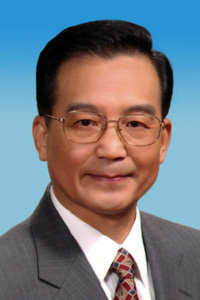
By Wen Jiabao (chinadaily.com.cn)
Updated: 2008-10-31 06:36 The history of modernization is in essence a history of scientific and technological progress. Scientific discovery and technological inventions have brought about new civilizations, modern industries, and the rise and fall of nations. China is now engaged in a modernization drive unprecedented in the history of humankind.
Francis Bacon, the 16th-century English philosopher, referred to science as a means to improve mankind's lot. Today, the hybrid rice variety developed by Chinese scientists has been adopted for planting in over three million hectares and has become a “golden key” to meeting China's own food needs and boosting world cereal production. Scientific and technological development in the realm of health has also increased average life expectancy in China to that of developed countries. To encourage further innovation, the Chinese government has formulated a Mid- to Long-Term Plan for Development of Science and Technology (2006–2020), which highlights research in the basic sciences and frontier technologies, with priority given to energy, water resources, and environmental protection. We strive to develop independent intellectual property rights in areas of information technology and new materials, while strengthening the application of biotechnology to agriculture, industry, population, and health. The future of China's science and technology depends fundamentally on how we attract, train, and use young scientific talents today. Thus, at the core of our science and technology policy is attracting a diverse range of talents, especially young people, into science and providing them with an environment that brings out the best of their creative ideas. In the field of science and technology, we will intensify institutional reform, restructure scientific research, rationally allocate public resources, and enhance innovation capability. We advocate free academic debate under a lively academic atmosphere, where curiosity-driven exploration is encouraged and failure tolerated. Science has no boundaries. China's endeavors in science and technology need to be more integrated with those of the world, and the world needs a China that is vibrant and able to deliver more in science and technology. Just as collisions generate sparks, exchange and communication enrich imagination and creativity. Many Chinese scientists have stepped into the international academic arena, where they and their foreign colleagues learn from each other and jointly contribute to the worldwide development of science and technology. To encourage the learning and application of science among the general public, we need to embrace a scientific culture by promoting scientific rationality while cherishing Chinese cultural heritage. Enlightened by science, the rich and profound Chinese culture is bound to shine more gloriously. I firmly believe that science is the ultimate revolution. At a time when the current global financial turmoil is dealing a heavy blow to the world economy, it has become all the more important to rely on scientific and technological progress to promote growth in the real economy. Economic and social development must rely on science and technology, and science and technology must serve economic and social development. We will rely on science and technology to promote economic restructuring, transform development patterns, safeguard food and energy security, and address global climate change. We are confident that China will reap a rich harvest in science and technology and that this will have positive and far-reaching effects on human civilization and the well-being of humankind. The author is the premier of the State Council of China and this article was originally written for the US magazine Science. 
|
       |
主站蜘蛛池模板: 隆化县| 乾安县| 舒兰市| 湘潭县| 永州市| 双辽市| 炎陵县| 武陟县| 阳朔县| 汶上县| 长寿区| 宜章县| 赤水市| 普兰店市| 峨眉山市| 南康市| 兴文县| 彭州市| 石城县| 巩义市| 胶州市| 临安市| 铁岭市| 柯坪县| 石河子市| 谢通门县| 华池县| 泰州市| 肃宁县| 南川市| 安福县| 那曲县| 大庆市| 那坡县| 长武县| 秀山| 宜兰市| 和平区| 襄樊市| 长武县| 孝感市| 休宁县| 榆中县| 荆门市| 邢台市| 萍乡市| 临漳县| 乐亭县| 三江| 开原市| 葵青区| 阿瓦提县| 措勤县| 平陆县| 金平| 郸城县| 喜德县| 宝鸡市| 天全县| 民县| 寻甸| 太白县| 新昌县| 大渡口区| 余姚市| 道孚县| 农安县| 余江县| 武功县| 亳州市| 财经| 宜君县| 富源县| 隆德县| 德阳市| 雅安市| 平泉县| 兴山县| 河间市| 高要市| 集安市| 彭州市|