|
|
 |
|
30th Anniversary Celebrations
New Rural Reform Efforts
Political System Reform
Changing Lifestyle
In Foreigners' Eyes
Commentary
Enterprise Stories
Newsmakers
Photo Gallery
Video and Audio
Wang Wenlan Gallery
Slideshow
Key Meetings
Key Reform Theories
Development Blueprint
Liu Shinan:
Don't go too far in name of sex education  Hong Liang:
US should fix its own economic woes first   Chen Weihua:
Need for medical privacy  OP Rana:
This world dream can't be deferred  Ready-to-wear
By You Nuo (China Daily)
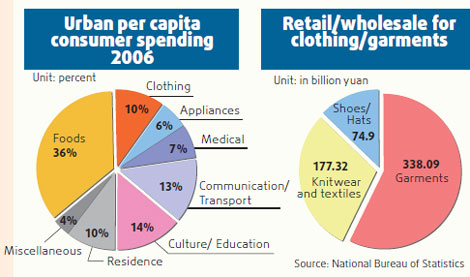
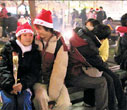
Updated: 2008-11-10 13:51  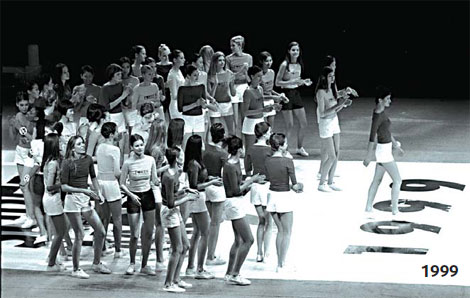 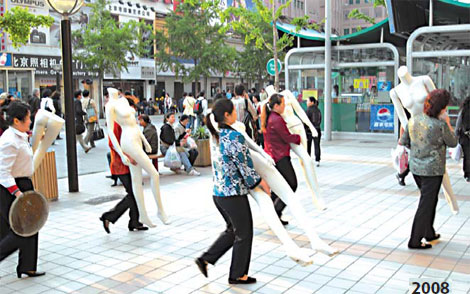 Made-in-China garments and textiles may still be favored items for middle-class shoppers during the current financial crisis. But while choosing between the large quantities and varieties of domestic supplies, perhaps very few can remember that 30 years ago China was nicknamed the country of "blue ants" in the international press. The reference was to the teeming masses of Chinese citizens seemingly all clad in ubiquitous blue trousers and jackets. That was a time when few billboards existed, except for those with political slogans. Shop windows usually had few items on display, and certainly not for fashion. Chinese cities actually had only one basic clothing style. That has been well-documented, though not statistically, but by thousands of old photos including ones that have run in this column. It took around two decades, between the 1980s and '90s, for urban Chinese to revamp their wardrobes. And indeed that was the time when many families began to own their first colorful wardrobes. Even farmers threw away their old clothes made from black coarse cloth cut from the pre-industrial age. Commercial campaigns for fashion began to spread in the cities - from the large coastal ones to the smaller ones in the inland areas. At the time our black-and-white photo was taken, this country was growing into one of the major exporters of (mainly inexpensive) garments and textiles in the world. But the change was not just an increase in production or variety. It is not just a success story of an industry. The flourishing garment market was an example of the spread of all sorts of commercial operations and how much difference they made. There may not seem much of a relationship from importing fashion shows, as shown in our black-and-white photo taken in 1999 - which must have been one of the earliest ones in the country - to sales staff carrying plastic mannequins across the street as seen in our 2008 color photo. From a marketing point of view, the fashion shows that feature international models are rare, glitzy events that take place in expensive locales. Whereas constantly re-arranging displays in shop windows and putting out temporary demonstrations on sidewalks, as people in the 2008 photo might be doing, shows the world of ordinary shops and consumers. The two photos show both ends of a learning process which originates in the metropolitan centers and permeates daily life with an offer to appreciate more choices. But it is far from complete yet. It was only recently, for instance, that the concept of branding began to sow its seeds in Chinese society. The Chinese still don't own many international garment brands yet.

|
       |
主站蜘蛛池模板: 深圳市| 汤原县| 平度市| 秦皇岛市| 宁城县| 长白| 固镇县| 泰宁县| 霍林郭勒市| 江津市| 南充市| 河西区| 牡丹江市| 温州市| 深泽县| 兴安盟| 石门县| 比如县| 延安市| 类乌齐县| 河北区| 水富县| 晋州市| 确山县| 合水县| 夏河县| 松溪县| 陆良县| 福建省| 香港 | 合阳县| 九龙县| 区。| 海伦市| 龙游县| 三门峡市| 黎川县| 岳阳县| 金溪县| 永年县| 濮阳县| 绥芬河市| 盘山县| 麻阳| 宜兴市| 长顺县| 博白县| 临夏县| 灯塔市| 霍州市| 鄂托克前旗| 揭阳市| 交城县| 都匀市| 丰都县| 望城县| 荆门市| 义马市| 张家川| 成安县| 七台河市| 大化| 白山市| 湖州市| 河津市| 古蔺县| 象山县| 南京市| 海兴县| 佛教| 沂南县| 方山县| 原阳县| 汕头市| 玉田县| 贞丰县| 封开县| 贡山| 庆元县| 东乌珠穆沁旗| 凤山县| 华容县|