Material life
From fishing village to bustling metropolis
By Teddy Ng (China Daily)
Updated: 2008-12-19 07:53
HONG KONG - If Peter Pun had put a bet on how large Shenzhen would grow, it's more likely than not he would have lost it.
When the then director of planning of Hong Kong first visited Shenzhen, in 1979, as an expert to train city planners, it was a fishing village. And the authorities were planning to develop it into a city of 2 million people by 2000.
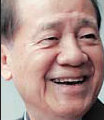 Edwin Tsang |
Shenzhen today has all the making of a metropolis and a population of more than 10 million.
Though it's easy today to say he underestimated the potential of the city's growth, many people shared the now 71-year-old Pun's feelings in the late 1970s.
"Only a few cars could be seen on the streets bicycles were the only things that could be linked with the word 'modern', if I had to name something," Edwin Tsang, a surveyor who also trained mainlanders in the early 1980s, recalls.
"The restaurant serving me was a temporary building, if it could be called a building, next to the railway station. And the hotel, by any standard, was shabby, with 10 people sharing one room. People had to sleep in the corridor during the peak season," Tsang says, who is also 71.
Pun says he went to Shenzhen because of his desire to know more about the mainland - all the information he had got was largely second hand and incomplete.
He actually risked his career by visiting Shenzhen because under British colonial rule a Hong Kong official meeting his mainland counterpart was a "sensitive" matter, Pun says.
A document, issued by the Hong Kong government, stated in black and white that he was not allowed to contact any mainland officials. But he still went there as chairman of Hong Kong Institute of Planners.
Life in Shenzhen initially was not easy. Tsang says he had to declare almost everything that he was carrying, even his watch. What made matters worse is that he had to report to the public security authorities daily during his stay in Shenzhen.
But both were impressed by mainland officials' eagerness to learn. "Their resolve to change could be clearly felt when I delivered lectures there," Pun says.
They listened to him with rapt attention, taking notes earnestly. "They were educated the only thing against their favor was that they had stayed isolated for too long."
Those who attended Pun's lectures contributed a lot to Shenzhen's development, although in the beginning, they simply copied Hong Kong's experience.
But for them at that time, "Hong Kong stood for the highest standard in the world in terms of city planning", Pun says.
But mainlanders' vision and knowledge grew so quickly in the following decades and even astounded their Hong Kong teachers. "Mainlanders have caught up," Tsang says.