男女羞羞视频在线观看,国产精品黄色免费,麻豆91在线视频,美女被羞羞免费软件下载,国产的一级片,亚洲熟色妇,天天操夜夜摸,一区二区三区在线电影

showbiz

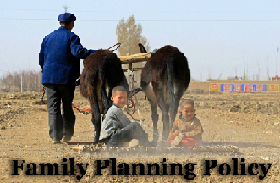
Special coverage: China Family Planning Policy

By uking
Updated: 2009-09-02 11:09

From the editor:

One of the most popular misunderstandings of China in the Western countries is the family planning policy introduced in 1979, which has been frequently and wrongly perceive as one-child policy and criticized by some international organizations as human rights violation. The rich content of one-child policy then has been simplified as every family can only have one child no matter what ethnic groups the family belongs to or what particular health situations of the family are. After 30 years of practice, there's also a growing voice in China that questions the necessity of keeping this policy. In big cities like Shanghai, the local government encouraged couples who meet certain criterions to have the second child. As Chinese are celebrating the 60th anniversary of the funding of People’s Republic of China, China Daily Website provides this special coverage of China Family Planning Policy to show the achievements, failures and the dilemmas of the Chinese government in managing a country with the largest population in the world.
 

Special coverage: China Family Planning Policy

Background

From the early 1970s, the Chinese government became increasingly aware that the over-rapid growth of population was unfavorable to economic and social development and decided to energetically carry out family planning in both urban and rural areas and integrated the plan for population development into the plan of national economic and social development.

On August 21, 1972, the Health Ministry concluded in a report to the State Council that the experience of birth control in urban areas is "late, long, few" policy, which called for later marriage (25 years old for man and 23 years old for woman), greater spacing between children, and two children for one couple.

At the end of the 1970s, Chinese leader Deng Xiaoping pointed

Shifts in population policy

After reviewing the policy, the Party Central Committee issued Central Document 7 in April 1984 to guide the birth planning policy up to the present. Document 7 allows 2nd children among rural couples with "practical difficulties" and also reform the workstyle, organization and ideology.

out that, to accomplish the goal of the four modernizations in China, it was imperative to take into consideration the basic features of the Chinese environment, that is, the vast scale of the country, its weak foundation, its massive population and the low ratio of cultivated land. As a result, the development of population should be coordinated with the development of the economy, society, resources and environment. In accordance with Deng Xiaoping's thinking, the Chinese government has made it a basic state policy to carry out family planning and population control and to improve the life quality of the population, and has clearly incorporated it in the Constitution of the People's Republic of China, thus establishing the important position of family planning programme in China's overall task of national economic and social development.

Main Content

The main contents of the current family planning policy in China are: Advocating delayed marriage and delayed child bearing, fewer and healthier births; and advocating one child for one couple. Some rural couples with actual difficulties are allowed to give birth to a second child a few years after the birth of the first child. There are practical differences in the family planning policy between urban and rural areas, and between the Han and the

Little emperors and little princes

Critics say that the one-child policy has spawned a generation of selfish brats. In China, the only-child has a special name: xiao huangdi "little emperors", or xiao gongzhu “l(fā)ittle princes.”

China's children are growing up "self-centered, narrow-minded, and incapable of accepting criticism," Yang Xiaosheng, author of “Only one child- the sad report of accidental injuries of China’s only-child”, said in an interview.

e thnic minorities, i.e., the policy for rural areas is more flexible than for urban areas; for national minorities more flexible than for the Han people. Each province (autonomous region or municipality) will formulate the corresponding policy and regulations in accordance with the state's policy and the actual local conditions and form its local legislation through legal procedures. In most rural areas, families are allowed to apply to have a second child if the first is a girl, or has a physical disability, mental illness or mental retardation.

The state has imposed no specific requirements on Tibet in family planning. In 1985, the People's Government of the Tibet Autonomous Region, in view of the actual population growth there, began to advocate family planning among Tibetan cadres, workers and staff, encouraging each couple to voluntarily space two births at reasonable intervals. Among the broad masses of farmers and herdsmen, the government has mainly educated them in child-bearing knowledge, advocated healthier birth and child-rearing practices, improved health care for women and children, and provided contraceptives and birth control technical services to those who volunteer to practise birth control. No policy restrictions have ever been imposed on the number of births in the agricultural and pastoral areas.

The population in China's Tibet Autonomous Region has grown rapidly over the past decades and the number of Tibetans makes up more than 90 percent of the regional population. Tibet's population increased to 2.87 million in 2008 from 1 million in the 1950s.


   Previous Page 1 2 Next Page  

Copyright 1995 - 2009 . All rights reserved. The content (including but not limited to text, photo, multimedia information, etc) published in this site belongs to China Daily Information Co (CDIC). Without written authorization from CDIC, such content shall not be republished or used in any form. Note: Browsers with 1024*768 or higher resolution are suggested for this site.
主站蜘蛛池模板: 荥经县| 太仆寺旗| 广汉市| 泰宁县| 紫阳县| 梅河口市| 池州市| 杭锦后旗| 西盟| 应用必备| 曲阜市| 嘉荫县| 天柱县| 西丰县| 晋江市| 竹山县| 永善县| 福州市| 江都市| 通道| 辛集市| 林州市| 苏尼特左旗| 清远市| 桃园市| 临邑县| 安康市| 尉氏县| 定州市| 枞阳县| 富顺县| 吉木萨尔县| 洞头县| 杨浦区| 澄江县| 娱乐| 黎城县| 东山县| 增城市| 平远县| 外汇| 麻城市| 金秀| 汾西县| 宁化县| 龙门县| 东城区| 舒城县| 确山县| 桂林市| 习水县| 肇庆市| 天水市| 仲巴县| 怀仁县| 大安市| 新竹市| 桃园县| 屯门区| 专栏| 墨竹工卡县| 桐城市| 平泉县| 石棉县| 肃南| 剑阁县| 肃宁县| 咸阳市| 林口县| 宜川县| 高青县| 同江市| 山阴县| 云霄县| 涞源县| 随州市| 中西区| 阳信县| 拉孜县| 香港| 安龙县| 伊春市|