60 People, 60 Stories
Giving back
By Andrew Moody (China Daily)
Updated: 2009-09-30 06:26
Chen Guangbiao is one of China's new generation of entrepreneurs who takes corporate social responsibility (CSR) seriously.
|
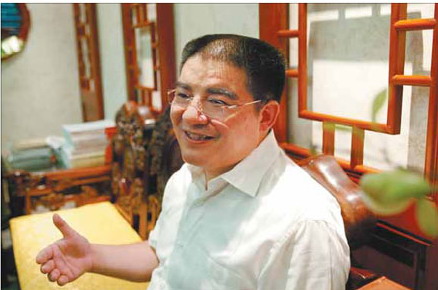 Chen Guangbiao, China's 406th richest business person, believes in giving back to society. [Du Lianyi]
|
The 41-year-old, who is China's 406th wealthiest business person with a personal fortune worth 2 billion yuan, had given more than 600 million yuan to charity by the end of last year.
| ||||

"Chinese entrepreneurs have become much more aware of the importance of giving something back to society," he says.
"If you have a cup of water, you drink it yourself; if you have a bucket of water, you have it in your home for your family.
"But if you have a river, you have a responsibility to share it with other people."
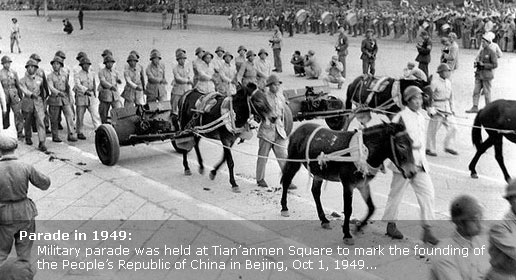
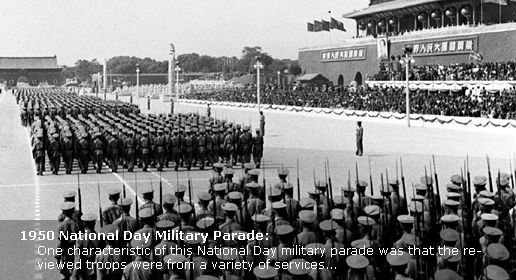
Corporate social responsibility is not a new concept in China. Following the birth of New China in 1949, the ethos of the centrally planned economy was for companies to supply goods and services for the benefit of society as whole.
State-owned enterprises also had a wider responsibility toward their employees and provided in many cases schools, accommodation and food.
The modern, Western concept of CSR was largely imported into China in the late 1990s.
Major international brands like Nike and Adidas wanted to conduct social audits of their supply chains and became interested in such issues as workers' rights and the pollution missions from manufacturing processes.
"The concept of corporate social responsibility has been around in the West for the past 200 years, if you think of the early industrial philanthropists," Chen says.
"In China, it has only been in the last 20 years that people have been aware of the concept. I think initially the main aim of the new entrepreneurs in China was to make money, but now there is much more of a focus on environmental protection and other issues."
A big turning point in terms of China taking CSR issues on board was the country joining the World Trade Organization in 2001.
This meant Chinese companies that wished to trade with many international companies had to adopt international kite mark standards, such as the SA 8000, set by the international body Social Accountability International.This resulted in a difficult period for many Chinese companies. Those who embraced the standard suddenly found themselves at a competitive disadvantage compared to those in the domestic market and a number of international markets, who did not.
The government in recent years has been keen to give clear signals that it wants China to take a lead on CSR issues.
In a landmark speech to a major CSR conference in Beijing in 2006, Liao Xiaoqi, former vice-minister in the Ministry of Commerce, signaled he wanted to see corporations play their part in creating a harmonious society.
There is still progress to be made. In its International Survey of Corporate Responsibility Reporting last year, international businesses advisers KPMG found 88 percent of Japanese firms, 84 percent of UK ones and 73 percent of those in the United States produce stand-alone CSR reports. Estimates suggest the equivalent figure in China is between 20 and 30 percent.
Certainly, CSR has become a major issue for foreign firms in China. AmCham-China, which has 1,200 members, spelled out its commitment in a book, Partnering in Progress, in 2006. It also donated more than $100 million in money, goods and services to last year's quake victims.
John Watkins, chairman of AmCham-China, says his members are committed to being good corporate citizens.
"Our members call China home and the chamber is committed to giving back to the Chinese community. We make a positive impact in the community on a regular basis," he says.
Chen, who is a member of the National Committee of the Chinese People's Political Consultative Conference, the country's top political advisory body, believes there is real momentum behind CSR in China now.
"I think the drive is much stronger here now than it is in the United States. We need to build on that and make CSR a top priority for us all," he says.
Additional reporting by Wang Bo
Time line
1949
The newly set up centrally planned system focuses on citizen welfare.
1950s
State-owned enterprises have wide responsibilities for employees, including providing education for their children.
1990s
Nike and other companies demand that China suppliers adopt CSR attitudes.
2001
China joins the WTO and companies are required by buyers to meet CSR international kite mark.
2006
The Chinese government signals it wants companies to embrace CSR to create harmonious society.
2008
CSR guidelines introduced for State-owned enterprises.