Lagging Beijing needs Art City







 |
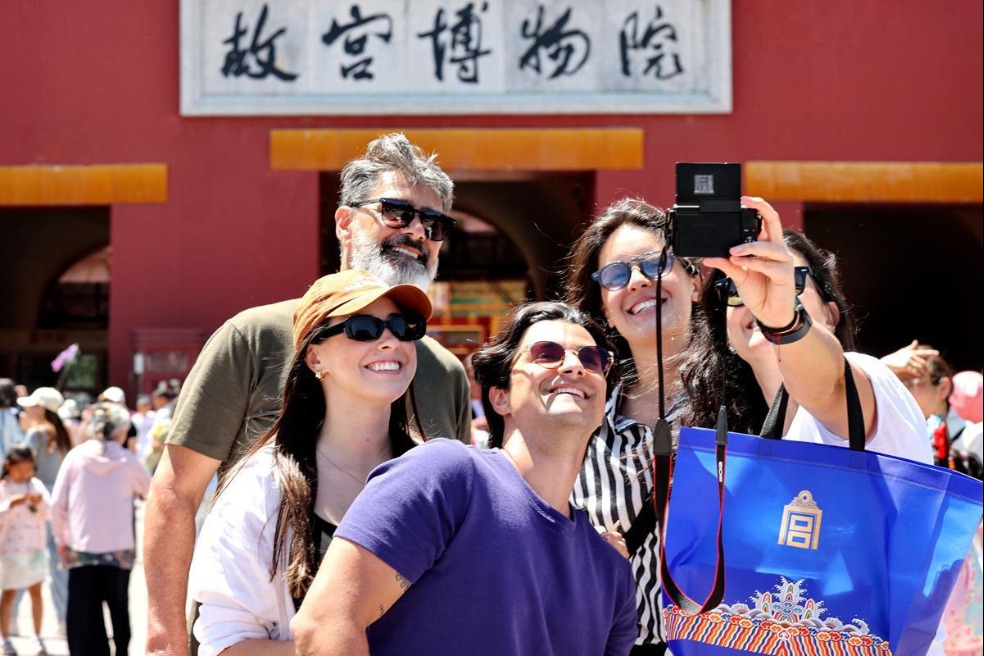
| The Palace Museum has grappled with overwhelming crowds for years. More than 15 million people visited in 2014, topping all museums in the world.[Photo/Xinhua] |
In a column a few years ago I took Professor Ren Yuan at Fudan University to task for concluding that neither Beijing nor Shanghai were international cities. In my view they were world cities then, and today are even more so. I must conclude that in terms of art, Beijing is falling further and further behind Shanghai. Nevertheless, there is a way for the capital to reverse this trend—unless Shanghai or another eager Chinese city beats them to the punch.
Yes, Beijing has the biggest museum in the world under one roof, the National Museum of China and across from it is the unique Forbidden City, or National Palace Museum, to give its formal name. Aside from a few others like the National Art Museum of China north of Wangfujing Street and its new under construction location in the Olympic area , most of the others are either too specialized like the Beijing Tap Water Museum or Beijing Police Museum, or they are the face-boosting tool of people possessing too much money and an edifice complex to go with it.
Shanghai on the other hand, has long had the better museums and their superiority grows steadily year after year. For example, the Shanghai Museum in People's Square or the Shanghai Art Palace now housed in the former China Pavilion. More recent additions include the Rockbund Art Museum set within 1930s Art Deco architecture, the Power Station of Art in a gargantuan old power plant, and the new Long Museum in the hot West Bund district or the nearby Shanghai Center of Photography, as well as the Yuz Museum in a converted airplane hangar, also perfect for displaying enormous contemporary works. Beijing has nothing quite like them.
And we can't forget the art shopping mall K11, opened in 2013, that is poised to expand to 11 cities nationwide in the next five years. In addition to artworks from the K11 Art Foundation's collection displayed throughout, K11 sponsors lectures, workshops and blockbuster exhibits such as the upcoming one from the Gala-Salvador Dalí Foundation.
Enter the idea of Beijing Art City. The Guggenheim Museum in New York, perhaps the world's leading museum "brand", has moved far from its landmark Frank Lloyd Wright building on the Museum Mile by pioneering the concept of going global in spectacular architectural style in Abu Dhabi, Berlin, Bilbao and Venice.
The British Museum, Louvre, Tate Gallery, and Hermitage are other major museums also expanding globally. The latest announcement is that the Smithsonian will open its first overseas branch in 2021 to anchor East London's 2012 Olympic site, now dubbed the 'Olympicopolis' cultural center.
The proposed 40,000-square-foot (3,700+ square meters) London Smithsonian will feature permanent and rotating exhibits from Smithsonian branches, including the National Air and Space Museum, National Museum of American History, and National Museum of Natural History, as well as various art galleries. The latter is critical because art galleries also play a major role in artistic culture and commerce.
So why doesn't Beijing find some prime land, say in our Olympic area, and open an Art City? Tourists from home and abroad would flock to it, contributing to the capital's economy. The world's best architects would compete for prized commissions to make Beijing Art City a tourist destination. Tycoons with an edifice complex can bid for naming rights, assured that "their" buildings would contain some of the world's most prestigious art and artifacts. The cultural institutions, most of which can only display a small fraction of their collection elsewhere, would be brand-building to Chinese and other visitors hoping to attract them and their money to their other venues. And because Beijing has so many art districts, gallery exhibition space can showcase the best of Chinese art in the contemporary art marketplace.
And perhaps best of all, Beijing and Shanghai can continue to further innovation in art and other fields. Both cities can continue to battle it out among both expats and locals for which is the better city, a perpetually asked question never having a clear-cut answer.