Pearl River secrets







Editor's note: China is divided into as many culinary regions as there are different ethnic groups. Its geographical diversity and kaleidoscopic cultural profiles contribute to an unending banquet of flavors.
Savory, sweet, tart, bitter and spicy. These are the major elements that make up the palette of flavors in the Chinese kitchen. But there is one all-important component that makes a meal really special: the elusive taste of xian.
The Chinese character for xian gives a clue.
The word is actually made up of two radicals, fish on the left and lamb on the right. Together, the word spells "delicious, fresh, lip-smackingly good food". The Japanese call it umami.
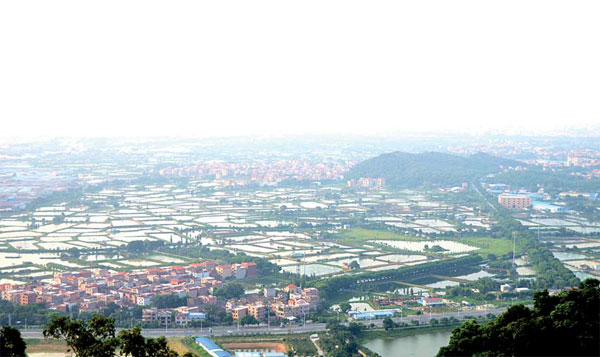
| Wetlands of the Pearl River Delta are scissored into ponds for fish with causeways on which there are mulberry trees for silkworms. Xu Jianmei / For China Daily |
When the ingredient is top quality, you can show off its naked flavors with subtle cooking skills that rely only on the most natural processes, such as blanching or steaming.
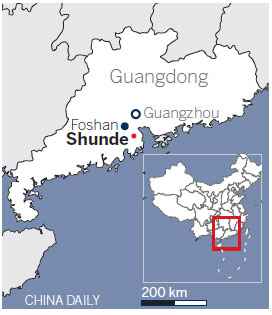
No cooking style shows this off better than the Cantonese, and no Cantonese regional cuisine shows off xian like those from Shunde county, my ancestral hometown.
Shunde is part of the Pearl River Delta, a relatively young land in geographical terms. Not so long ago, it was part of the seabed, before tectonic forces first moved it up and then allowed it to subside into wetlands. It was to these wetlands that my ancestors first came thousands of years ago from the Central Plains, and they started digging ponds for fish, piling the excavated soil to create a little causeway on which they started planting mulberry trees for silkworms.
Today, the area is still a lush patchwork of fish ponds and mulberry dikes. A museum commemorates its past as the capital of the Maritime Silk Road.
More than anything else, this land - rich in seafood, meat and vegetable produce - has nurtured generations of the finest chefs.
When a Chinese chef announces that he is from Shunde, it is a badge of honor. It means that he is used to the best mountain treasures and seafood pleasures - shanzhen haiwei. It also means he possesses the delicate touch necessary to bring out the xian in these ingredients.
It is both nature and nurture.
Shunde children grow up eating the best dishes, their palate tuned to the sweet and natural. They play in their parents' kitchens watching the home chef turn out tender steamed custards, milk puddings, delicate fishes fresh from the ponds, steamed and then drizzled with sizzling hot oil on top of shredded scallion and ginger.
They witness the velveting process that turns beef into the most tasty stir fry, minced pork formed into patties and garnished with a single salted egg yolk.
They gradually learn all the tricks of how best to preserve and enhance the xian of the best ingredients.
This culinary heritage has stayed in the blood. Many from Shunde have emigrated to other lands, but if they have not chosen to be chefs or purveyors of fine foods, you can be sure they are all closet food critics.
I had someone ask me this question once: How would you define a good cook?
The answer was simple. A good cook must know how to cook a perfect bowl of rice, steam a fresh fish and fry a crisp platter of vegetables.
Too many housewives depend on the rice cooker, so much so that they have forgotten the original way to prepare rice. A rapid boil and a slow simmer is the only way to get fluffy grains of rice with the unique cereal fragrance.
Steaming a fresh fish demands knowledge of the fish anatomy, a grasp of cooking time and the drama of the crucial sizzle of oil.
But by far the most difficult to do is that perfect plate of vegetables - perfectly cooked, enticingly bright green and still crisp to the bite. The crafting starts from the cut of the vegetables to the desired heat of the wok, with much delicate adjustment in between, down to when you add the salt - all basic knowledge for the Shunde cook.
Take the ways a Shunde chef cooks chicken. There are two very famous chicken dishes that bring out the best of the fowl - a roast chicken and a white-cooked bird.
The roast chicken is marinated in salt and spices, inside and out, and then the bird is hand-held over a pot of boiling oil. The chef ladles oil over the chicken until it is cooked perfectly, creating a dish that has none of the oiliness you would expect. The juices simply burst through the skin at first bite.
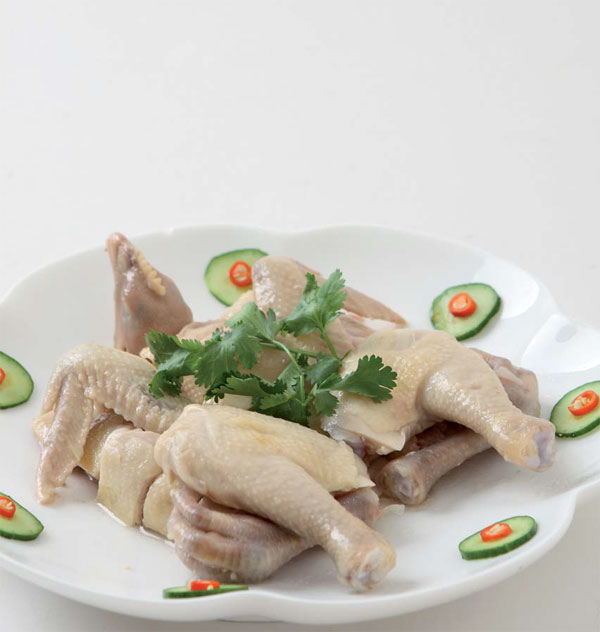
Equally painstaking is the white-cooked chicken. The thoroughly cleaned chicken is not marinated at all, but is repeatedly plunged into a pot of boiling water. The final stage is an ice bath to tighten and crisp the skin. The extremely juicy chicken is then cut up and served with minced ginger and scallions, all its flavors intact.
Fresh ingredients are a virtual obsession with the Cantonese cook, especially when it comes to poultry and seafood. We believe in highlighting the natural flavors and all that it takes for that taste of xian.
paulined@chindaily.com.cn
Shunde White-cooked Chicken
1 whole chicken, about 1.5 kg
1 bunch spring onions (scallions)
5 cm piece young ginger
Sesame oil
Vegetable oil
Salt
Clean the chicken thoroughly but take care not to break the skin. Cut off the head but retain the neck. This helps you hold the chicken.
Prepare a 3-liter pot of boiling water. The water must come to a rapid rolling boil.
Lower the bird into the pot, remove from the fire and close the pot lid. Let it sit 15 minutes.
Remove the bird and drain. Return the liquid to the fire and allow it to come to a rapid boil. Once again, plunge the chicken in and let it sit away from direct heat.
While the chicken sits out its final hot bath for another 10 minutes, prepare a large bowl of ice cubes and water.
Mince the ginger and scallions and add salt to taste. Heat up a ladle of vegetable oil, and add a teaspoon of sesame oil.
Pour the hot oil over the ginger-scallion mixture to cook it slightly. This allows the fragrance to rise.
Remove the chicken from the hot broth and place into the ice water for five minutes.
Drain, cut up into serving portions and serve with oyster sauce and the ginger scallion dip.
(China Daily European Weekly 02/17/2017 page18)





Today's Top News
- US conducting operation to seize Venezuela-linked oil tanker in Atlantic: US media
- Visits reflect commitment to relationship
- Mainland sanctions diehard 'Taiwan independence' separatists
- China's postal delivery volume hits 216.5b items in 2025
- 2025 in review: A year of shifting horizons
- Decade-plus high for key A-share index