When Chinese was the height of chic







In recent years, 18th-century Europe's fascination with exotic kitsch has acquired new life
When it comes to taking stock of an era's bad taste, satirists are usually right on the money. The "Continental Europe wind" (歐陸風(fēng) ōu lù fēng) style that has been blowing across China's world of design since at least the late 1990s - spawning architecture such as Shanghai's "Dutch Town" and countless bedrooms gilded to oblivion - has been lampooned by the hipper sections of the Chinese public as the "basic necessity of the tuhao (土豪 tǔ háo)," the crude nouveau riche.
Wind back a few centuries, however, and the ill European wind starts to sound more like the continent's revenge for having once been inflicted with what observers in the 18th century dubbed a mania for "splendid deformities" from China. An English clergyman named Joseph Warton, writing in The World journal in 1753, accused the tasteless public of "(spending) their lives and their fortunes in collecting pieces, where neither perspective, nor proportion, nor conformity to nature, are thought of or observed."

Eighteenth century English writer Charles Lamb also poked fun at the China-inspired kitsch - including actual china - from his childhood, on which landscapes were drawn as a confused potpourri of "horses, trees, pagodas". Other satirists of the period asked if, one day soon, England's country dairies and churches would also come bedecked with dragons, bells and oriental roofs?
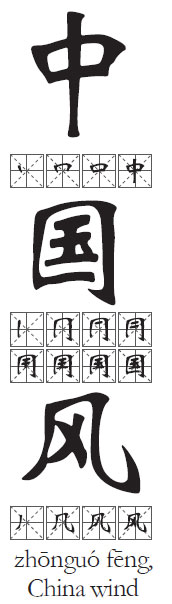
Called "chinoiserie" (literally "China stuff" in French) by art historians and "China wind" (中國(guó)風(fēng) zhōngguó fēng) in Chinese, the mania for Chinese motifs was a movement in the consumer culture of mid-to-late 18th century Europe. Tantalized by earlier, semi-mythicized snippets of China from the tales of travelers such as Marco Polo, Europeans' taste for the exotic found fulfillment in this period through increased contact with the empire of the Qing Dynasty (1644-1911) through court envoys, such as the Jesuits, and merchants trading in ports such as Canton and Macao. These voyagers brought back stories and sketches of people, buildings and landscapes that made up the basic blueprint of how Europe imagined the East.
Meanwhile, the goods they traded became all the rage: fine teas, delicate porcelains and luxurious silks, admired for their intricate quality as much as the mystery behind their making.
By the middle of the 18th century, it had become vogue for aristocratic homes across Europe to have a whole room outfitted in "the Chinese style". The chinoiserie of the French and Germans, on the other hand, was known for lacquered furniture pieces illustrated with people and scenes from the East in a rainbow of color and sumptuous, romantic detail. The Germans also had a brief affair with Chinese architectural styles, building Chinese pavilions with curved roofs and fairy tale statues in their palaces and private gardens. This was a mania they shared with the English, who had the most systematic treatment of chinoiserie of all.
Kew Gardens (邱園 qiū yuán), on the outskirts of London, and the Chinese Room at Claydon House, an 18th century manor house in Buckinghamshire, remain the two best surviving examples of English chinoiserie in the outdoor and indoor settings. Kew Gardens' House of Confucius and famous pagoda represented its architect William Chambers' and English society's idealized views of Chinese gardening principles. Seen as a deeply philosophical art, practiced by gardeners who are "also painters and philosophers, having a thorough knowledge of the human mind, and of the arts by which its strongest feelings are excited," Chambers wrote of Chinese gardening as a means to incite creativity and liberate the imagination of the gardener from the stifling symmetry demanded by English landscaping.
Despite the myth that the Kew Gardens pagoda was a copy of Nanjing's Great Pagoda, Chambers' designs were not based on an existing Chinese model; nonetheless, having been to Canton, his renditions were more accurate than the work of most of his contemporaries, who created entirely from stereotype and imagination. Claydon House's designers were of the latter type: the Chinese room is decorated with an almost overabundance of scrolls, "oriental" faces, gilt phoenixes, china vessels hanging where no vessels have gone before (such as above the doorway), and finally a latticework wall pattern of a gleaming white finish certainly found nowhere in China itself.
These elements added atmosphere to rooms that were solely used for enjoying afternoon tea, which had cemented itself as a custom among British society during this same period as a result of the increase in overseas trade. Tea was also the product almost solely responsible for the rapid commercialization of chinoiserie in Britain in this period, whereas originally they had been foreign curios and imports for the collector's market. It started with a demand for tea tables and china, all of which had to have Chinese motifs to reflect the exotic origin of this stylish activity. It then spun off into cabinetry, wallpaper, salon furniture, and what historian Susan Horton calls a vision of a land that was "teeming with raw materials waiting to be turned into cash."
China itself - what it looked like, the kind of art it was creating in this period - necessarily faded to the background of this movement. The history and people of this vast empire functioned as a mere object, a remote ideal through which European societies articulated their experience of their newfound wealth and cosmopolitanism.
Far from approximating staid Confucian architecture, or the wraithlike, subdued ink portraits of Qing China, the scenes and motifs of chinoiserie resembled Lewis Carroll's world through the looking glass more than anything else: as per Lamb's recollections, it was a world populated by jolly mandarins in peaked hats, the "merry little Chinese waiter holding an umbrella," people who floated in mid-air and tumbled and made exaggerated gestures in their gowns. Ironically, these illustrations, and the gilt phoenix heads and scrolls beloved by orientalists, are now marketed by decorators in China as quintessential European motifs of the Rococo period, an art movement that took place at around the same time with a similar storybook style.
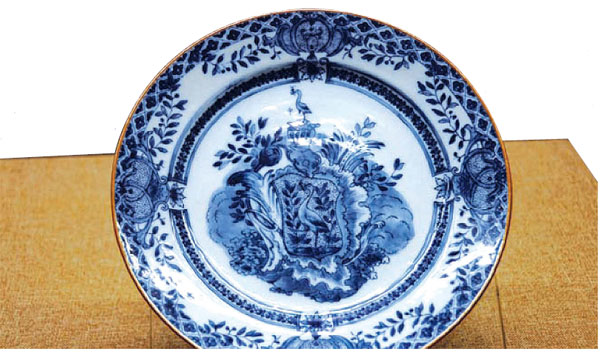
This is not to say that China didn't make hay out of the chinoiserie fascination. It got rich on porcelain and tea exports. As well as activities abroad - actually starting the careers of many big names in European design, such as Thomas Chippendale with his lattice cabinets and Josiah Spode's blue-and-white willow pattern plates - there was also a flourishing market in Chinese ports for craftsmen making chinaware designs for Western tastes, though their actual opinion on such tastes is lost to history.
Moreover, as historian David Porter has noted, the period of this "China craze" was a relatively egalitarian and peaceful moment in the turbulent history of early modern exploration and cultural exchange. There was an air of mythology but also genuine curiosity and a desire to incorporate what were believed to be the best parts of another culture.
Courtesy of The World of Chinese, www.theworldofchinese.com
The World of Chinese
(China Daily European Weekly 03/03/2017 page23)




Today's Top News
- Trump says Maduro to be transported to New York
- Venezuela sends letter to UN Security Council, condemning US armed aggression
- China strongly condemns US use of force against Venezuela
- Britain 'not involved in any way' in US operation in Venezuela: British PM
- EU urges de-escalation in Venezuela
- What we know