A new beginning for The Great World







Iconic amusement park to reopen as a hub for global cultural heritage
Shanghai's oldest indoor amusement park, The Great World (Dashijie), will reopen in late March, more than a decade after it was closed.
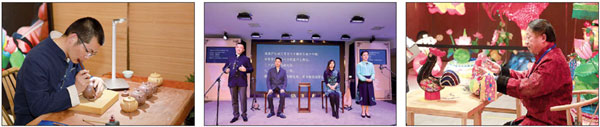
But the venue - once the largest of its kind in the city - will not reprise its role as an amusement park. Instead, it will showcase intangible cultural heritage from around the world.
"Shanghai has no lack of places for fun or amusement today. The mission of The Great World has now taken on new significance," says park spokeswoman Xie Jun.
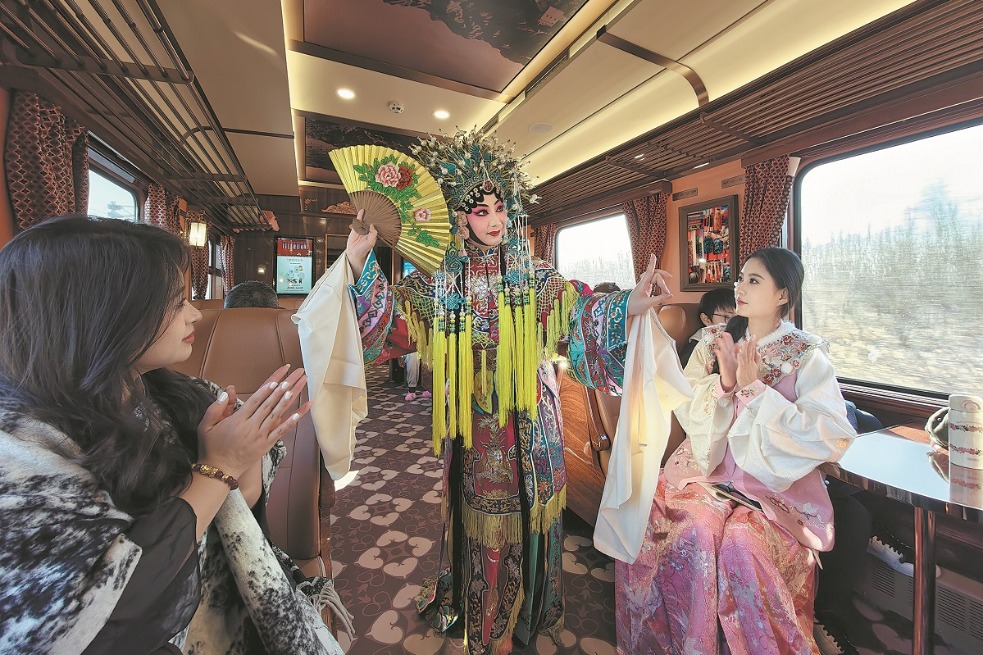
| The newly renovated Great World has invited artists and actors to perform as part of efforts to brand it as a venue that showcases intangible cultural heritage from around the world. Photos Provided to China Daily |
| Comprising three four-story buildings and two wings, The Great World had for decades been a prominent landmark in Shanghai. |
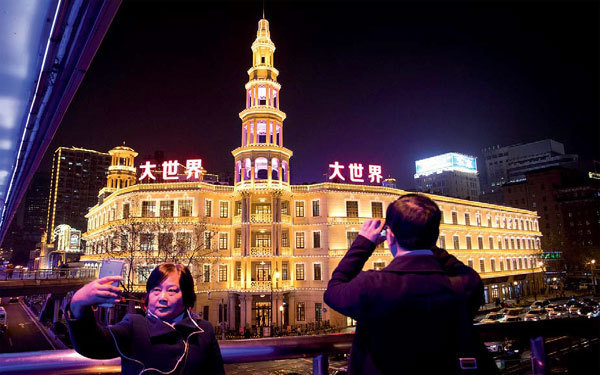
Comprising three four-story buildings and two wings, the park, now under the Huangpu district government, had for decades been a prominent landmark in Shanghai because of its iconic multilayered hexagonal tower featuring 12 yellow pillars. It was often said that a trip to Shanghai wasn't complete until one had visited The Great World.
Established in 1917 by tobacco tycoon Huang Chujiu - notorious for having made his fortune by tricking people into buying local medication at the price of imports - The Great World was envisioned as a multifaceted amusement park featuring Western cafes, cinemas, fun fairs, Chinese tea houses and traditional opera theaters.
After passing through various hands and changing names, and even becoming a gambling and prostitution center for a time, the park was taken over by the Shanghai Municpal Government in 1955.
In that year, the average number of visitors per day swelled to a peak of 40,000, from a mere 10,000 per day in the years following decades of war and instability.
When it reopens this month, the park will showcase 50 types of intangible culture, including live demonstrations. Experts will be on site to show their skills.
"The inheritors of these heritages will perform on a rotating basis and we will be inviting as many of these as possible so that visitors can experience all the different cultures without having to travel around the world," says Xie, who noted that this new concept aligns with the park's original purpose when it was built a century ago.
After China reopened its doors to the world, The Great World saw an influx of entertainment forms, such as karaoke and video games. It was popular with residents and tourists into the 1990s.
"Things were much simpler back then. When I was a child, I could stand in front of the distorting mirrors and laugh at my reflection for minutes," says a 76-year-old Shanghai native surnamed Zheng.
The same 12 mirrors will remain in their original positions in the compound.
Zheng, a retired bus driver, went to the park when it opened to members of the media and invited guests at the end of December but was disappointed when he wasn't allowed inside.
"Among the many historical sites that are considered iconic in my hometown, The Great World is the one I personally feel most connected to. It's one of the few that was accessible to us ordinary people. Our childhood memories are embedded in every one of its bricks," Zheng says.
However, Zheng admits that he will not be visiting the park as often as he used to when it reopens: "I don't think I need to see the different forms of cultural heritage so regularly. Besides, it's so easy to travel and see the world these days."
According to local media reports, crowds started to decline around 1998, when the park faced competition from the newly built Shanghai Jinjiang Amusement Park. The new entertainment venue in southwest Shanghai, which had cost 90 million yuan ($13 million; 12.3 million euros; 10.7 million) to construct, was then the largest outdoor amusement park in the country.
The traditional opera performances at The Great World were no longer appealing to the younger generation, and the park's management was unable to expand the facilities or revamp the site because the architecture had been designated for historical preservation by the municipal government.
The combination of such factors led to the demise of the once-popular entertainment venue, with average daily visitors dwindling to a paltry 100 by 2003. On weekday mornings, there would sometimes be fewer than 10 visitors in the park.
A ticket to the 14,000-square-meter park was priced at about 30 yuan in today's money, and it gave visitors access to all the facilities within.
According to the park management, the new price of entry has yet to be determined. The venue will be limited to 3,300 people daily. Officials also say that profitability will not be a major concern, as the focus will be on preserving heritage and culture.
xujunqian@chinadaily.com.cn
Timeline: The Great World
July 14, 1917: The Great World was opened on the French National Holiday in the French Concession.
1931: Following the death of its founder, Huang Chujiu, the park was purchased by Huang Jinrong, a mafia kingpin, at a low price. The park was renamed Rong's Great World and gained notoriety for its gambling operations and sex services.
1955: The venue was renamed Shanghai People's Amusement Park after it was taken over by the municipal government following the founding of the People's Republic of China. The new name was soon dropped, as residents preferred The Great World. The mafia boss ended up as a sweeper in the facility. Chen Yi, the mayor of Shanghai, later ordered the park to be redesigned into a space for educational purposes.
1966: The park was named Oriental Red, the title of a song praising Chairman Mao Zedong, during the "cultural revolution" and functioned as a warehouse until 1974.
1987: The venue took up its old name, The Great World, once more. Bumper cars, discos and fashion shows were introduced to the facility, which made it popular with locals and tourists. The government also sponsored weekly blind dating events, as the decade-long political movement in China had left many urbanites single after they were sent to work in rural areas.
2003: Management cited the SARS epidemic as the reason for shutting down the park. The Great World had been virtually deserted since the late 1990s.
| From left: The number of visitors started to decline in the late 1990s; former mafia boss Huang Jinrong ended up as a sweeper in The Great World; the venue was a must-see for tourists in 1980s; the park in 1930; fhe compound in 1917. |

(China Daily European Weekly 03/17/2017 page21)



Today's Top News
- China reports 20% rise in inter-regional trips on first day of holiday
- China rebuffs criticism over drills around Taiwan
- Mainland pledges deeper cross-Strait integration in 2026
- Lai's 'separatist fallacy' speech rightly slammed
- Xi's message for New Year widely lauded
- Swiss bar fire kills around 40, injures more than 110