EU-China summit comes at crucial time







Europe hoping to harness some of Belt and Road's bustling energy for its own purposes and gain better access to Chinese market
In 2013, in speeches delivered in Kazakhstan and Indonesia, President Xi Jinping introduced the concept of reviving the ancient routes that linked Europe with China via camel-borne and ship-borne trade. There were many doubters in the West. The project seemed so vast, requiring so much investment and so many countries to sign on and participate, that it seemed unlikely to see the light of day for years to come.
Yet, this year, 29 heads of state and 100 country delegations attended the first Belt and Road Forum for International Cooperation, held in Beijing on May 14 and 15. Obviously, many countries saw the benefits of joining the project and learning more about it.
Between 2013 and 2017, China also introduced the Asian Infrastructure Investment Bank, which China has launched against the background of a need for Asian infrastructure spending estimated at $1.3 trillion (1.16 trillion euros; £1 trillion) by the Asian Development Bank.
If you consider the long-heralded and much discussed inevitability of China's emergence in a geopolitical role that matches its new economic might, then an emergence in this form - peaceful, outward-reaching and aimed at boosting prosperity on a mutual basis - must be perceived as far preferable to one that threatens conflict. The Belt and Road is China's attempt to advance its global expansion in a way which demonstrates China's fundamental goodwill and desire to live in harmony with its global neighbors.
However, while it is relatively straightforward for smaller countries with traditional Western links, like New Zealand, to signal their acceptance of the global power shift by joining the Belt and Road Initiative, it is more difficult for the established powers, particularly the United States, to do so. China's emergence confronts the US with a dilemma: does it support the process, thereby gaining considerable economic benefit, but perhaps yielding a part of its dominant global position; or does it oppose the process (as it did with the formation of the AIIB), and risk losing the support of some or most of its allies.
The third economic superpower, the European Union, is in a similar position to the US, but with the important difference that some of its members, for example, Poland and Hungary, are located close to central Asia, while others, like Greece, already have significant Chinese investment (that, in fact, is turning out to be very successful).
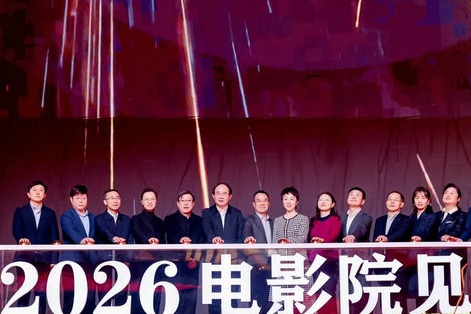
As China starts to reach out to claim the global leadership to which its economic achievements have entitled it, the summit between the European Union and China in Brussels on June 1 and 2 comes at a significant time.
The requirement for Chinese investment in Europe to be open and transparent is one factor behind the long delay in finalizing the bilateral investment agreement between the EU and China, which has been in negotiation since shortly after the 2008 credit crisis, and which would replace the existing multiple trade agreements between individual member European states and China. Other key issues here for China include demonstrated cuts in Chinese industrial overcapacity, particularly in steel; and access for European countries to the Chinese market equal to that enjoyed by Chinese companies to Europe's market. These are difficult issues, but China's continued growth and Europe's own need to increase economic engagement with China make them increasingly important to resolve soon. They might be important issues at the Brussels summit.
At the European end of the Belt and Road Initiative, China has recently acquired 67 percent of Piraeus, Greece's largest port, having first taken control of two of the port's three container terminals in 2009. China is simultaneously engaged in developing the overland road and rail links from southern Greece into Eastern Europe. The extent and speed of Chinese involvement with Southern and Eastern Europe has raised eyebrows in the EU, which recognizes China's need to expand and diversify, but is not used to dealing with an Asian power on its doorstep.
Britain's decision to leave the European Union, which will take effect on March 29, 2019, will not only deprive the EU of its second-largest economy, but will also deprive China of its main platform within Europe, since many Chinese multinationals have already established their European headquarters in London. Doubtless most of the mare waiting to see how the negotiations between Britain and the EU develop, but if these turn out as badly as many expect, Chinese companies based in London will have to look outside Britain for their foot in Europe.
Trade, migration, climate change, foreign policy and security issues will be the key issues at the EU-China Summit in Brussels. But looming over all these will be the question of how Europe comes to terms with a China that has suddenly emerged as an economic force and geopolitical voice that cannot be ignored, and whose position five years from now can only be much stronger than it is today. By exercising its right to set conditions on China's access to the European market, Europe hopes to be able to harness some of China's bustling energy for its own purposes.
The author is a visiting professor at the Guanghua School of Management, Peking University. The views do not necessarily reflect those of China Daily.
(China Daily European Weekly 05/26/2017 page8)




Today's Top News
- China reports 20% rise in inter-regional trips on first day of holiday
- China rebuffs criticism over drills around Taiwan
- Mainland pledges deeper cross-Strait integration in 2026
- Lai's 'separatist fallacy' speech rightly slammed
- Xi's message for New Year widely lauded
- Swiss bar fire kills around 40, injures more than 110