Narrowing ideological gap will require time







Zhou Bajun puts the abusive reaction many Hong Kong residents have to mainland visitors down to shock over the economic clout their northern compatriots now wield
Article 5 of the Basic Law of the Hong Kong Special Administrative Region stipulates: "The socialist system and policies shall not be practised in the Hong Kong Special Administrative Region, and the previous capitalist system and way of life shall remain unchanged for 50 years." In the past 20 years Hong Kong's existing capitalist system and way of life have not changed but Hong Kong residents' daily life has become richer with the injection of new information via the internet. Hong Kong residents could not have foreseen 20 years ago all the web-based personal communication and information exchange platforms they now rely on. Needless to say none of them has anything to do with "One Country, Two Systems".
There is a view that suggests large amounts of capital flowing from the Chinese mainland to Hong Kong in recent years have affected the latter's existing capitalist system. A closer look shows this doesn't make sense. For starters, mainland capital is no match to either British or US capital in terms of total investment in Hong Kong, let alone that of local Chinese businesses. Firms controlled by mainland capital now account for more than half the Hong Kong Stock Exchange in terms of listings, market capitalization and trading turnover but their business operations and contributions to the GDP and employment are found mainly on the mainland. Also, all mainland capital investments in Hong Kong and mainland capital-controlled enterprises listed and traded on the Hong Kong Stock Exchange follow relevant Hong Kong laws. Some mainland residents have purchased real-estate properties in Hong Kong in recent years and a few mainland developers have snatched up some major land lots here with considerable impact on the local housing market. Still, their presence and business activities do not affect "One Country, Two Systems", because they abide by Hong Kong law.

In the past dozen years or so a growing number of mainland residents have come to Hong Kong as tourists, investors and consumers of healthcare, insurance and other services without affecting Hong Kong's existing capitalist system or way of life, but did make some areas become overcrowded and caused certain commodities and services to be in short supply. Some local residents were so upset about the inconveniences that they took to the streets to protest against mainland visitors while certain opposition parties used their discontent to blame "One Country, Two Systems" in late 2011 and early 2012. Some people may wonder why those locals were so angry.
One reason is a psychological gap. For generations, Hong Kong people were used to much higher income and personal assets than their mainland compatriots'. In recent years, however, the income gap has narrowed, particularly in comparison with residents in coastal regions and major cities, where many people have become richer in a relatively short period. Their proportion to the total national population is still very small but their absolute number is way larger than Hong Kong's 7 million. When they were able to visit Hong Kong under the Individual Visit Scheme, the amount of money they spent shopping - especially on luxury items - shocked many a local resident. One day in 2012 a Dolce & Gabbana store on Canton Road in Tsim Sha Tsui closed its front door for a large group of shoppers from the mainland and shooed away some people trying to take pictures of the inside. The incident triggered a round of fierce criticism by local, while some commentators lamented that "one can no longer hear the Cantonese dialect on Canton Road". That showed the big mental fall many local residents experienced seeing so many surprises all of a sudden.
Another reason is the difference between Hong Kong and mainland habits. As the number of mainland visitors grew, many of them posed a great challenge to locals in the form of bad habits such as spitting, littering and loudness in public. Normally most people would tolerate such unbecoming behavior or politely tell the visitors to respect local rules but some Hong Kong people chose to overreact with even more uncivilized behavior. The reason why some locals lost control of themselves may differ from person to person but the root of the problem is ideological rivalry. Since its economy began taking off in the 1960s and 1970s Hong Kong society in general has acquired a sense of superiority over the mainland in ideology, including social system, level of economic development and personal income and wealth and set of values. In recent years the sense of superiority in the level of economic development, personal income and wealth has fallen significantly and prompted some people to cling even more dearly to the sense of superiority in social system and "core values". It was on such psychological conditioning that they built their belief in political illusions and justified their illegal behavior toward mainland visitors.
In short, the increasing exchanges between Hong Kong and the mainland have not affected Hong Kong's existing capitalist system and way of life but led to more frequent and heated clashes between their ideologies. Ideology can be spread through exchanges of personnel, goods, services and capital investments; but such exchanges do little to help remove ideological differences. That means there will be plenty of opportunities for ideological clashes to occur between Hong Kong and the mainland in the years to come, because their rival ideologies cannot be reconciled overnight.
(HK Edition 05/29/2017 page4)



Today's Top News
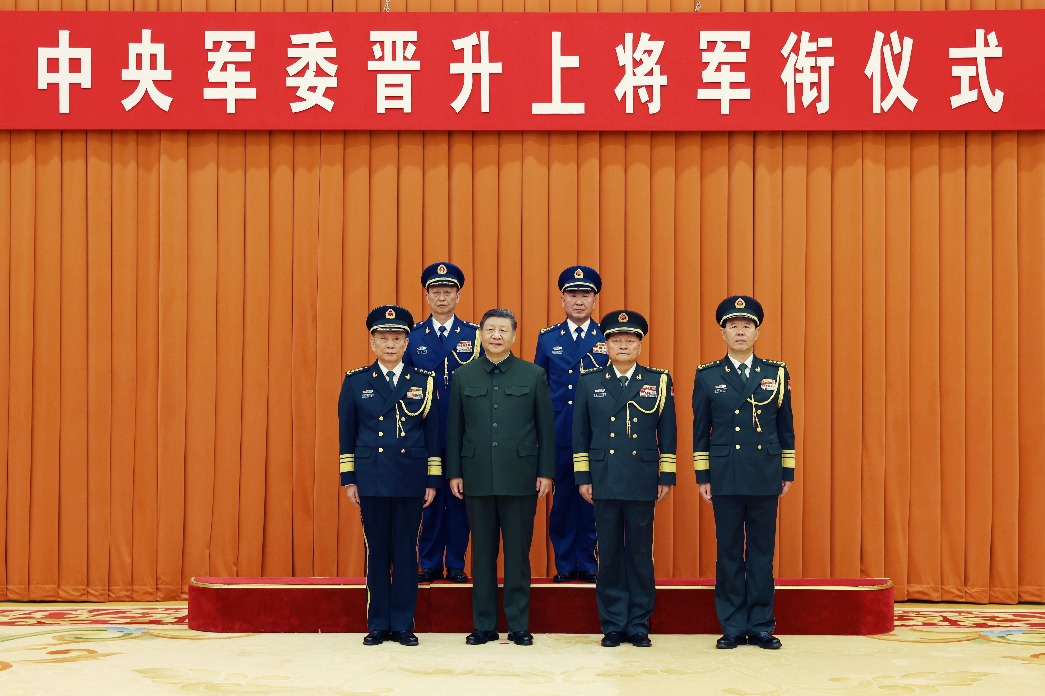
- Xi presents orders to promote two military officers to rank of general
- Xi congratulates Jose Antonio Kast on election as Chilean president
- China urges opposition to Japanese official's remarks about possessing nuclear weapons
- Ukraine says latest peace talks with US, Europe 'productive'
- Asia's rise and Europe's structural decline
- Economic stability a pillar of China's national security