German business leaders: The way forward with China







Editor's note: China and Germany signed 11 deals and collaboration agreements during Chinese Premier Li Keqiang's visit to Berlin recently. This year marks the 45th anniversary of the establishment of China-Germany diplomatic ties, in which business exchanges play a critical role. Five German companies with a presence in China talk to China Daily about Sino-German economic relations.
Jochem Heizmann, President and CEO of Volkswagen Group China
Back in April 1983, Volkswagen arrived in a country on the move. In 2016, Volkswagen Group China and its Joint Ventures delivered almost 4 million cars to Chinese customers. But it's not only the figures which count. Most important for me is that we managed to excite more customers than ever before. People are always a focus of our strategic thinking. Like 30 years ago: China is on the move again.
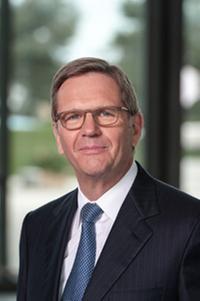 |
| Jochem Heizmann. [Photo provided to chinadaily.com.cn] |
I'm convinced, together with our current and our new partners we will turn challenges like environment protection, digitalization, electrification, and congested city traffic into opportunities. Together we continue to fulfill our mission: to develop and build the best vehicles here and now while also taking care of the entire mobile ecosystem and the environment.
We view China as an incubator for innovation and new technology, and a source of solutions that can be transferred to the world. New ambitious targets for the future have been set under the "Made in China 2025" strategy. For the Volkswagen Group I can say: we want this change and we want to shape this new world of mobility. Our own agenda is called "TOGETHER – Strategy 2025".
It has a lot in common with "Made in China 2025", not just timing. Along the way, we are leveraging our traditional assets: in mechanical engineering, product quality, fascinating design and strong brands. Our high-efficiency combustion engines, new NEVs and sustainable production will foster green mobility. But we are also setting new priorities: digitalization, autonomous driving, smart city concepts and mobility services.
That's why we set up the "Volkswagen Group Future Center Asia", one of three global innovation hubs, here in China. So Volkswagen Group is striving to transform itself from a car manufacturer into a people-centered provider of sustainable mobility. Our good operating result in 2016 enables us to further invest at a high level in China. This year again we are setting aside RMB 30 billion from the cash flow of the two Joint Ventures for reinvestment in future-proof development. And we expect to maintain the same level in the coming year.
Denis Depoux, Asia Deputy President and Senior Partner of Roland Berger
Over the past 30 years China has gradually become the factory of the world, and the country's production and manufacturing capacity has grown across virtually all industrial sectors. Europe – and German companies in particular – have played a big role, not only as markets, but also as providers of technology, know-how and industrial goods.
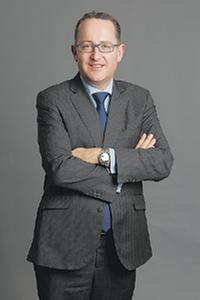 |
| Denis Depoux. [Photo provided to chinadaily.com.cn] |
The Chinese government's 13th Five-Year Plan brought in-depth transformation to the country's economy. Domestic consumption, increased industrial added value and a growing services industry should fuel a new virtuous circle of growth, with Chinese customers wanting better, more customized domestic and international products delivered ever more rapidly.
The coming Chinese industrial revolution relies on new possibilities offered by the connectivity between manufacturing and production-open platforms and ecosystems, logistics and online distribution channels and their consumers, in China and beyond. However, this will not happen without Chinese production and manufacturing modernizing rapidly.
A series of government-sponsored plans, including Internet Plus and Made in China 2025, are designed to achieve this goal. The Belt and Road Initiative is also seeking to create infrastructure and industrial parks and facilities to gradually shift from made in China to made by China. At the business level, production line exports will increasingly become systems, and then components exports.
Added value may remain, but unit volume will falter as Chinese companies develop substitution technologies. This has some concrete implications for the evolution of Sino-German business collaboration, including increased integration and localization, continuous product and system innovation, and a shift from pure components/equipment export to more hybrid systems+software+engineering models. Beyond direct trade and investment, Chinese policy makers and large and small companies can find inspiration in the German model.