The future of Sino-German ties is brighter







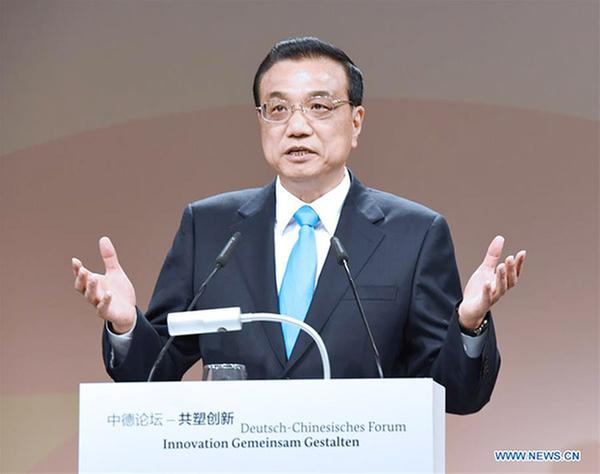 |
| Chinese Premier Li Keqiang speaks at a bilateral forum on innovation cooperation, which is also attended by his German counterpart Angela Merkel, in Berlin, Germany, June 1, 2017. [Photo/Xinhua] |
This year marks the 45th anniversary of the establishment of diplomatic relations between China and Germany. In the intervening years, the two countries and, indeed, the whole world have experienced tremendous changes, from the end of the Cold War and multipolarization of the world to globalization and the information technology boom. Once a divided country, Germany today is the leading European power. And China, once a poor and backward country, has become the world's second-largest economy and a responsible global power.
All these reflect profound changes in the international situation.
Sino-German relations have withstood the test of these changes. Despite some ups and downs, bilateral relations have strengthened, bringing tangible benefits to both sides as well as to the rest of the world. Sino-German ties can thus be described as a veritable all-round strategic partnership of mutual benefit.
Forty-five years ago, China and Germany barely had any contact. Today, apart from their close relationship, they have in place dialogue mechanisms for more than 80 important cooperation channels, including government consultations, high-level financial dialogue, as well as diplomatic and security strategy dialogue, which have widened bilateral and multilateral channels of communication. The two countries also closely cooperate in areas such as finance, energy, environment, education, and science and technology.
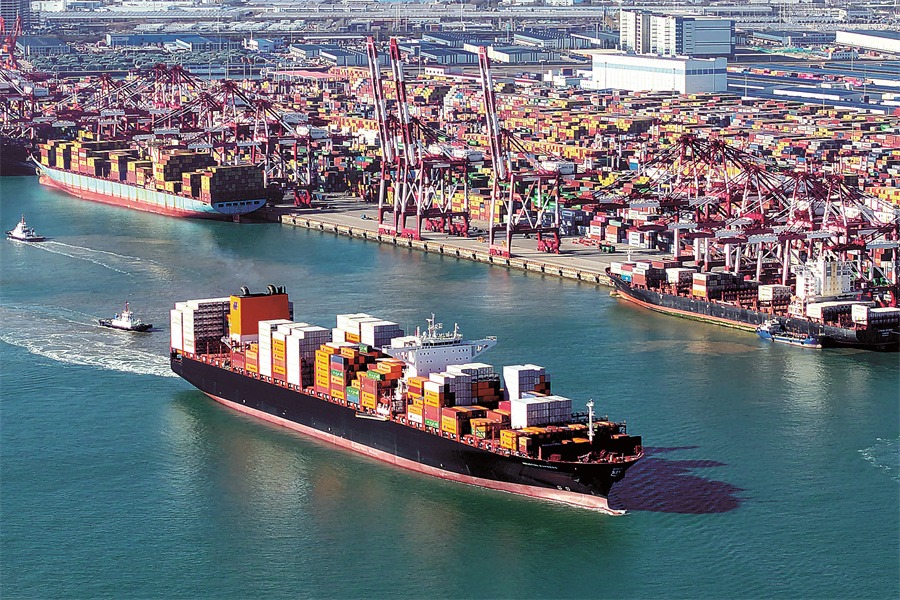
China and Germany are each other's largest trading partners in their respective regions, with bilateral trade reaching about $160 billion last year, or 30 percent of the total trade between China and the European Union. More than 8,200 German enterprises are operating in China, with their investment of over €60 billion ($67.34 billion) generating long-term and stable profits.
In the early years of their diplomatic relations, China hosted only three German students and Germany 10 Chinese. Today there are about 32,000 Chinese students in Germany and nearly 7,000 German students in China. From just a few hundred visits by people in the 1970s, yearly trips between the two countries have increased to more than 2 million with about 10 direct flights a day.
Still, Sino-German cooperation needs to be further strengthened, and for that, the leaders of the two countries have to deepen their strategic communication, although they already maintain close contact through visits, meetings, phone calls and letters, and coordinate their positions on current and urgent issues. German Chancellor Angela Merkel has visited China 10 times, the most by a Western leader. And the expected high-level visits this year will consolidate the close relationship between the two sides.
Sino-German ties, among the deepest and most pragmatic relations of China with European countries, have promising prospects, because:
First, the two sides respect each other's core interests and key concerns, which is the political foundation to sustainable and healthy ties.
Second, the two countries' economic structures and different levels of development are highly complementary, and economic cooperation has become a mainstay of bilateral relations.
Third, the two countries have abundant resources for people-to-people relations in the form of their cultural richness and natural scenic spots which attract tourists. And China can learn from Germany's experience in science and technology, and social management.
Fourth, the two sides support each other and have similar views on major international issues, including advocating multilateralism, settling international disputes through negotiations, and improving global economic and financial governance. Besides, China and Germany support each other within the framework of the G20, promote globalization and investment facilitation, and oppose protectionism.
Fifth, the two countries handle their differences properly, even while dealing with issues that test bilateral ties.
The fast transforming world needs more stable and responsible forces, as the international situation is undergoing complex and profound changes. Properly handling these changes is a challenge for both countries. But the changes also offer them new opportunities for cooperation. Therefore, we have every reason to be confident about the future of Sino-German relations.
The author is China's ambassador to Germany.