To remove bottlenecks to growth, innovation is key







After decades of transformational growth, the Chinese government has concluded that the old model of high investment low wage growth will not achieve its goal of avoiding being stuck in a "middle-income trap". To reach President's Xi Jinping's goal of becoming a "moderately prosperous society" by 2020, the 13th Five-Year Plan (2016-20) aims to double per capita income by 2020 from its 2010 level.
The plan lays out a vast variety of reforms designed to increase market efficiency, upgrade industry and improve the qualifications and opportunities of the people. In his January speech at Davos, Xi said: "Building on the progress of 30-odd years of reform, we have introduced more than 1,200 reform measures over the past four years, injecting powerful impetus into China's development."
"Innovation is the primary force guiding development. Unlike the previous industrial revolutions, the fourth industrial revolution is unfolding at an exponential rather than linear pace. We need to relentlessly pursue innovation. Only with the courage to innovate and reform can we remove bottlenecks blocking global growth and development," Xi said.
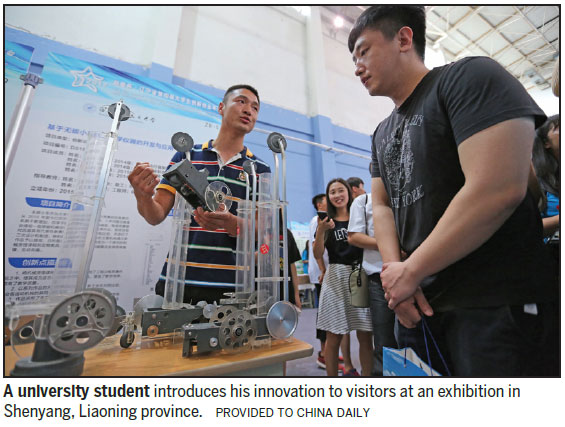
Ashok Pandey, vice-president of Nvidia APAC Operations, says that a raft of specific programs are designed to encourage industries to move to higher value-added sectors. "China has always surprised the world with new business model innovations. The Chinese government is encouraging innovation and is leading through the transformation with the four new initiatives - Made in China 2025, the Belt and Road Initiative, Internet Plus, and Mass Innovation and Enterpreneurship."
One major goal of structural reform is to improve the efficiency and market orientation of State-owned enterprises by reforming their corporate governance. Christian C. Johnson, president of US consulting firm Emerging Markets Finance, concludes: "In 2015, China issued 'mixed ownership' guidelines encouraging many SOEs to attract partial foreign or private ownership. Just last year, the Chinese government announced that it is creating several new government-owned management firms to manage portfolio groups of SOEs in order to further leverage the benefits of improved corporate governance."
Following President Xi's visit to Imperial College, London, in 2015, Alice Gast, president of the college, said: "China's triple helix of government, industry and academia is supported by a tremendous investment in innovation. This investment in higher education is paying off. You see it in the facilities, people and research outputs. In recent times, we have gone from working occasionally with Chinese partners to becoming equal collaborators."
According to a summary of the 13th Five-Year Plan (2016-20) issued by the National People's Congress: "The importance of jobs is on the rise, not only in terms of their number, but their quality, as authorities want to derive growth chiefly from improved labor productivity, rather than more credit. Labor productivity currently stands at 87,000 yuan ($13,241; 11,277 euros; £10,195) per person. The target is 120,000 yuan by 2020."
To achieve these goals, the education system must be expanded to spread opportunity, and reformed to emphasize innovation even more. According to a circular issued by the State Council, China's Cabinet, in January: "The plan encourages the cultivation of students' entrepreneurship and innovation capabilities and practical skills. In addition, efforts should be made to optimize urban and rural education, create a favorable school environment, advance international education cooperation, improve education quality in rural areas and regions inhabited by ethnic groups, promote entrepreneurship of college graduates, increase teacher quality and carry forward education modernization."
Xi has repeatedly emphasized that quality education is essential for all people. In January, the president said, "Making sure children of impoverished families enjoy access to high-quality education is a fundamental solution to poverty." In February 2015, when visiting an elementary school in Yan'an, he said education is the key to development in old revolutionary-base areas and impoverished areas. "Don't let the kids lose at the starting line," he said.
davidblair@chinadaily.com.cn
(China Daily European Weekly 08/11/2017 page8)

Today's Top News
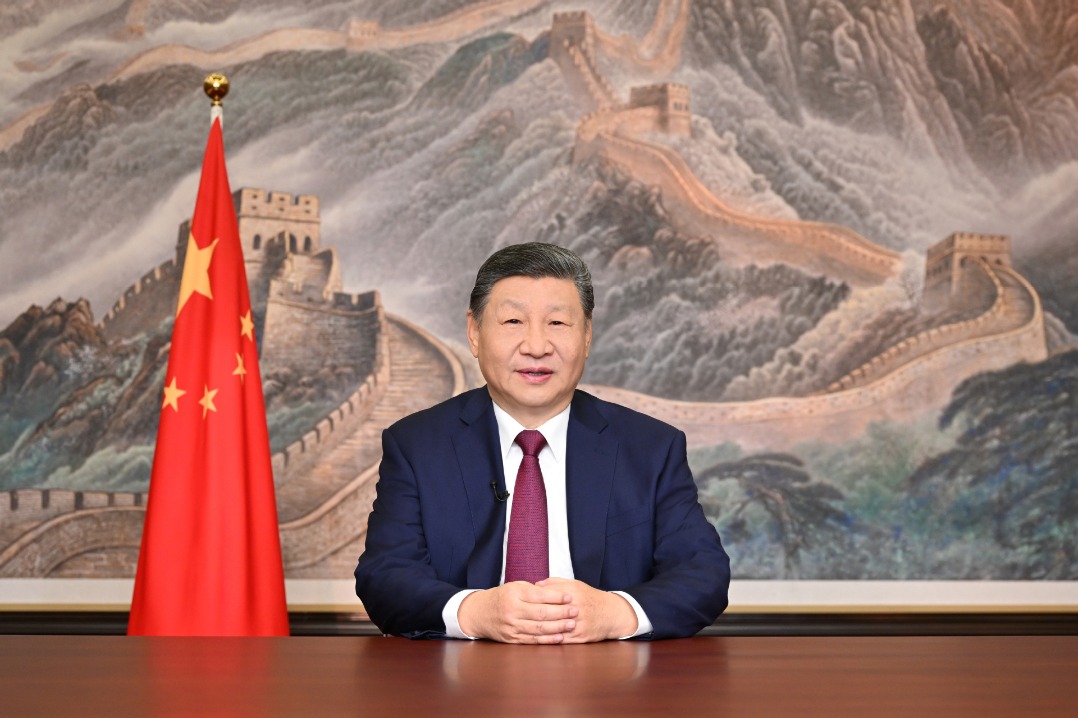
- Full text: Chinese President Xi Jinping's 2026 New Year message
- Poll findings indicate Taiwan people's 'strong dissatisfaction' with DPP authorities
- Xi emphasizes strong start for 15th Five-Year Plan period
- PLA drills a stern warning to 'Taiwan independence' separatist forces, external interference: spokesperson
- Xi, Putin exchange New Year greetings
- ROK leader's visit to help boost bilateral ties