Bread, bun, baozi







Editor's Note: China is divided into as many culinary regions as there are different ethnic groups. Its geographical diversity and kaleidoscopic cultural profiles contribute to the unending banquet of flavors.
Whether you are backpacking in China or on a galloping gourmet tour through the country, there is one food you are bound to encounter. This is the ubiquitous baozi, described as a bun, a bread, a dumpling or a meal.
It is indeed various things to various people, at various times of the day.
Appearing at breakfast, it is stuffed with meat or vegetables as a quick, cheap filler for the working class. At the dimsum restaurants at lunch, it becomes a major attraction, packed with sweet roasted pork, chicken, abalone or even the best marbled beef or mutton.
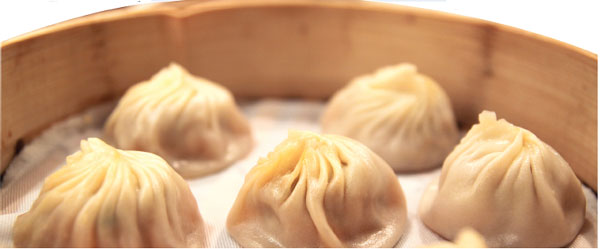
In another guise, it sheds its thick, doughy skin for a paper-thin chewy wrapper around a ball of minced meat and onions. This is the Shanghainese xiaolongbao, squirting hot juices at first bite, and eaten at any time of the day.
In Chinese homes from Henan to Sha'anxi, it becomes large, perfectly raised and steamed buns, with no filling other than the cook's careful skills.
And, in between, there are buns and dumplings of all shapes and sizes from other provinces, made of thin or thick dough, with fillings both sweet and savory. Or with nothing in them at all.
The Chinese have been shaping dough into buns for almost 2,000 years, from the first baozi made in Sichuan during the Three Kingdoms period.
It was believed that the first baozi was the brainchild of master strategist Zhuge Liang. It was a time of constant wars, and the troops were weary and vulnerable.
After another lengthy battle, Zhuge Liang was leading his battle-worn men home when they were stopped by a raging river. He summoned the army shaman, who told him that restless spirits of troops who had perished in previous battles could not cross the water to go home and they were clamoring for human sacrifice.
Zhuge Liang pondered the problem, and decided enough blood had been shed and human sacrifice was out of the question. He commanded the army cooks to shape dough into head-shaped buns stuffed with meat. Forty-nine huge steamed buns were thrown into the river.
The waters calmed, and his troops were ferried across safely.
From then on, baozi became a regular item for sacrifices, and soon became just as popular as food for the people.
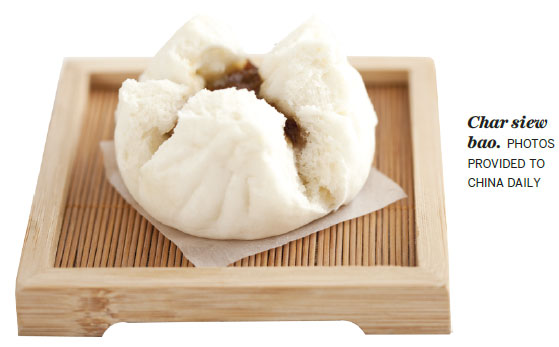
In my childhood, meat-filled baozi were regular treats. While the dainty char siew bao filled with sweet roasted pork fillets were an occasional treat, it was the da bao, the big bun, that made the deepest impression.
It must have a pure white fluffy dough skin that can be enjoyed by itself. The dough, southern-style, must not stick to the teeth, and be just slightly sweet to bring out the fragrance of the wheat.
Unlike char siew bao, da bao must have a firmly pleated top that is tightly closed, mainly to keep in the meat so it steams and cooks properly. The fatty juices should flow when hot, and not be claggy like the thick, caramelized gravy of the char siew bao.
Whether it is a chicken or pork variety, the meat inside a da bao must be clearly defined and perfectly velveted so it slides into the mouth with each bite.
Traditionally, slivers of water chestnut are added for texture. In Southeast Asia, thin slices of the local yam bean or jicama give a barely perceptible crunch to the filling, and an even more subtle sweetness.
Better quality buns will also have shiitake mushrooms, and half or a quarter of a hardboiled egg.
The bun must be moist to the last bite, with the brown juices uniformly staining the insides of the dough.
A da bao is designed to be easily portable, the perfect fast food, as big as a baby's head and a meal in itself.
Southerners raise their dough with mianfei, a thick gloppy slurry made from flour, water and sugar that is allowed to ferment overnight.
The next day, more flour and water are added and then kneaded till it takes shape, after several restings and risings. Balls of dough are then pinched off and deftly flattened into a disc.
The filling goes in, the sides are pinched together in a series of pleats going clockwise. These require nimble coordination between thumb and index finger of one hand, while the other hand cups the bun taking shape.
These days, pre-mixed baozi flour using yeast or baking powder as leavening are sold in supermarkets, with instructions on the packages. This has made the making of the buns even easier.
Southern baozi are both sweet, with custard and sweet bean paste fillings, and savory, with lamb or mutton, pork, beef and chicken. There are vegetarian versions as well.
Northern buns tend to be smaller, and, like the Qingfeng Baozi made famous by a restaurant visit by President Xi Jinping, are mainly filled with pork and plenty of leeks.
The buns are often paired with a bowl of chaogan, the offal stew so beloved by Beijingers.
These are only a few of the countless varieties of baozi found in China, and you are bound to chance upon a favorite in your travels through the country.
paulinedchinadaily.com.cn
A cross section of common baozi
Dousha Bao
Stuffed with red bean paste, this is a very popular bun that is sometimes made into the shape of a peach for longevity and served on birthdays, especially on those of the elderly.
Naihuang Bao
A popular sweet bun first created in Hong Kong. Soft dough is filled with a hot liquid custard, just like the lava cakes of the West.
Shuijing Bao
Crystal buns with a skin made of wheat starch that cooks to a translucent chewiness. The filling can be sweet, with red bean or mashed lotus seeds, or vegetarian, with mushrooms and bamboo shoots.
Lianrong/Zhima Bao
Sweet buns filled with lotus or black sesame paste. Sometimes, these are baked instead of steamed.
Da Bao
A Cantonese teahouse favorite stuffed with mainly chicken or pork and flavored with ginger, oyster sauce and Chinese wine.
Char Siew Bao
Probably the best-known of the baozi outside of China. Honey and oyster sauce-marinated roasted pork fills a soft fluffy bun that is allowed to split open like a broad grin.
Zhurou Dacong Bao
Classic northern buns with a blander dough and minced pork filling strongly flavored with chopped leeks.
Niurou Huluobo Bao
Minced beef and carrots make a tasty combination. Also popular in the northern provinces.
Yangrou Dacong Bao
Mutton and leek baozi are often served in Muslim restaurants across China. Popular in the Inner Mongolia autonomous region.
Tianjin Goubuli Bao
Goubuli means "ignored by the dog", and it was the nickname of the original chef who made these buns, now a signature snack of the port city of Tianjin.
Vegetarian Baozi
There are also many vegetarian buns, filled with mushrooms, chopped vegetables like shepherd's purse or carrots and bamboo shoots with minced tofu.
(China Daily European Weekly 08/18/2017 page20)




Today's Top News
- Full text: Chinese President Xi Jinping's 2026 New Year message
- Poll findings indicate Taiwan people's 'strong dissatisfaction' with DPP authorities
- Xi emphasizes strong start for 15th Five-Year Plan period
- PLA drills a stern warning to 'Taiwan independence' separatist forces, external interference: spokesperson
- Xi, Putin exchange New Year greetings
- ROK leader's visit to help boost bilateral ties