


Witness the fitness







Tapping into rising participation rates key to sports industry's expansion
China's bid to turn sports consumption into a new economic driver requires a shift in focus toward to the leisure, entertainment and service sectors, experts say.
CBA ups its game
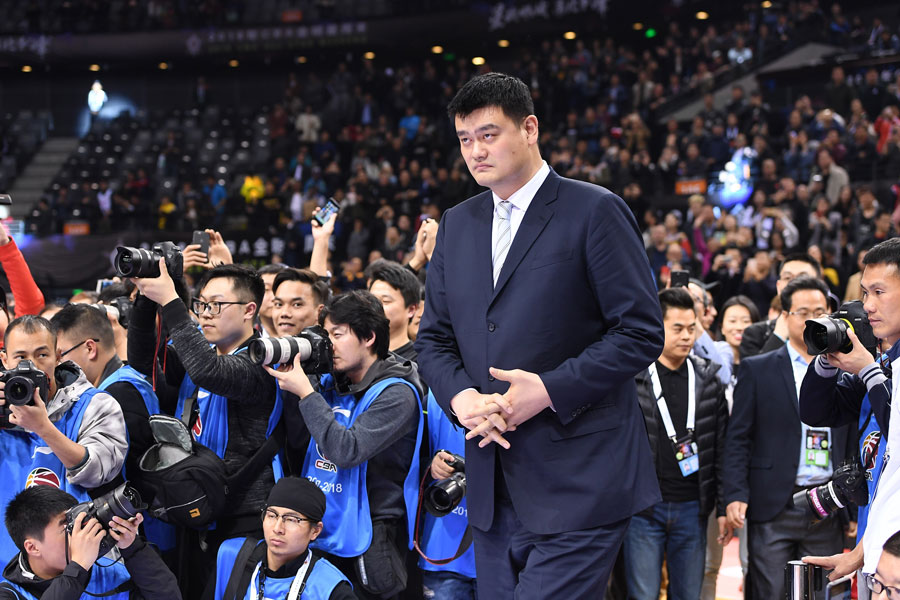
More and more around the country, sport is something people actively participate in rather than passively consume on TV.
From sweat-soaked joggers plodding the nation's running trails to the excited crowds roaring on their basketball heroes at CBA games, sports participation is on the rise.
The healthy living trend is reflected in the rapid growth of China's sports industry, which maintained double-digit added-value growth in 2016, according to the latest figures from the National Bureau of Statistics.
Sports-related businesses in the country generated 647.5 billion yuan (about $101 billion) in added value in 2016-17.8 percent higher than the figure in 2015-contributing to a total industry scale of 1.9 trillion yuan by the end of 2016, the bureau announced earlier this month.
However, the sports industry's contribution to the country's economic growth remains modest, with untapped potential in the service sector, according to Zhao Yong, deputy director of the General Administration of Sport of China.
"The industry scale of sports-related businesses in our country is still not big enough compared to other sectors or the equivalent industry in Western sporting powers such as the United States," said Zhao.
"The structure of the industry still needs to be diversified to explore more business opportunities in sports-related entertainment, leisure and service sectors for more balanced growth in the future."
The industry's added value accounted for 0.9 percent of GDP in 2016 compared to a 2015 figure of 3 percent in the US, according to analysis conducted by Plunkett Research.
Huang Haiyan, a sports industry professor with Shanghai Sports University, identified the consumption of intangible sporting products and services, such as fitness coaching, ticketing and spending at venues, as the next frontier to close the gap.
"The public demand for sports-related consumption has escalated from only purchasing sports equipment to a wider range of services and experience-based products. However, the supply of these products still lags behind," said Huang.
The manufacture and sales of goods still accounted for the bulk (around 63 percent) of the 1.9 trillion yuan sports market in 2016, compared to around 36 percent for the service sector. In contrast, the service sector contributed to about 80 percent of the United States' sports industry value in 2014, with the country's big four professional leagues (NFL, MLB, NBA and NHL) generating a combined $26 billion, according to Plunkett Research.
China is aiming to build a 5 trillion yuan sports industry by 2025, and Huang believes that key to reaching that target will be building more accessible facilities, multi-use sporting centers and sport-related tourism destinations, as well as organizing more amateur events.
"From the marathon craze to the emerging winter sports sensation in the country, it has become obvious the public want to exercise more, not only for fitness but for fun," she said.
China has identified marathon running and winter sports as two pillars of its sporting revolution.
With over 500 long-distance running events staged across the country, the Chinese Athletic Association recently unveiled a plan to host around 1,900 marathons by 2020, attracting 10 million runners annually.
In 2016, the country's winter sports administration and urban planning department announced plans to build 650 skating rinks and 800 ski resorts by 2022, laying the foundation for the winter sports industry to generate a projected 1 trillion yuan in revenue by 2025.
"As long as taking part in sports activities-be that running a race, skiing at a resort or just watching a game-sports consumption will become a strong anchor for our country's economic growth sooner or later," said Ma Jilong, the former director of the sports equipment department at the General Administration of Sport of China.


Most Popular
- Dazzling display gets National Games underway
- Opening ceremony of National Games staged in Guangzhou
- Countdown to 15th National Games: On-site warm-up entertains audience
- Zhou Shen speaks of pride in National Games theme song
- Guangzhou gets ready for National Games extravaganza
- First cross-border event debuts at the National Games