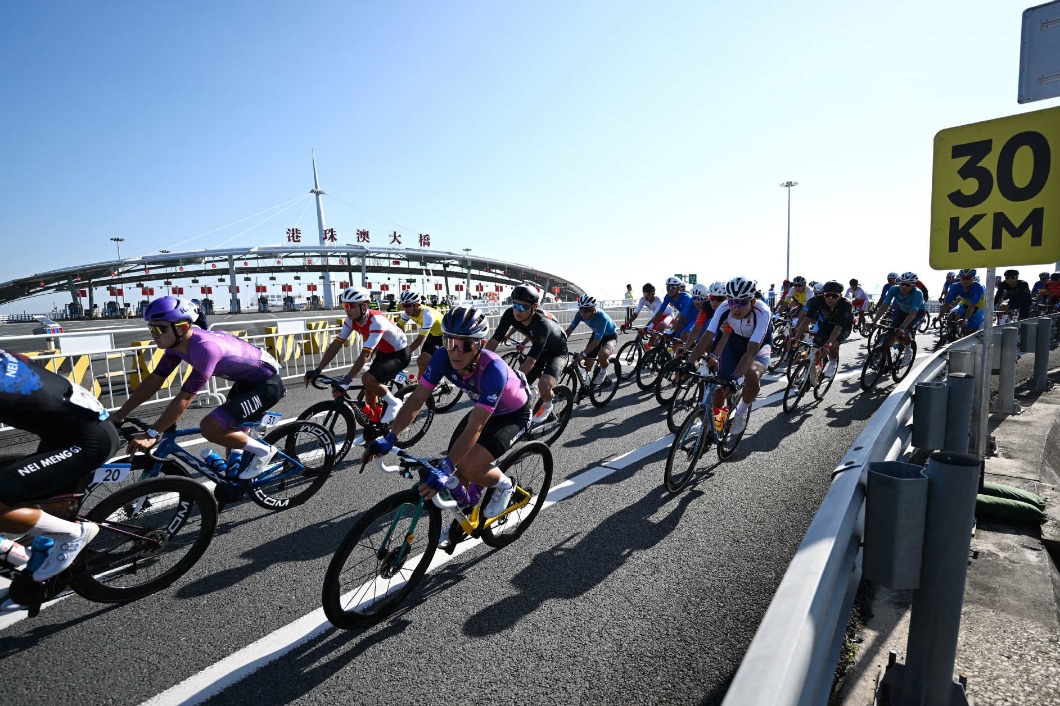
Ground missile defense system tested







China launched its first ground-based midcourse missile defense interception test in four years on Monday, a move experts said would further improve China's long-range missile defense capability during wartime.
The test met expectations and was conducted in Chinese territory, the Defense Ministry said in an online statement on Tuesday. The test was defensive in nature and not targeted at any country, it added.
When asked about the test, Foreign Ministry spokesman Geng Shuang said on Tuesday that China resolutely follows the path of peaceful development and upholds a defensive military policy.
China has conducted three similar tests, in January 2010, January 2013 and July 2014.
The latest test came amid the recent fruition of the $453 million arms deal between the United States and Taiwan, which was approved in 2015.
The deal would allow the US to arm the island with 250 FIM92 Stinger portable antiaircraft homing missiles later this year.
Major General Zhu Chenghu, a professor at the National Defense University, said Monday's test could be a response to the US recently labeling China a "nuclear threat" and planning to expand its nuclear arsenal to deter China.
The midcourse missile defense system, known as GMD, is primarily used to intercept and protect China from incoming long-range ballistic missiles, on which most nuclear warheads can be loaded, he said.
"China and other countries are reasonably worried because the US has not only modernized its nuclear arsenal in recent years, but is also eluding international conventions and lowering the threshold to use nuclear weapons by creating smaller, more accessible bombs," he said.
Midcourse interception is widely regarded as the most feasible but difficult phase to intercept a ballistic missile in its three-phase flight, the other two being boosting and terminal re-entry, he said.
This is because the missile usually reaches its maximum speed and height during its midcourse flight at more than 100 kilometers in space, where there is no air resistance, and it is hard to detect and intercept by ground-launched interception weapon.
The average peak speed of an intercontinental ballistic missile can reach 5,000 to 7,000 meters per second, or close to 15 to 20 times the speed of sound, according to the Federation of American Scientists, a nonprofit organization on nuclear security.
"Missile interception is often compared to hitting one speeding bullet with another, however, this is becoming less true because incoming missiles can now carry more than a dozen warheads and even deploy various decoys to fool interceptors," said Zhu.
"It is now more like the world's fastest and deadliest cat-and-mouse game. Even the best system needs several detectors and intercepting missiles working together to fully deter one attacking missile, despite this, a small percentage of warheads can still get through."
Given its technical difficulty and cost, only a handful of countries have GMD systems and most of them have a limited scale, Zhu said. Russia has around 70 interceptor missiles to protect Moscow and its surrounding area. Japan, Israel, and Republic of Korea are also building limited GMD systems, mostly with help from the US.
The US currently leads the world in missile defense capability. Apart from spending more than $40 billion in the past 18 years on GMD that protects all of North America, the US also has the world's most advanced sea-based missile defense system called Aegis, according to the US Missile Defense Agency.
Li Haidong, a researcher of American studies at China Foreign Affairs University, said the fundamental difference between the Chinese and US missile defense systems is that China deploys missile defense for self-defense, but the US deploys far more systems than its security needs.
"The US deploys most of its missile defenses in Europe, the Middle East, and Asia to ensure its own absolute security and hegemony at the expense of other countries' security interests," he said.
"These actions can disrupt regional strategic balances, and push the world into a new missile arms race."




- Guiyang deputy mayor under investigation for discipline violations
- Chinese medical team sets up health education column in PNG newspaper
- China launches low Earth orbit satellite group
- Audiences amazed by National Games opening
- Chinese fishing boat capsizes off southwestern S. Korea
- Revolutionary's legacy lives on in Tianjin