Tiny bit of inspiration







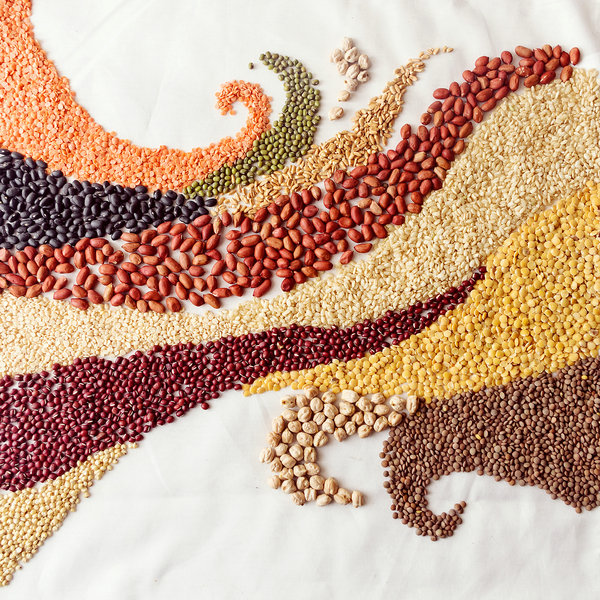
Red beans, green beans, soybeans, black beans, speckled beans. The Chinese pantry cannot do without them, says Pauline D Loh.
To the Chinese, food is medicine. Every mouthful is beneficial in some way, and there are strict rules as to when to eat, what to eat and how to eat.
It is only in the past 30 years that animal protein has played an increasingly large role in Chinese diets, a departure from the traditional daily meals where meat was frugally used as flavoring. The fatted pig, cow and lamb were killed only for major festivities.
Take a classic Chinese stir-fry, with its base of aromatics like garlic and ginger, followed by vast quantities of neatly cut vegetables and a few slivers of meat. The meat plays a supporting role and serves only to enhance the sweetness of the greens.
Chinese housewives have, over generations, developed ingenious ways of making plant protein taste good and compiled a whole encyclopedia of reasons to justify why these are good for you.
Just as Indian vegetarian food depends a lot on lentils and pulses, the Chinese pantry cannot do without beans.
Red beans, green beans, soybeans, black beans, speckled beans - even beans with "eyebrows". We eat these so often they have become forgotten, part of the background of everyday home-cooked food.
Yet they are indispensable. We use them when we braise a pot of fragrant stewed meats, we use them in a vast variety of soups. We mix them into rice, deep-fry them as crunchy garnishes for noodles, we make desserts from them. The list is endless.
They're enjoyed equally by vegetarians and carnivores.
The ubiquitous red bean, or adzuki, is what mothers turn to when the family seems a little under the weather. A few handfuls soaked in water and added to the rice pot will "boost blood".
In cases of more severe anemia, a course of red beans, aged citrus peel and dried Chinese jujube brewed as a drink will do the trick.
Red beans are also widely used in desserts, after they are cooked down to a thick sweet paste that then goes into cakes and snacks.
Their slightly smaller cousin, the green or mung bean, is used in many ways, and often similarly. But while the red bean warms the blood, the green bean cools the body, so it is more often eaten in summer when the system easily overheats. Green bean soup, with a sprinkle of the appropriate dried herbs, will chase away thirst and sunstroke, as every Chinese granny will tell you.
Of course, sprouted green beans are probably the most familiar form, a favored micro-vegetable that is now equally beloved in international kitchens for its crisp sweet crunch, raw or lightly cooked.
And there is the soybean, upon which rests the foundation of all Chinese food.
We can probably run a separate series on this most famous of Chinese beans, but we only have space for a summary of its uses in Chinese cuisine.
Fresh, the bean is cooked in its pod and eaten as a vegetable. Dried, it becomes the miraculous starter to sauces, pastes, drinks, seasoning and a whole category of ingredients starting from the humble bean curd and its huge extended family of related products.
Ground soybeans cooked in water become soybean milk. Soybean curds become tofu, which is then made into soft, hard, semi-fermented, fermented, salted and preserved products. It is almost impossible to enter a Chinese kitchen and not encounter the soybean in some form.
One reason for the processing was the embarrassing effect soybeans have on the human gut. But this inconvenience does not affect its popularity. The whole beans are still widely used to sweeten stock, add body to braised pots of meat and cooked and deep-fried as a beer snack.
Apart from the soybean, other beans are equally popular in various regions.
For example, there is the black-eyed pea, which the Chinese call meidou, or the cream-colored bean with black eyebrows, referring to the dark scar where the bean connects to its pod.
There is a rainbow of beans, from grass-green broad beans to deep chocolate kidney beans to red and white speckled beans. And every one is treasured.
The best way to show off the creativity with beans in the Chinese kitchen is to showcase some classic recipes, from staples to soups to desserts.
Contact the writer at paulined@chinadaily.com.cn