Interview: Culture plays big role in handling mental health issues: therapist







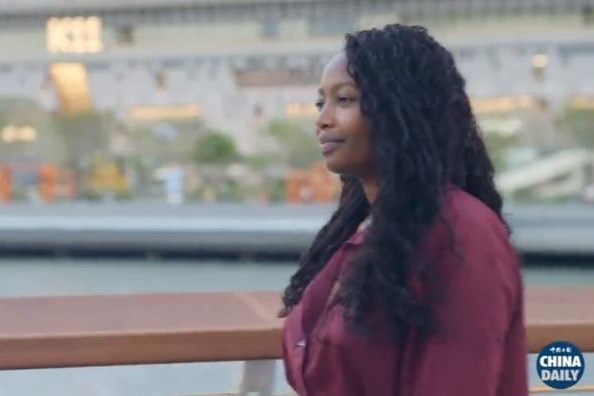
Culture plays a big role in one's ability to handle mental health issues, which is especially true for Chinese students studying in the United States, licensed Chinese psychotherapist Moni Tang told Xinhua in a recent exclusive interview.
"No one really knows what counts for depression," Tang said. "And there is value in our culture on endurance and toughening up. Sadness is not something that is taken as clinical or more medical, but something that you need to overcome to become a better person."
From a top student in a Chinese middle school to an overseas student in a high school in Minnesota, the United States, Tang still remembers every detail of difficulties she had more than ten years ago.
Sitting in a group counseling room in her office in Houston with cozy sofa and soft light, Tang shared her past experience with Xinhua reporters.
"I remember my first day here, just getting to the Chicago airport," Tang said. "Somehow the luggage didn't get a tag to go to Minnesota, so my luggage stopped at the Chicago airport. And we never learned about to speak 'airport English.'"
Tang ended up lost in the Chicago Airport, alone at the age of 16, before she found out her flight to Minnesota had been canceled.
"I had to sleep in the airport," Tang said. "And I didn't have a phone. I started asking people to borrow their phone to call China, and of course people said 'no no no.' That was kind of my first day here."
Managed to get to school, Tang found it's even harder to cope with her new life. Besides language barrier, she also began to truly feel the distance from her family and became very homesick.
"I cried pretty much for a whole year, all day, all night, except the times that I was in class," Tang said. "I looked fine when I was in school, but as soon as I got back to the dorm, I would start crying until the next morning."
Tang dealt with difficulties adjusting in that first year, and overcame what she believed was likely a combination of depression, adjustment issues and homesickness.
"I overcame depression that first year I was here," Tang told Xinhua. "But I didn't know that it was depression. I couldn't pinpoint it, I was too young, but I kind of diagnosed myself retrospectively."
Been through a difficult journey adjusting herself in the US, Tang volunteered as a peer advisor in her college, helping Chinese students with similar experience as she had before.
Growing from a peer adviser to a professional counselor and psychotherapist, Tang said it's common among Chinese students in American schools and universities to feel depressed, anxious, or homesick at a different level, especially in their first years in the country.
"How do we help Chinese students cope easier?" Tang said, in discussing whether things are getting worse for the mental health of Chinese students. "The problems have been there, but it is now really coming to the surface."
Tang believes there is a difference in culture between Americans and Chinese and how they handle mental illness. In her experience, Americans are more emotionally focused and tend to come for counseling to work through things on an emotional level, looking for self-care.
However, for the Chinese patients and students she is seeing, they are coming to her practice after they are considered "ill" or "sick," at a point when they are really struggling. According to Tang, in Chinese culture, mental health is more medically focused.
Tang said what she observed was that the word "depressed" gets tossed around in conversation in loose and casual ways. Chinese students usually talk about their feelings through social media, such as WeChat. Some would look up depression online with a suspicion that they might be depressed. This may help the stigma to decrease, but the problems will not go away.
Although there isn't a formal education of the symptoms of depression and how one should be more aware, Tang said benefits can come from understanding the culture around you more deeply. "For all students it is important to know how to connect with others," she said.
And the problems can be as simple as how you communicate with a professor, whether it be more appropriate to visit in person or send an email. And if you must send an email, how should you write it?
"In American culture there is more importance in how you talk about yourself and you express yourself through words," Tang said, in contrast to Chinese culture which focuses on doing and actions--showing who you are.
Tang believed a better education on what these mental health problems are can help students moving forward, and can help reduce the stigmas that prevent students from seeking help.
"Maybe just listening to their issues is enough, listening to their stories and showing empathy is enough," she said.