Kim-Trump summit faces big challenges







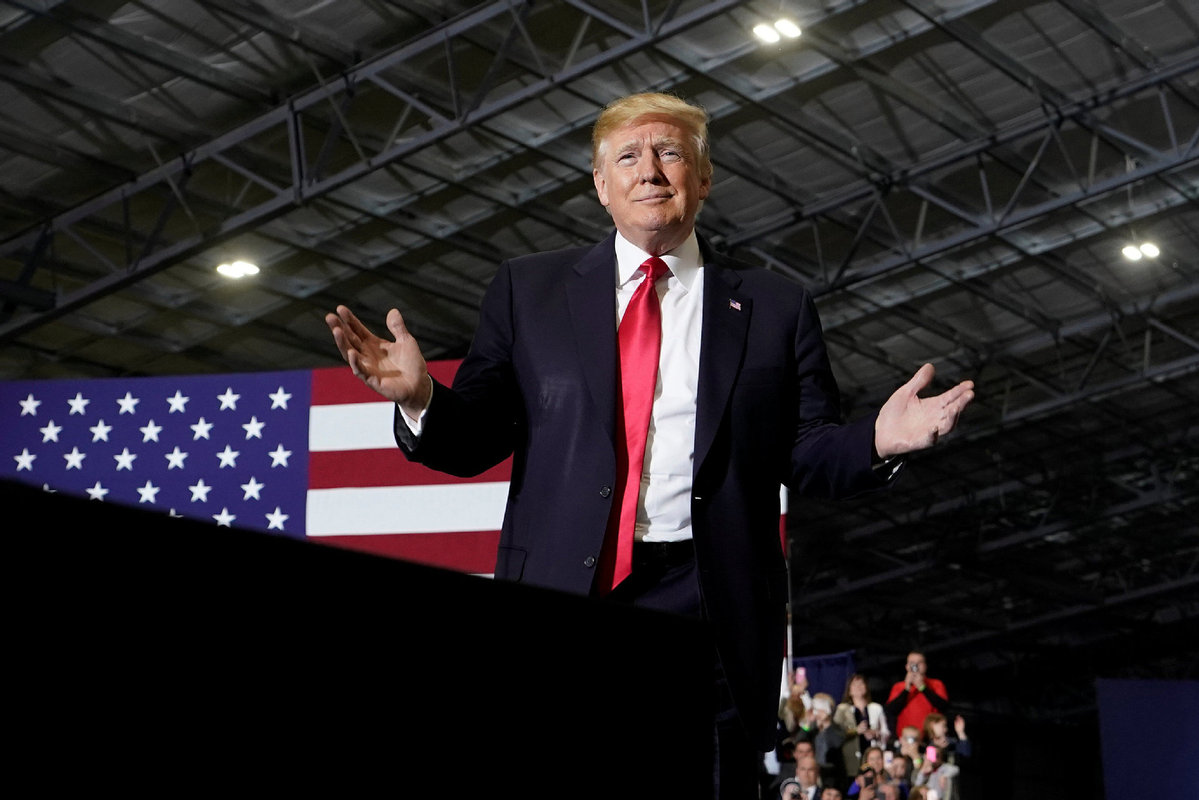
After a year of rising concerns about a possible conflict over the Democratic People's Republic of Korea's nuclear program, tensions on the Korean Peninsula have considerably eased. On April 27, DPRK leader Kim Jong-un and Republic of Korea President Moon Jae-in held a historic meeting at the border village of Panmunjom. The meeting kicked off a new era of summit diplomacy and is likely to be followed by a summit between US President Donald Trump and Kim, which could pave the way for a new beginning on the Korean Peninsula.
The inter-Korean summit was a success by many measures, even if some of the key details remain to be worked out. In a break with the past, Kim agreed to meet Moon at the Peace House in the demilitarized zone, making him the first DPRK leader to travel south of the dimilitarized zone. There was also a frankness in how Kim spoke of the economic difficulties facing the DPRK.
But perhaps the most significant factor in the Panmunjom agreement was the two sides' commitment to realize denuclearization, which incidentally is the first direct reference to denuclearization in an inter-Korean document.
The document focuses on three areas of inter-Korean cooperation: the development of co-prosperity, the reduction of military tensions, and the development of permanent peace on the Korean Peninsula.
One of the key elements of the Panmunjom agreement on co-prosperity is the consensus to implement all prior inter-Korean declarations and agreements that would provide the DPRK with clear economic benefits if it follows through by abandoning its nuclear program. In terms of easing tensions, the agreement reaffirms a non-aggression pact, calls for the end of hostile acts, and phased disarmament.
The two sides also agreed to seek a peace treaty to end the Korean War by the end of 2018. While denuclearization is the last element of the agreement, nominally, the adoption of all prior inter-Korean declarations and agreements should also commit the DPRK to the 1992 Joint Declaration on the Denuclearization of the Korea Peninsula.
While helping to create a framework for cooperation, details will still need to be worked out on the phased approach to disarmament agreed to in the agreement. But perhaps most important will be defining how the economic and social cooperation agreed upon will be conducted while sanctions are still in place.
If the summit with the ROK president opened the door to a denuclearized peninsula, it will be up to Trump to close the deal on denuclearization. But expectations should be managed. The Panmunjom agreement is intentionally ambiguous in some regards and any deal reached by Trump and Kim at their planned meeting will be about top-down aspirations, rather than a detailed pact. However, if the planned Kim-Trump summit is successful, there are certain elements we should look for in any agreement.
The most important element will be how the two sides define denuclearization. The United States and the DPRK have historically had different definitions of what denuclearization means. For the US, denuclearization has meant the complete, verifiable, and irreversible dismantling of the DPRK's nuclear program. In contrast, Pyongyang has often referred to the "denuclearization of the Korean Peninsula", by which it means the removal of Washington's nuclear umbrella and US troops from the peninsula as part of the process of denuclearization.
An important first step will be arriving at a common definition of denuclearization.
Timelines will also be important. The Panmunjom agreement places clear benchmarks, even if further details are still needed, for the end of hostile acts in the demilitarized zone by May 1, military talks in May, family reunions on Aug 15, and the conclusion of a peace treaty by the end of the year. Any US-DPRK agreement will need to clearly define when denuclearization will be concluded, when inspections can begin, and when sanctions relief can start.
The US has suggested that denuclearization be relatively quick, as was the case with Libya, before sanctions relief can begin, while the DPRK has suggested a phased approach that would provide some benefits before complete denuclearization is achieved. Details on denuclearization and other issues will need to be negotiated after the summit, but a clear timetable need to be established.
While there are clear elements the US should seek in any agreement, the DPRK will have priorities as well. These are likely to include the conclusion of a peace treaty, security guarantees, and sanctions relief, but will also likely include a request for Washington to provide direct economic aid for Pyongyang as part of any agreement.
The author is senior director of Korea Economic Institute of America.
Source: chinausfocus.com