Good but uncertain times: a time to prepare







Our Regional Economic Outlook suggests a strong global and regional growth momentum. But there are also clouds on the horizon for which all need to prepare and now is the time to do it. China's reforms have stabilized the economy and progress has been made in financial deleveraging. Key will be to stay the course.
As we note in our recently released "Regional Economic Outlook", the Asia-Pacific region remains the main engine of the global economy, and near-term prospects have improved since our report of October 2017. But there are many risks on the horizon, including a tightening of global financial conditions, a shift toward protectionist policies, and an increase in geopolitical tensions. In addition, over the longer run, Asian economies will face major challenges from aging population and slowing productivity growth, as well as the rise of the digital economy, which could yield huge benefits but also bring major disruptions.
Given these uncertainties, macroeconomic policies in the region should be conservative and aimed at building buffers and raising resilience, while taking advantage of strong economic conditions to implement structural reforms to promote sustainable and inclusive growth. Regional growth is expected to remain strong at 5.6 percent in 2018 and 2019-up about 0.1 percentage points from our previous forecast-supported by strong global demand and favorable financial conditions.
As in other regions, inflation in Asia has largely remained subdued despite the pickup in growth. We project that inflation will remain at 1.4 percent on average in advanced economies and 3.3 percent on average in emerging markets. Among the larger economies, growth in Japan has been above potential for eight consecutive quarters and is expected to remain strong this year at 1.2 percent. And in India, after temporary disruptions caused by the currency exchange initiative (called "demonetization" in India) and the rollout of the new Goods and Services Tax, growth is expected to recover to 7.4 percent, making it once again the region's fastest growing economy.
For China, 2018 is projected to ease growth to 6.6 percent from 6.9 percent last year, as financial, housing and fiscal tightening measures take effect and net exports contribute less. Such a slowdown is necessary and will benefit China in the long run, as it reflects the economy's transition from a focus on quantity to quality of growth. Inflation is expected to rise from 1.6 percent in 2017 to 2.5 percent in 2018, but remain moderate and in line with the regional trend.
Complex factors influence outlook
Risks to near-term growth are balanced, but downside risks prevail over the medium term. On the upside, the global recovery could again prove stronger than expected. The new Comprehensive and Progressive Agreement for Trans-Pacific Partnership and the successful implementation of the China-proposed Belt and Road Initiative, assuming debt sustainability and project quality are maintained, could support trade, investment and growth.
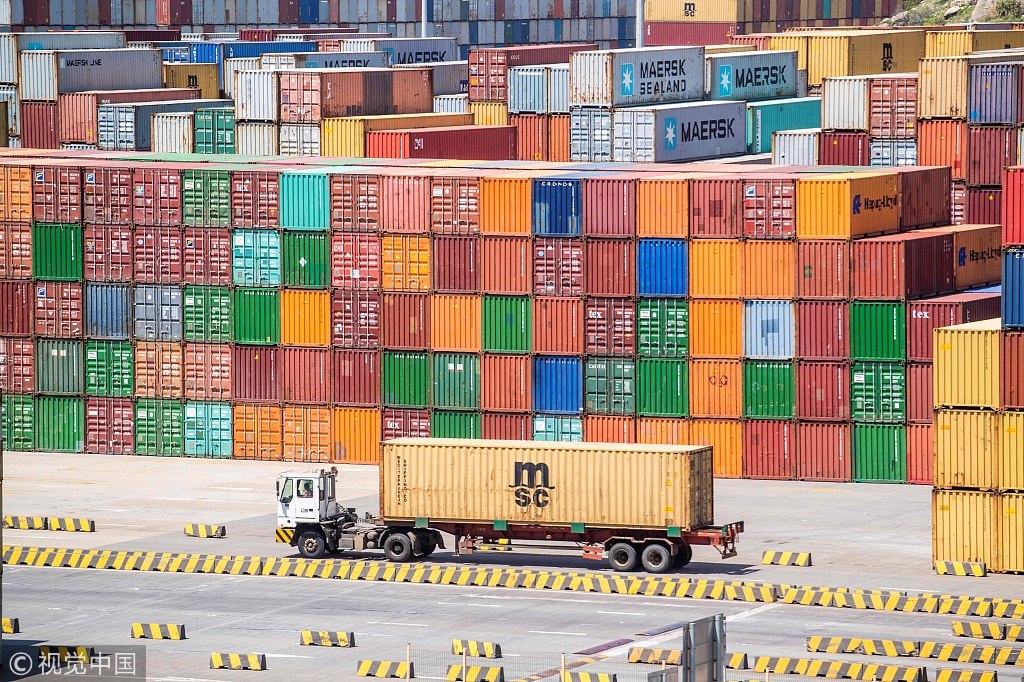
Asia, however, remains vulnerable to a sudden and sharp tightening in global financial conditions, while extended periods of easy financial conditions could risk a buildup of leverage and financial vulnerabilities. More inward-looking policies in major global economies, as highlighted by recent tariff actions and announcements, could disrupt international trade and financial markets and have a substantial impact on Asia, which has benefited so much from economic integration.
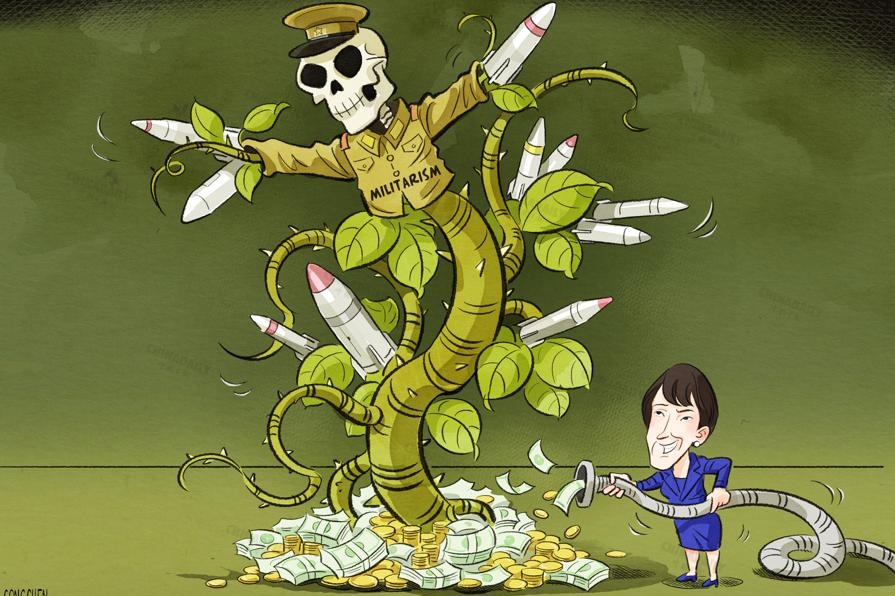
Finally, geopolitical tensions could have serious financial and economic repercussions.
In the longer run, Asia's growth prospects could be heavily affected by demographics, slowing productivity growth, and the rise of the digital economy. Aging populations are an important challenge, as many economies face the risk of "growing old before they grow rich", and the adverse effect of aging on growth and fiscal positions could be substantial. A second challenge is slowing productivity growth. Besides, the global economy is becoming increasingly digitalized, and while some recent advances could be truly transformative, they also come with challenges, including those related to the future of work. Asia in aggregate is embracing the digital revolution, but the degree varies significantly across the region.