Experts call for stricter regulation of nation's booming pet economy







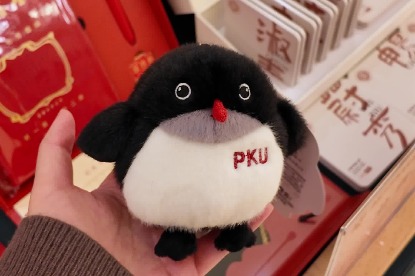
By coincidence or design, Tmall, Alibaba's other major business-to-customer platform, is represented by a cartoon black cat.
However, as this is the "Year of the Dog" in the Chinese horoscope, images of canines also appear on all kinds of product designs.
"Nekonomics"
For businesses, the growing affection shown by Chinese people toward their furry friends is undoubtedly a huge opportunity, especially given the vast scale of the potential market.
"It is certain that pet-related industries will continue to soar as our economy grows," said Wang Jiayi, a brand manager and cat behaviorist with Naja Veterinary Clinics, a nationwide franchise of upscale pet hospitals.
Food, toys, medical care, furniture, photography, electronic devices such as GPS collars - the potential is infinite, she said.
Wang, who is also the founder of Catman Club Ltd, a company that provides cultural and social services for cat lovers, said a growing number of Chinese are becoming pet owners.
"Nekonomics" is a term invented by Japanese scholars to describe the economic effect when cat-related goods, cultural content and services sell well, and prompt growth in the wider economy.
Kanshiro Miyamoto, emeritus professor at Kansai University in Osaka, Japan, estimated that the phenomenon generated more than 2,000 billion yen ($18 billion) in 2015, and it said it will dwarf the economic impact of the 2020 Tokyo Olympic Games.
In a recent report, the Nikkei newspaper suggested that China's cat food market will overtake Japan's in 2020, generating $1.8 billion a year.
A study conducted last year by a market research institute in the United States said the value of China's market for electronic pet devices reached $1 billion by the end of 2016, and predicted that it would account for more than 20 percent of global market share by 2040.
"That sounds about right," said "Rabbit-eating Carrot," a Weibo blogger whose two cats - "Threeless" and "Four-less" - have more than 1.5 million followers on the Twitter-like social network.
"My monthly expenditure on my cats is about 1,000 yuan, which covers their food, treats and litter," she said, adding that she expects nekonomics to have a great effect in China.
"I am happy to see that Chinese society is becoming more aware of feline charisma."






- Law aimed at bolstering standard Chinese language education passed
- Connecting cities, changing lives
- World's longest expressway tunnel opens to traffic
- Taiwan lawmakers vote to pass motion to impeach Lai
- Xi: Steadfastly implement conduct rules
- Beijing community leads the way in grassroots governance