‘Anti-contract trap’ brings the risk of disorder to the world economy








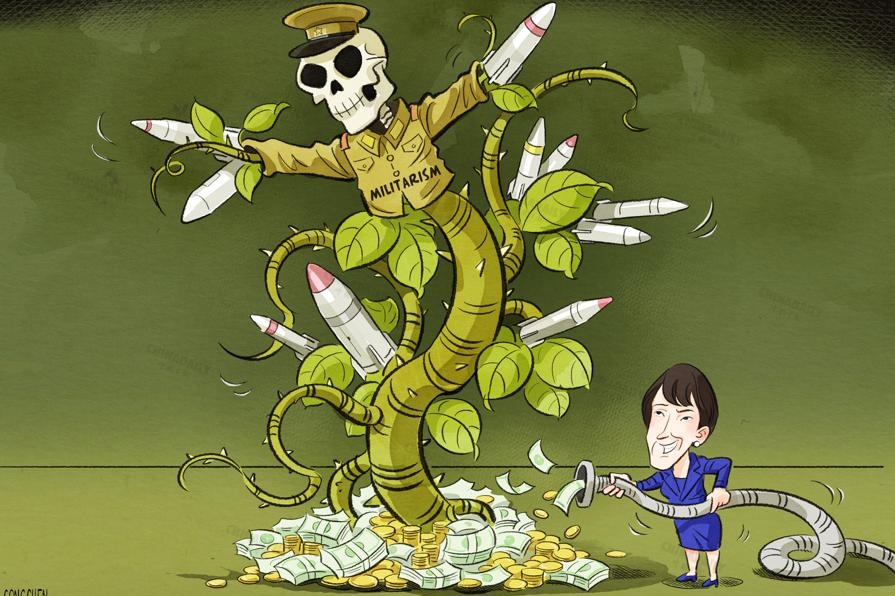
Although the US has historically regarded itself as a special member of the international community to undermine the rules, the world’s attention falls on this year’s US government, which holds high the banner of “American first” and rejects its long-term contractual spirit of social core values, slipping into the "anti-contract trap" without any scruples.
As we all know, the voluntary conclusion of contracts and the conviction of promises are an important foundation of the modern market economy. Based on the spirit of contract, countries promote the complementary and free flow of production factors and promote the development of economic globalization. Over the years, developed countries and developing countries have formed a cycle of economic factors, including advanced technologies, low-cost labor, natural resources and other economic factors in accordance with economic laws and commercial voluntary principles to promote global economic growth.
However, the White House nowadays have disregarded this basic historical fact, and frequently made remarks, accusing the current international rules of being unfair and letting the United States suffer. The Sino-US economic and trade exchanges are based entirely on market principles, and the technical exchanges and cooperation between Chinese and American companies are based entirely on commercial contracts. The White House has unreasonably conducted Section 301 investigation on China and imposed tariffs, which however neither complies with the performance obligations of the parties that abide by international rules, nor respects the contractual results of the enterprises that are the mainstay of economic and trade cooperation. It also does not abide by commercial credit, disrupting the global division of labor and cooperation, and undermining the foundation of the market economy's conviction.
Fair competition is an important cornerstone of the development of the market economy and an important prerequisite for promoting the effective role of the market. Interfering with the legitimate and independent management rights of enterprises through administrative power will disrupt market order and distort resource allocation. In the past year or so, the US has engaged in investment restrictions and has vetoed many foreign M&A transactions. The US government has even begun to directly intervene specific investment activities of US companies and foreign companies, infringing on the right of enterprises to choose independently. For example, in the choice of business sites, the White House forced the US Ford Motor Company to change its global layout strategy and publicly put a threat on Harley's overseas plants. All this violates the long-standing principle of fair competition in the market economy, which has interfered with market and corporate expectations and undermined the orderly flow of cross-border capital. Freedom, equality and openness are the traditional concepts of modern market economy and important principles of economic globalization. The US government has continued to undermine the core values of the traditional political economy, stirring up unilateral trade protectionism, isolationism, and populism. Regarding the problems in the economic and trade field, the US does not look for its own reasons but shifts its responsibility to others. It also tries to work without international organizations to discriminate against others; it does not assume responsibility as the sole superpower in the world at all, but puts its domestic law on top of international law instead, trying to shift domestic contradictions outwards, triggering global disputes and economic disorder. On the one hand, the US government ignores the large profits of US companies in China, and on the other hand, it says it worries that the US companies investing in China are required to conduct “compulsory technology transfer” which will affect their technological leadership. For one, they hope that Chinese companies will invest in the US to create more "rice bowl" in the local job market, but for another, it shows fear of “acquirement of advanced technology and intellectual property rights under government intervention,” hence creating obstacles to technical cooperation between Chinese and American companies. All kinds of behaviors show they only want to take advantage of the benefits but are reluctant to bear obligations. All these have seriously affected the normal trade investment activities of enterprises, increased the uncertainty of business operations, and are not conducive to the US to further attract foreign investment. In addition, it is also not conducive for American companies to share global trade cakes, but will instead raise the spending costs of US consumer.
A good order is the foundation of all good things. An important reason why economic globalization can benefit people of all countries is that it can build a set of institutional frameworks, including international economic and trade rules after long-term efforts and continuous efforts. For a huge system like the world economy, order is as indispensable to the system as sunshine and air to lives. It is the common responsibility and obligation of all countries in the world to abide by the maintenance of international rules in the spirit of contract.
According to a study by the WTO, the world’s largest economy US is by far the largest unruly member, as two-thirds of all violations in the system are caused by the US. It is a typical action of pragmatism and strategic shortsightedness if one follows the rules when one can benefit from it but desert all rules when one cannot win from the system.