China and LAC: How the twain can meet







The distance between China and Latin America and the Caribbean (LAC) often appears so vast that it is difficult to remain optimistic about the future of relations between both sides.
The distance between the two takes many shapes. Geographic distance is one such manifestation. I often hear from colleagues who would much rather travel to other regions of the world rather than take the 20-hour flight across the Pacific Ocean. In the Spanish language, people even say that someone “is in China” to mean that a person is very far away.
But it is the distance in the collective imagination of both peoples that is even more intense and problematic. This stems from a perception that because of history, language, customs, and religion, the two sides share very little in common.
Given these challenges, how can China and LAC deepen their relations today at a time when both sides stand to gain so much from working together on issues of common interest?
I recently visited the National Museum of China and while there I stumbled upon an exhibition that left some deep impressions on how to answer this complex question.
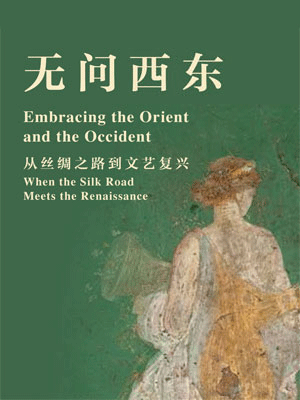
The exhibition, titled “Embracing the Orient and the Occident: When the Silk Road Meets the Renaissance,” brings together 200 cultural relics and artworks collected from dozens of Italian and Chinese museums to tell a story of commonality between East and West—and all the communities in-between—woven together by the exchange that took place over centuries along the ancient Silk Roads.
The curator, Li Jun, professor in the Central Academy of Fine Arts, starts the exhibition with a famous quote by the British poet and imperialist J.R. Kipling: “Oh, East is East, and West is West, and never the twain shall meet…” The exhibition proceeds to unravel Kipling’s assertion by showing the endless ways in which Eastern and Western civilizations met again and again, inspiring and intimately intermingling with each other.
Silk, of course, plays a central role in this story. One of the earliest works in the collection, the 1st century CE fresco Flora di Stabia, shows a woman with her back turned, walking away with flowing silken robes as she picks a flower from the side of the road.
Beyond silk, goods like ceramics and the compass, images like that of the lotus and phoenix, ideas like Buddhism and Christianity, and famous personages like Zheng He and Mateo Ricci all had their own role to play in creating what the curator describes as “a Renaissance that was cross-cultural in nature.”
In the same way that the exhibition puts on display the many East-West intersections produced by trade and exchange over the Silk Road, we should also pay greater heed to the areas of overlap between China and LAC. This will reveal that the things that keep both sides together are stronger than those that would otherwise keep them apart.
The exchange that has taken place over close to 500 years between the two sides has already produced many bridges that are fertile ground for study. Take food as an example. Many ingredients in famous Chinese dishes trace their origins to the American continent, including potatoes, peanuts, tomatoes, and chili peppers. Meanwhile, maize allowed the Chinese to open new areas of the country to agriculture and habitation, particularly in China’s west around the area of Sichuan. Chinese dishes, for their part, have entered the LAC palate and been transformed by local tastes, producing fascinating hybrids, like the chifa of Peruvian cuisine.
Migration patterns have also done much to bridge the China-LAC gap. While much of the historical migration of Chinese to the region happened under conditions of hardship, it is an undeniable fact that Chinese were central—even indispensable—to the building of the modern LAC region. In the construction of the Panama Canal, the opening of saltpeter mines in Chile, the sugar plantations of Cuba, and the retail industry in Argentina, hybrid Chinese were there and played a decisive role.
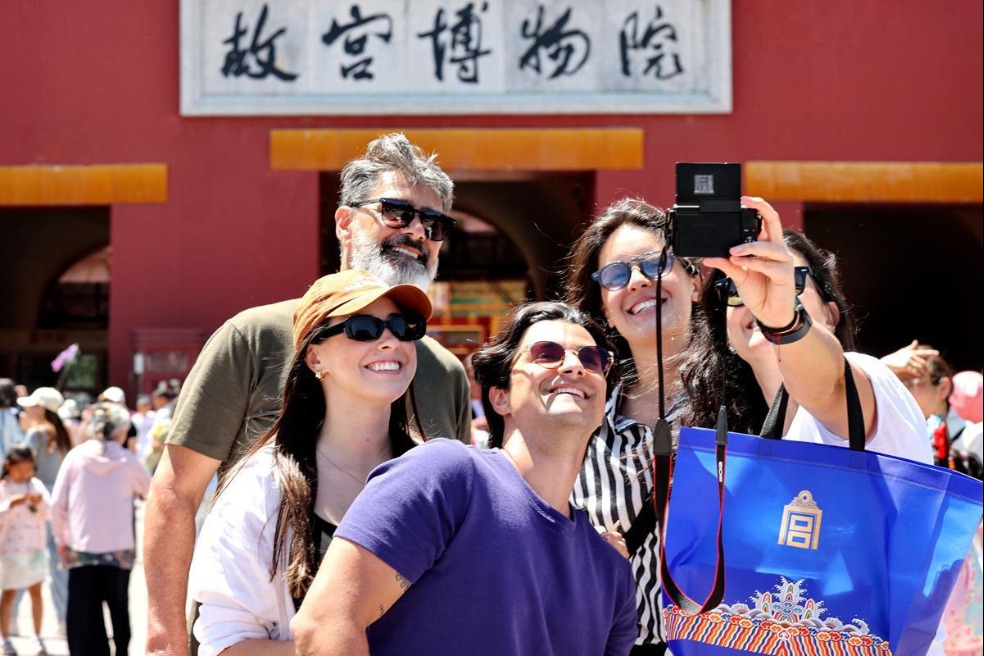
Today, bilateral migration is stronger than ever, with an estimated 1.21 million overseas Chinese in LAC and more and more people from the region traveling to China to study, work, and visit, including through exchange programs like “Puentes para el Futuro.” The close to 40 Confucius Institutes in the region, as well as the ubiquity of high-quality Chinese products from brands like Huawei, Lenovo, and FAW, have come to complement the historic Chinatowns of Lima, Mexico City, Havana, and Buenos Aires as the markers of long-standing bonds between the peoples of China and LAC.
Giving priority to these and other bridges in the building of the Sino-LAC relationship will then be key in dispelling the distances—real and imagined—that often get in the way of a genuine partnership between us.
But we can and should go a step further, for our people share more than just some occasional encounters. China and the LAC region have always been connected by deeper interests and values. Both peoples alike value the idea of community, show high regard for the family, respect authority, desire autonomy in their search for paths that correspond to their national conditions, and dream of development—in these and other ways, Latin Americans and Chinese are really one peoples, the basis for an authentic community of common destiny.
Distances can be challenging, and they cannot be easily overcome. In describing the China-LAC relationship, however, we can confidently refer to the Tang dynasty poet Wang Bo’s words when sending off a dear friend: 海內存知己,天涯若比鄰 (A bosom friend afar brings a distant land near).
The author is a professor and researcher specializing in international relations at Universidad Externado de Colombia.
The opinions expressed here are those of the writer and do not represent the views of China Daily and China Daily website.