Benefits flow from river that nurtures







Editor's note: The development of the Yangtze River Economic Belt, which covers 11 provincial regions whose combined GDP accounts for more than 40 percent of the country's total, is a key strategy for national development. Starting today, China Daily reporters traveling along the river will bring you stories of how local people are developing the economy while preserving this mother river.
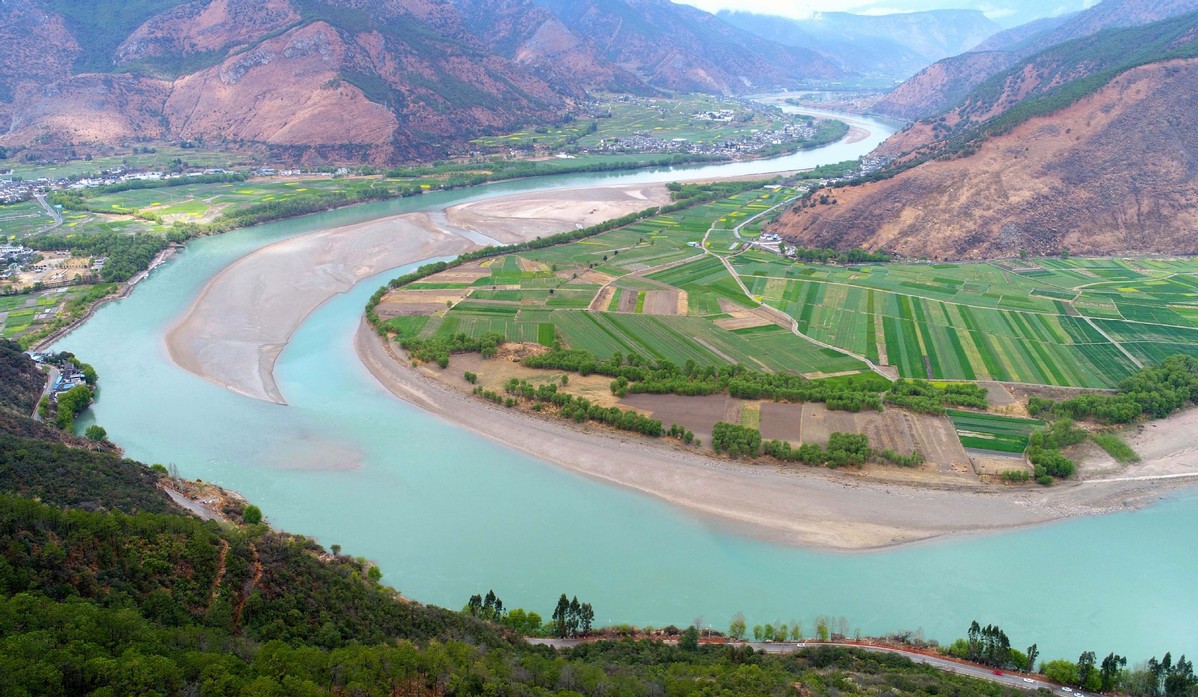
Lijiang, a city in northwestern Yunnan province known for its beautiful scenery and unique culture of the Naxi ethnic group, has sought to integrate into the Yangtze River Economic Belt through green development, according to local officials.
The Jinsha River, as the upper stretches of the Yangtze River are known, runs through Lijiang, and this section, which is around 600 kilometers long, accounts for about one-tenth of the total length of the Yangtze.
"In the strategy of the Yangtze River Economic Belt, Lijiang forms an important barrier for the ecological security of the middle and lower reaches of the Yangtze River, due to its special location," said the city's top official, Cui Maohu, who is secretary of the Communist Party of China's Lijiang committee.
The city has paid great attention in recent years to protection of the local environment and the development of the green economy, especially in areas along the Jinsha River, he said.
Residents in villages alongside the river in Lijiang, who know the importance of ecological health, began planting willow trees on the river's banks in the 1960s. A total of 3.5 million willows were planted in towns along the Jinsha in Lijiang's Yulong county, according to government figures.
In the beginning, some farmers planted willows to shield crops from wind and to keep the banks from collapsing during floods. Gradually, the villagers understood the benefits of doing so and started to plant trees extensively on the banks.
He Zezhou, a 77-year-old villager, has grown nearly 1,000 willow trees over the past 30 years, and he continues to plant them each year. Now the younger generations are involved in the annual campaign, which has become a village tradition, He said.
"Ecology is so important. It is a foundation for many other developments," He said. "The river is our fosterer. We need its water for irrigation, but we also need to make it healthier so it won't hurt us." The planted willows have successfully stopped the banks from collapsing, even during heavy floods, he said.
He added that since the village has paid more attention to the environment, an increasing number of tourists are willing to visit the village, and this has also benefited his family's restaurant, which brings in an annual income of more than 100,000 yuan ($14,770).
Lijiang's forest coverage has increased from 64.8 percent to 74.4 percent over the past 18 years, thanks to prolonged ecological campaigns, such as the return of grain plots to forestry and protection of natural forests, according to the city's bureau of forestry.
In addition, the local government is planning to build around 100 demonstration villages of green agriculture and tourism, Cui said.
Many residents of Shigu village have taken full advantage of local natural resources, as well as the suitable weather, to promote a "courtyard economy" and a fruit economy-which are more environmentally friendly than traditional agriculture.