Greater bay area making global waves







Dynamic trading region aims to become major economic driver
In the Pearl River Delta in South China, two mammoth projects are nearing completion, and when they are finished they will constitute the final stages of the transportation backbone of one of the most dynamic trading regions in the world.
The Guangdong-Hong Kong-Macao Greater Bay Area, made up of nine cities in Guangdong province plus the special administrative regions of Hong Kong and Macao, will become the largest of the world's top four bay area commercial regions as well as a top industrial, high-tech, financial and transportation zone.
By the end of this year, travel time by high-speed rail between Hong Kong and Guangzhou South Station will be reduced to 48 minutes, cutting an hour from the current travel time on the Guangzhou-Kowloon line.
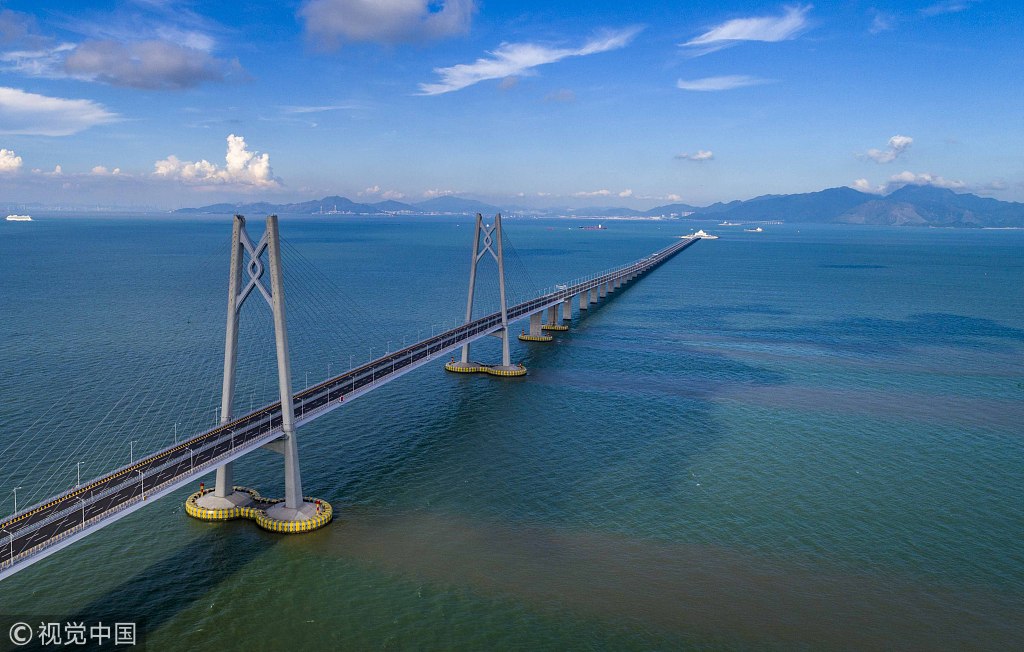
Meanwhile, the 120 billion yuan ($18.4 billion) Hong Kong-Zhuhai-Macao Bridge will become a key link along an expressway between Hong Kong and western Guangdong.
The bridge is expected to carry 29,100 vehicles and 126,000 passengers daily by 2030, and 42,000 vehicles and 175,000 passengers per day by 2037.
In October, Xi Jinping, general secretary of the Communist Party of China Central Committee, said in his report to the 19th CPC National Congress that the central government would give priority to developing the Greater Bay Area, and boost cooperation between Guangdong, Hong Kong and Macao, in order to enhance regional cooperation throughout the Pearl delta.
"We will formulate and improve policies and measures to make it more convenient for people from Hong Kong and Macao to develop careers on the mainland," Xi said.
At about 56,000 square kilometers, the Greater Bay Area is larger than Tokyo Bay, the second-largest bay area worldwide, at about 36,900 sq km. It is more than two times larger than the New York Metropolitan (21,500 sq km) and San Francisco Bay (17,900 sq km) areas, according to the Hong Kong Trade and Development Council.
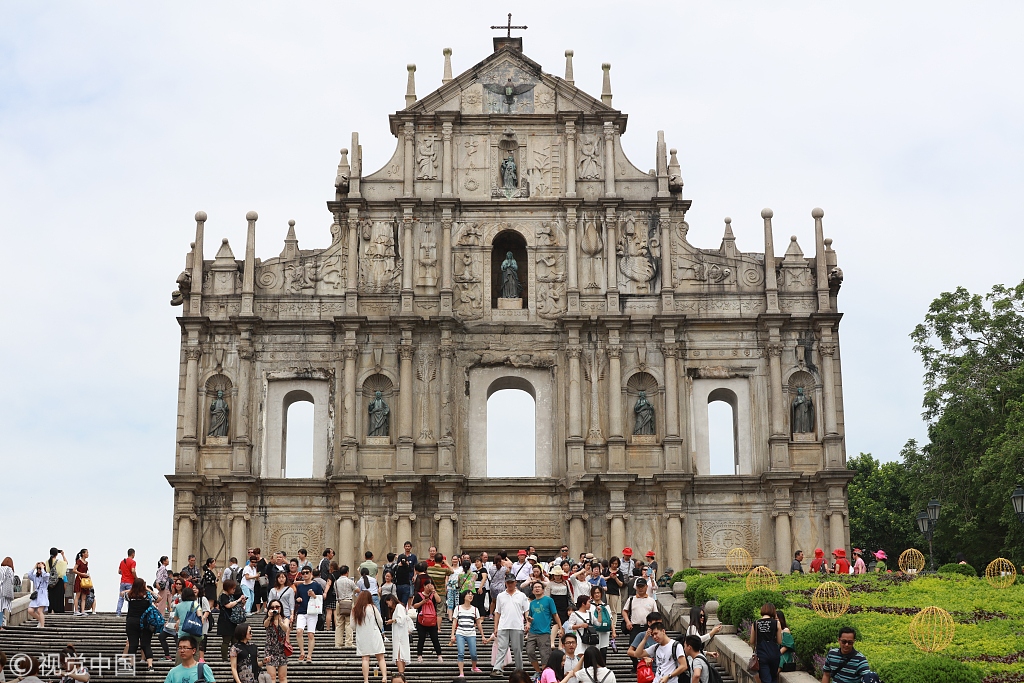
The Greater Bay Area population is estimated at about 68 million, more than the population of France, one of the world's wealthiest industrialized nations. Last year, the total GDP contributed by all 11 cities in the Bay Area stood at 11.7 trillion yuan. According to the latest estimate by real estate consulting firm CBRE, the Greater Bay Area will become the world's top bay area by 2020, when its regional GDP will surpass that of all other bay areas.
It is estimated that about 60 percent of the global economy is generated in river delta regions, according to the World Bank. In the Tokyo Bay Area, the integrated hub covers only a small percentage of Japan's land mass. In 2015, the region's GDP was $1.77 trillion, accounting for more than one-third of Japan's GDP of $4.4 trillion at the time.
The San Francisco Bay Area is hailed as the world's leading center for high technology and technology startups. Several international tech giants, including Google, Apple and Intel, have their headquarters there.
The Guangdong-Hong Kong-Macao Greater Bay Area has become a hot topic among businessmen, politicians and scientists. The buzz is not confined to the Bay Area, however, but reaches around the globe as corporations seek new opportunities in innovation and technology, international trade, finance and shipping.
Novelist and Nobel laureate in literature Mo Yan sees the vibrant interaction in Guangdong, Hong Kong and Macao as the key to innovation.
"It works like cooler and warmer waters colliding under the ocean surface, where the intersection breeds a wide diversity of aquatic species," Mo said.
Reduced travel times will lead to more vigorous exchanges among business experts, entrepreneurs, academics and new graduates, becoming the engine for fresh synergy, greater collaboration and new ideas.
The cities in the Bay Area, commonly known as the"9+2", comprise the Guangdong province cities of Guangzhou, Shenzhen, Zhuhai, Foshan, Zhongshan, Dongguan, Huizhou, Jiangmen and Zhaoqing, plus the two special administrative regions of Hong Kong and Macao. Hong Kong, Guangzhou and Shenzhen have dominated the region for decades, with the highest GDPs and economic growth.
Last year, Shenzhen generated record annual GDP of 2.2 trillion yuan, eclipsing Hong Kong and Guangzhou, both of which reported GDP of 2.15 trillion yuan.
However, Hong Kong continues to play a major role as one of the world's leading financial centers. There is also an overflow of technological companies from Hong Kong into Shenzhen. The vibrant import-export market of Guangzhou gives the Bay Area an early advantage in the race with global competitors.

- US defense policy act fuels Taiwan tensions
- New Year holiday to bring peak in travel
- China's top 10 sci-tech news events unveiled
- Over 700 generative AI large model products complete filing in China
- Beijing accuses Lai of 'kowtowing' to US
- Hong Kong's global standing boosted with increasing presence of intl organizations: justice secretary