Belt, Road can ignite Africa’s industrial revolution







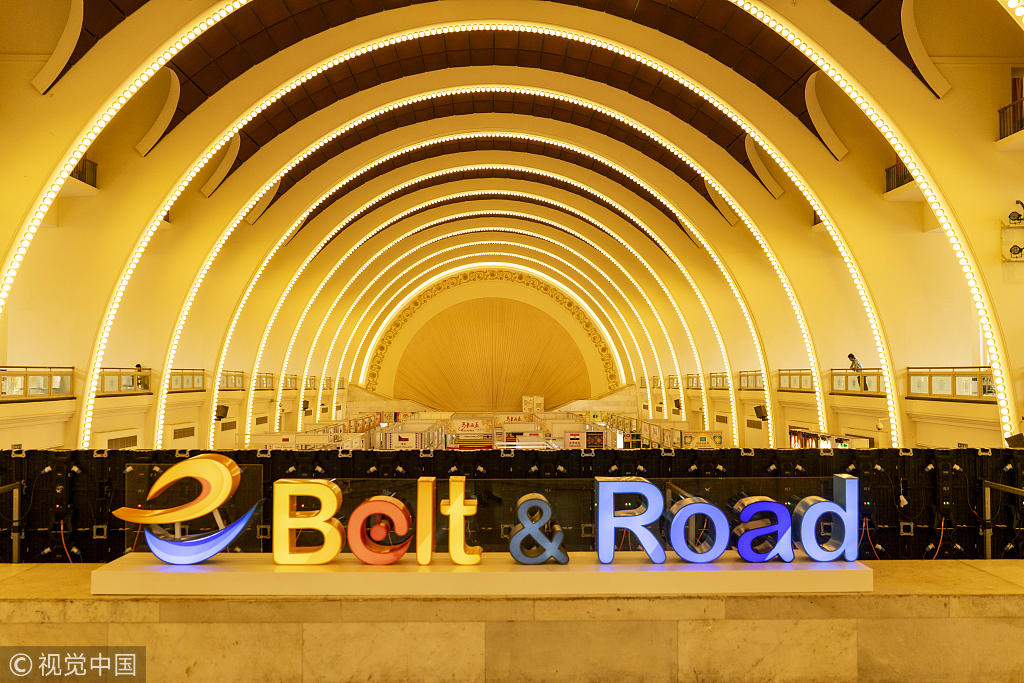
As more African countries embrace China’s Belt and Road Initiative (BRI), chances are, it has the potential to kick-start the long-awaited industrial revolution on the continent, if leaders can make concerted efforts to seize the opportunity. This could eventually dispel the notion of Africa’s development being an enigma to the world.
In order to seize and maximize that opportunity, African countries that do not wish to be left out in the next wave of industrial revolution should strategically position their economies to connect with the BRI, a key policy initiative which seeks to revive the ancient Silk Road on land and water.
While the ancient maritime Silk Road reached as far as the eastern coast of Africa, the modern version promises to reach deep into the continent, open up economies, create employment, reduce inequality, unlock opportunities in infrastructural development, and in the process create a community of common destiny and shared prosperity as espoused by President Xi Jinping.
At the core of the BRI are two physical routes -- the Silk Road Economic Belt, stretching from Asia to Europe, and the 21st Century Maritime Silk Road that begins in China and passes along the Indian Ocean to East Africa and then Europe.
Government officials from China have stated that the initiative will not be restrictive but open to all nations without limits on geography, thereby expanding the historical scope of the Silk Road.
Although many countries in Africa are not officially linked to the proposed routes, it is expected that the impact could be felt across the continent due to the massive financial ambition described as China’s commitment to take on more global responsibilities, as the country underwrites billions of dollars in infrastructure investment on projects along the routes.
Since its commencement five years ago, the BRI has garnered interest from over 70 countries so far, with an increasing number of countries in Africa expressing interest in the initiative, which seeks to build a network of infrastructures -- including highways, railways, bridges, seaports and industrial parks -- along the route. The initiative complements the African Union’s Agenda 2063, which aims to accelerate regional integration and develop sustainable economies.
African countries that have currently signed onto the BRI include Egypt, Ethiopia, Djibouti, Senegal, South Africa, Libya, Morocco, Tunisia, Tanzania, Kenya and Cote d'Ivoire. Others have expressed their desire to participate in the BRI, such as Mauritius and Rwanda. Ngozi Okonjo-Iweala, the former finance minister of Nigeria, has urged African countries to get involved in the initiative as it seeks to improve connectivity and infrastructure.
In a 2016 interview with Xinhua News Agency, Togolese President Faure Gnassingbe disclosed his country’s desire to become the "anchor point" in West Africa for the BRI.
Lt. Gen. Charles Kayonga, Rwanda’s ambassador to China, has praised the initiative and is optimistic that it would serve as a platform for Africa to grow with the rest of the world.
Ghana's Foreign Minister Shirley Ayorkor Botchwey who was in Beijing in June, told China’s State Councilor and Foreign Minister Wang Yi that Ghana will support the BRI and is willing to carry forward bilateral friendship, learn from China's development experience and strengthen varied cooperation with China.
To date, projects in Africa have begun earnestly since the inception of the initiative, with some near completion and others currently underway. The first phase of the standard gauge railway project -- from Mombasa in Kenya through Uganda to Rwanda and potentially to Burundi and Democratic Republic of Congo-- has been completed and is enjoying praise within the subregion. A $4 billion railway between Djibouti to Addis Ababa, the continent’s first transnational electric railway, has also been completed and put into operation.
In July, Djibouti opened the first phase of the Djibouti International Free Trade Zone (DIFTZ), a $3.5 billion project that spans an area of 4,800 hectares. Regarded as Africa’s largest free trade zone, the $370 million, 240-hectare pilot zone consists of four industrial clusters which will focus on trade and logistics, export processing, business and financial support services, as well as manufacturing and duty-free merchandise retail.
Chinese investment in special economic zones co-developed by Chinese companies and the Ethiopian government is on the increase, establishing Ethiopia as a potential center of garment manufacture in Africa.
Analysts say that through this initiative, China is sharing with the involved countries the dividends from its development and reform, as well as its experiences and lessons learned in growth. China, in the process, is transferring abroad its competitive production capacity and industries with comparative advantages.
This will help narrow the gap between developed countries and less-developed countries, improve the production capacity of participating countries and remove trade blocks. It is in this regard that African countries should position their economies toward this wind of change that has begun to blow across the continent in order to ignite an industrial revolution.
To successfully benefit from the initiative, opposing factions and political parties in Africa should settle their political differences and enhance mutual trust. Countries should define the right targets, set the right priorities, and design the right operating models to work together. Difficulties may arise due to varying economic cultures and other potential roadblocks. However, it is incumbent on governments to create an enabling environment for projects to succeed, and that includes providing adequate security to protect the investment environment.
It is also important that participating countries build multilevel intergovernmental policies and communication mechanisms to bridge their economic development strategies with each other. Countries should work out plans and measures for regional cooperation, negotiate to solve cooperation-related issues, and provide policy support for the implementation of large-scale projects. It is only through these concerted efforts that countries on the continent can easily adjust their development agendas, take advantage of the opportunities of the BRI and roll out a continentwide industrial revolution.
The author is a freelance journalist from Ghana.
The opinions expressed here are those of the writer and do not represent the views of China Daily and China Daily website.