Yangtze River valley gleams in ecology protection plan







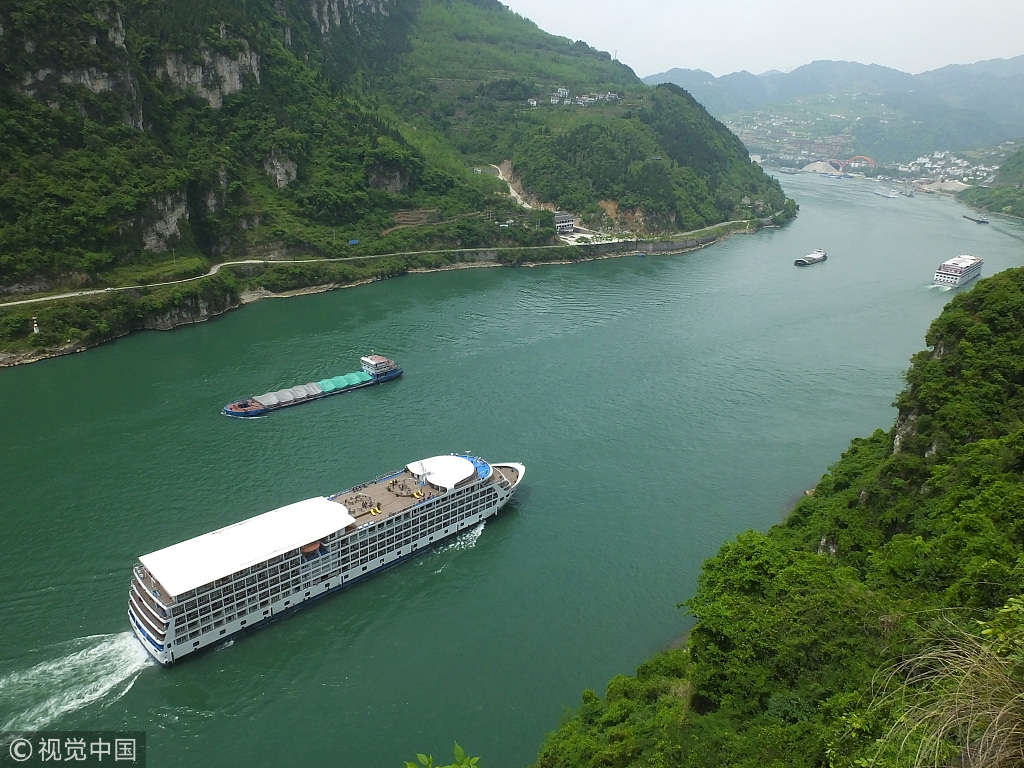
For two consecutive years, the Changjiang Water Resources Commission of the Ministry of Water Resources, along with the relevant departments of the provinces in the Yangtze River valley, has carried out a series of "physical examinations" to check the health of the river. Based on these tests, the program for the protection and rehabilitation of the Yangtze River valley's ecological environment and the three-year action plan (2018-20) were worked out in March.
With less than one-fifth of China's land area, the Yangtze River valley produces one-third of the country's food, accounts for one-third of its GDP and is home to more than one half of its inland river navigation mileage, making it an important driver of China's economic growth, which in turn will help realize the Chinese Dream.
But China's rapid economic and social development and its huge population have greatly increased the load on the Yangtze River, making its protection and rehabilitation all the more important.
Fortunately, the top authorities realize the need to protect the Yangtze River valley's ecology and ensure its sustainable development. Addressing a meeting in Chongqing on Jan 5, 2016, to promote the Yangtze River Economic Belt, President Xi Jinping said the rehabilitation of the Yangtze River's ecological environment is an important task and no extensive development will be allowed along the belt. Thanks to his guidance, for the past more than two years, the water conservancy departments have prioritized ecological protection while improving channels, building water allocation projects, and adjusting river-lake relations and thus have strengthened the ecological construction of the valley.
A series of incisive policies and plans, such as the special water conservancy plan for the Yangtze River Economic Belt, the general plan for the protection and exploitation of the river's shoreline, and the plan for the distribution of water, sewage outlets and emergency water sources along the belt, have yielded great results. For example, the strictest water resources management system has been adopted for the Yangtze River valley.
Besides, a unified water volume regulation and management system, as well as a series of targeted measures have been put in place to strictly control the flow of pollutants into the river. Concrete measures have also been taken to strengthen approval, supervision and management for the use of river and lake shorelines in the valley. And a negative list for market access for shoreline development has been introduced.
Also, accelerated legislation on Yangtze River protection and a series of studies on water resources protection and ecological rehabilitation technologies are expected to provide better protection for the river.
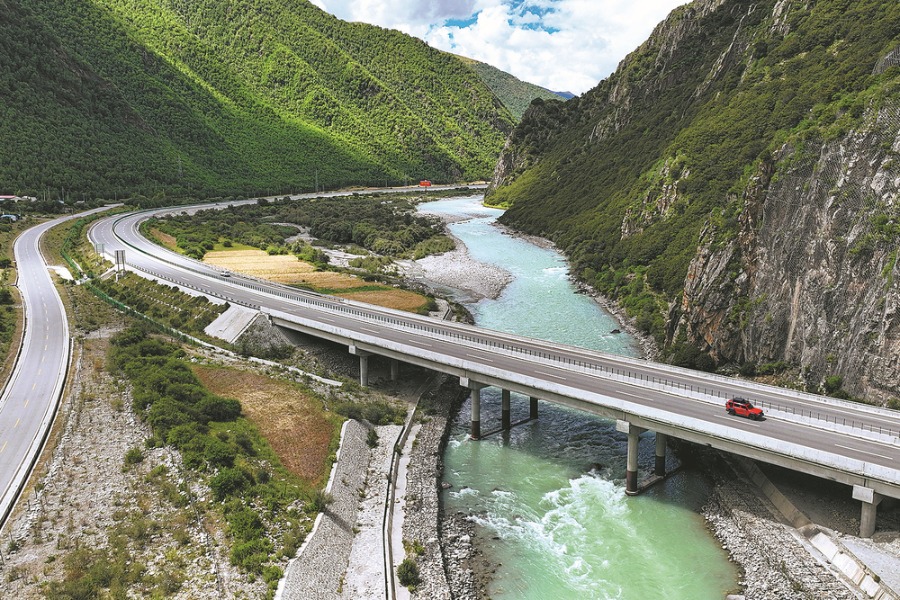
Owing to such policy measures and efforts, the Yangtze River valley's ecological environment has improved, with the water quality in 95 percent of the river's trunk stream meeting or exceeding the grade-III standard, and 90,000 square kilometers of land is being treated for soil loss. The number of reservoirs included in the joint operation of the upper and middle reaches of the river increased from 10 in 2012 to 40 in 2018, preventing floods in 2012, 2016 and 2017 from causing havoc. In addition, the reservoirs have boosted power generation, water supply and ecological protection.
But the protection and development of the Yangtze River still face some severe problems, including insufficient water supply in some areas, low dike standards of some tributary lakes, slow pace of construction of water storage and flood water diversion facilities in some areas, frequent landslides in mountainous areas, and serious waterlogging in some urban areas. Which shows the protection and development of the river is a tough and protracted battle that requires good top-level design, as well as sound efforts and measures.
Encouragingly, the recipe prescribed by Xi in Wuhan, Central China's Hubei province, on April 26, offers a practical approach and a clearer path for the protection of the Yangtze River and the development of the Yangtze River Economic Belt.
The author is a writer with China Daily.