Tencent looks to tap smart transport







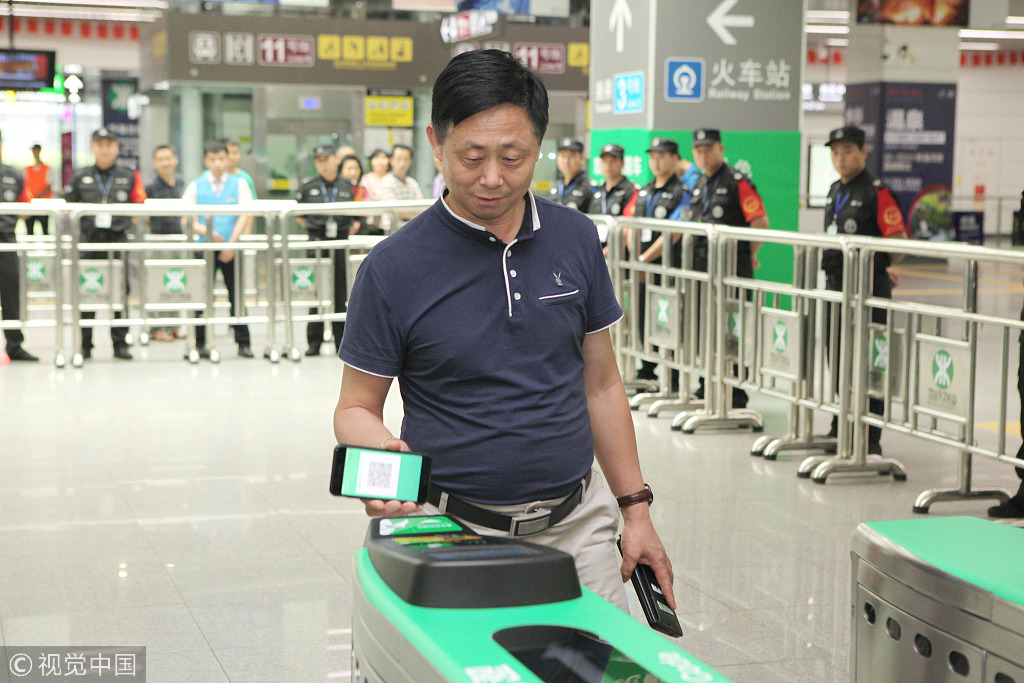
Chinese tech conglomerate Tencent Holdings Ltd is expanding its QR code payments, bus hailing and intelligent travel assistance, in an effort to grab a slice of China's burgeoning smart transportation market.
The Shenzhen-based company has ramped up efforts to promote the digitalization of China's public transport sector, and is working with local governments, bus and subway companies to promote its QR code payment.
Rather than swiping public transportation cards, or queuing for tickets to pay for journeys, commuters simply scan a QR code generated on their phones via a smartphone app. Since being launched in 2017, its QR code payment service for buses, subways and ferries have expanded to cover more than 50 million users in 100 cities, and the firm is eyeing further gains.
"Transportation is a very important area for Tencent's exploration of the industrial internet. We hope to utilize our technological achievements over the past two decades to become a digital assistant to the public transportation industry," said Zheng Haojian, Tencent's vice-president, in a forum on smart transportation in Beijing.
He added that intelligent transport technology could help improve traffic congestion, and the market had huge room for growth.
As part of the push, Tencent has signed an agreement with Shenzhen Airlines to allow passengers to use QR codes for security checks and boarding planes. The partners will also carry out cooperation in big data, cloud computing and artificial intelligence.
Tencent is also piloting a bus hailing business in Zhengzhou, the capital of Henan province, and exploring the application of cloud computing and big data in analyzing real-time traffic data for smarter transport management.
Fellow tech conglomerate Alibaba Group Holding Ltd is also eyeing public transportation systems, with its digital payment method Alipay.
So far, users can use Alipay on a range of metro systems, including those in Beijing, Shanghai, Xi'an and Hangzhou.
As of May, Alibaba said its digital wallet was also accepted on buses in 50 cities, with 50 more target within next year.
Competition between the two giants is intense, with both trying to assert their own system as the digital wallet of choice in scenarios ranging from bike-sharing, to ride-hailing, to e-commerce, to money transfers.
More than 60 percent of Chinese people have used smart transportation services such as online ride-hailing and mobile maps, while 36.1 percent of travelers pay for public transit with QR codes, according to a report released by a think tank of Tencent Financial Technology earlier this month.