Mosuo, the 'kingdom of women'







China Reform and Opening – Forty Years in Perspective
Mosuo, the "kingdomof women"
Editor's note: Laurence Brahm, first came to China as a fresh university exchange student from the US in 1981 and he has spent much of the past three and a half decades living and working in the country. He has been a lawyer, a writer, and now he is Founding Director of Himalayan Consensus and a Senior International Fellow at the Center for China and Globalization.
He has captured his own story and the nation's journey in China Reform and Opening – Forty Years in Perspective. China Daily is running a series of articles every Thursday starting from May 24 that reveal the changes that have taken place in the country in the past four decades. Starting this month, China Daily will run two articles from this series each week – on Tuesday and Thursday. Keep track of the story by following us.
After climbing narrow passes through the land of the Yi tribes, one arrives at the Lugu Lake coming over the crest of a mountain. The lake spreads like a vast mirror exuding calm upon its waters.
The Lugu Lake is home to the Mosuo "kingdom of women", arguably the last matriarchal society left in this world. They adopted many Tibetan customs and practice Tibetan Buddhism.
Their sacred mountain is Ge Mu. It is a female spirit that rises beside the lake, reflecting their values and social hierarchy. The lake is their mother, the mountain their protector spirit. The Mosuo people love their lake and mountain.
In olden days, men plied the Tea Caravan Trail and women stayed behind. That is how they came to rule their society. While many customs are considered ancient, much of their thinking is quite modern. Actually, it would be considered avant-garde, cutting edge in most Western societies, where a medieval morality still rules.
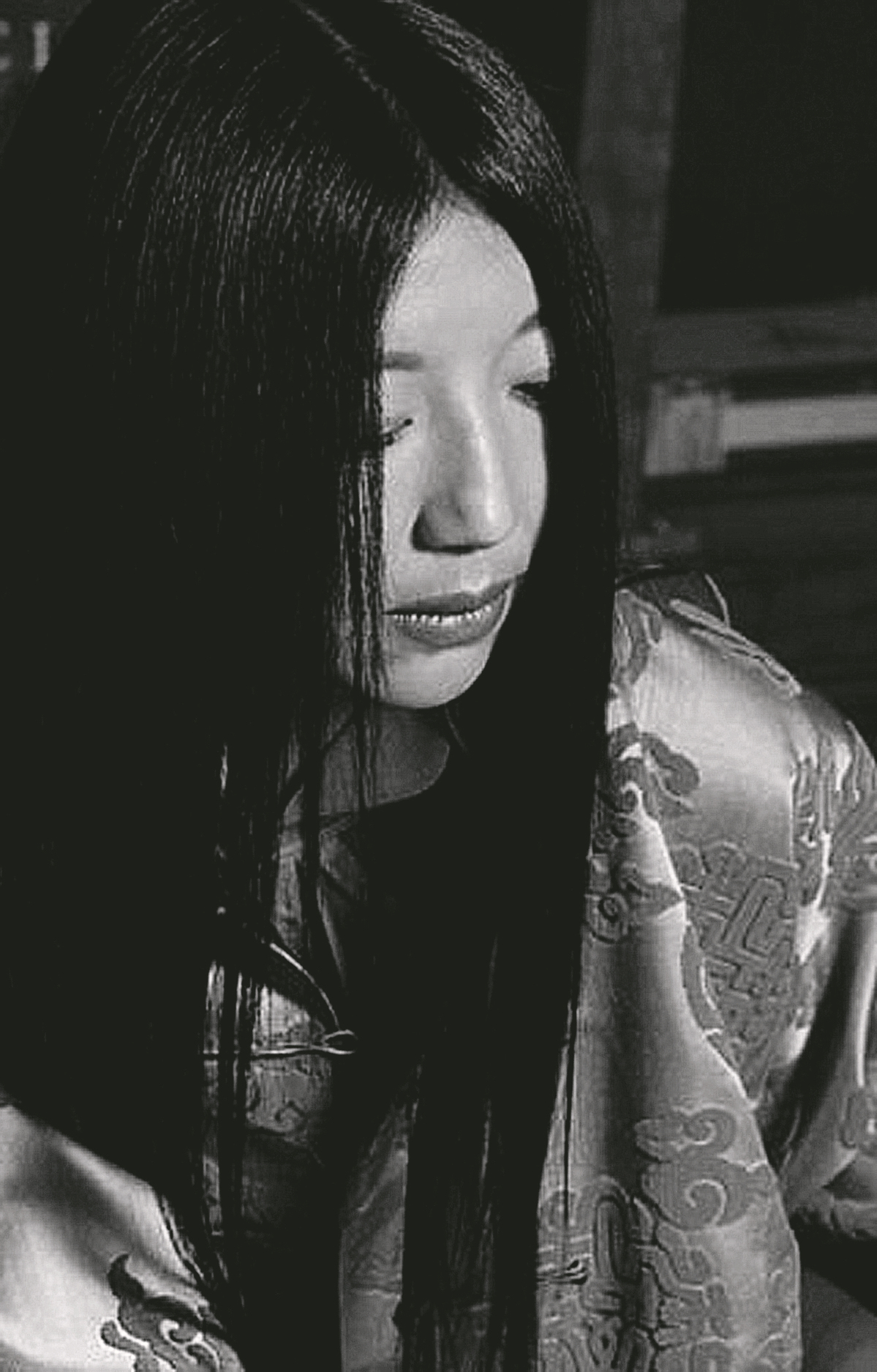
I first heard of the Mosuo people and the Lugu Lake from Yangerche Namu. She left Lugu — the Mother Lake — as a teenager, wandered to Shanghai, then to Beijing to the National Minorities University. After graduating, she became a performer, author and then celebrity.
The Mosuo "nation of women" is arguably the world's last true matriarchal society. At the Lugu Lake, women rule. The women choose their lovers, but never have husbands. Children never know their fathers and do not care. Property is held by women, not men, and passed from mother to daughter.
"Zouhun" ("walking marriage") is the tradition where a Mosuo girl chooses or changes her lover. Mosuo homes have a "flower chamber" built near the entrance of their courtyard houses that is separated from the main compound. A young girl will signal interest to a potential lover by touching the palm of his hand with her fingertips. Then she will stay in the flower chamber that night. Her lover can visit her after dark and leave before sunrise through a "backdoor", which every Mosuo home has for this purpose.
Yangerche Namu's home is a large traditional Mosuo two-tiered courtyard, which doubles as a guesthouse. It is far from the tourist village, built alongside the Sichuan border of the Lugu Lake, with the Mosuo's sacred mountain shadowing behind.
"In Han culture, the dragon is on top and phoenix on the bottom," Yangerche Namu said, pushing long black hair aside with her fingernail. "In Mosuo society, the phoenix is on top and the dragon on the bottom."
"You were born here, but now live in Beijing most of the time," I asked. "Where do you prefer to be?"
"This is my home — clear, healthy, warm, together. The whole society should be like this family of mine — warm and happy together."
"Why isn't society that way?"
"It has forgotten that women are the nucleus of society." "Women?" I asked.
"The women!" she said forcefully, making a fist.
"So is this the last matriarchal society?"
"Our tradition is strong but under some threats," she sighed, then laughed again. "When the door opens to the tourists and everybody comes, there will be some problems in keeping our traditions, though maybe not that much. Because even when more Mosuo leave home and come out just like me, they will find that some things at home are good and better than elsewhere. We have peace and love in our lives."
"I have been following the Tea Caravan Trail," I explained. "In each section, there are sacred mountains. For the Bai people, it is the Cang Mountain beside the Erhai Lake. In Lijiang, the Jade Dragon Mountain is sacred to the Naxi. Here at the Lugu Lake, do the Mosuo have a sacred mountain as well? "
"For us Mosuo, we have a Female Spirit Mountain. Ge Mu is the Mosuo people’s sacred mountain. It rises beside the Mother Lake. The mountain is possessed by a female spirit named Ge Mu. She was once a pretty Mosuo girl, who grew up beside the lake, working the land together with other Mosuo women. One day, they were tilling the land beside the Lugu Lake when Heaven knew about Ge Mu and wanted her. Rumors spread through villages that Heaven may have fallen in love with her beauty. But nobody could prove the rumors. One day, through a cloudburst, Heaven descended to earth, sweeping Ge Mu into the sky. As she flew under the arms of Heaven's gusts, she cried to her people below. The villages gathered around the lake and cried back, seeing Ge Mu between the clouds."
They screamed, calling her back and disrupted the force of Heaven's wind that was carrying Ge Mu aloft. She fell tumbling from the sky back to her people, and small dots along the crest of lake started clustering like ants along the edge of an orange peel. As she fell headlong toward earth, her body disintegrated and re-formed, becoming the sacred mountain. Yangerche Namu had described along the Sichuan side of the Lugu Lake.
The Lugu Lake is pure water suspended above the mountains. It is an oasis of blue, and is a point of connectivity between sky and earth. Ge Mu flies into the sky and plays her flute. She is the protector of peace of the Mosuo people.
Yangerche Namu recalled among moments in life she enjoys the most, those sitting beside the lake late at night, meditating on the stars that cling to the darkness above. It is the best time to listen. Sometimes, you can hear the flute.
Please click here to read previous articles.