


Cultural relic restoration in need of repair as a trade







JINAN-Chen Genquan lays down the rasp, removes the sawdust and narrows his eyes to check a wooden chair that has regained its original glory.
Chen, 65, is one of the cultural relics repairers in the city of Qufu, the birthplace of Confucius in East China's Shandong province.
Confucius, who lived between 551 BC and 479 BC, was an educator and philosopher. He founded the school of Confucianism that has deeply influenced later Chinese generations.
"The key to repairing wooden artifacts lies in keeping their original appearance unchanged," Chen says.
He has worked in a cultural relics repair team for over 35 years.
The team is in charge of restoring ancient wooden buildings and artifacts for the Confucius Temple, the Confucius Family Mansion and the Confucius Cemetery, which together are a UNESCO World Heritage site and one of the three largest ancient building complexes in China.
Incredible craftsmanship
The sun rises on the same tidy yard and shines onto the three roofs of the 1,000-year-old Kuiwen Hall, a major building, which used to be a library in the Confucius Temple.
In 1985, the onerous task of fixing the structural problems of the hall fell upon the team's collective shoulders. This was the first large-scale restoration of the Kuiwen Hall since the Ming Dynasty (1368-1644).
During the restoration, most of the wooden components, especially the roof ridges, were repaired or replaced.
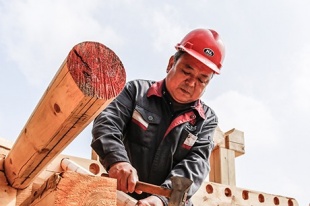
"Cultural relics are history within reach. As a repairer, I'm responsible for preserving that heritage," Chen says, adding he worked nine hours a day for two years to complete his part of the work.
Regular checks and restoration of the ancient wooden buildings are conducted twice a year by Chen's team to deal with problems such as erosion caused by humidity. Often, Chen and his colleagues have to go through dozens of historical books and materials before the restoration work can begin.
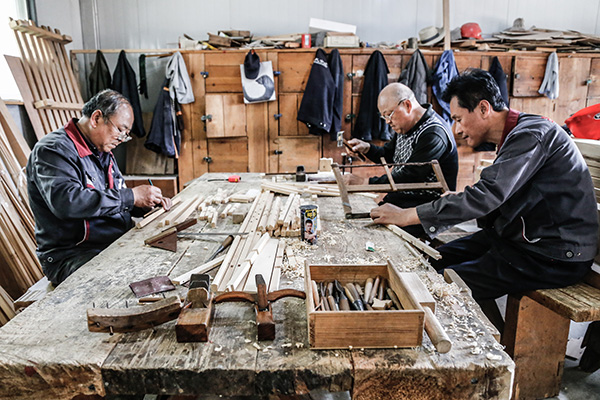
In the repair team's workshop, a stone's throw away from the Confucius Temple, a dozen experienced relic repairers are busy measuring, sawing and sanding, with tools and wooden boards scattered everywhere.
Chen's desk is located in the corner of the workshop, upon which books related to ancient building renovation are piled.
In the past, he could not afford to buy books and used to copy the books he borrowed. In 1987, he bought his first book for 6 yuan-three days worth of wages.
Artisans like Chen are in great demand in the industry. Chen and the 50 other members of his team are often invited to other places in the country to share their knowledge on the restoration of wooden relics.
"Their reputation not only comes from their techniques and experience, but also people's respect for their craftsmanship," says Kong Deming, deputy director of Qufu's ancient building project management bureau.
Talent shortage
Chen has seen many people come and go. In the 1990s, many colleagues left the team to build antique-style wooden buildings with private companies for higher salaries.
"I never thought about leaving. Cultural relic restoration has unrivaled meaning and value for me," Chen says.
A survey showed that more than half of the cultural relics in China are suffering from erosion of varying degrees. Nearly 20 million relics are in urgent need of professional restoration. However, the industry faces an aging problem. The youngest member of Chen's team is 50 years old.
Kong says repairing relics has become less attractive, as machines can do a lot of the work, and young people are turned off by the arduous working conditions and long training period. Artisans like Chen who handle immovable cultural heritage have to work outside in the sizzling summer or biting cold winter.
"Getting hurt is an inevitable part of our daily work," Chen says, showing a scar on his right leg. "Craftsmanship has nothing to do with money, it has become a belief, driving my teammates and me forward. I hope more talented young people will understand that and join us."
China has already stepped up its efforts to solve the problem.
In October, the country's first national-level competition on cultural relic restoration was held in Qufu to highlight the importance of craftsmanship. A total of 111 skilled workmen participated in the contest.
Li Yongge, former director of the Palace Museum's ancient building repair center, says competitions like this can help China find more skilled workers in the relics restoration field.
"Relic restorers deserve more respect in our society. They save our cultural heritage from the ravages of time and make ancient culture and history come alive," Kong says.