Challenges in Asian nations' plastics fight







Fundamental changes needed to tackle waste management, analysts suggest
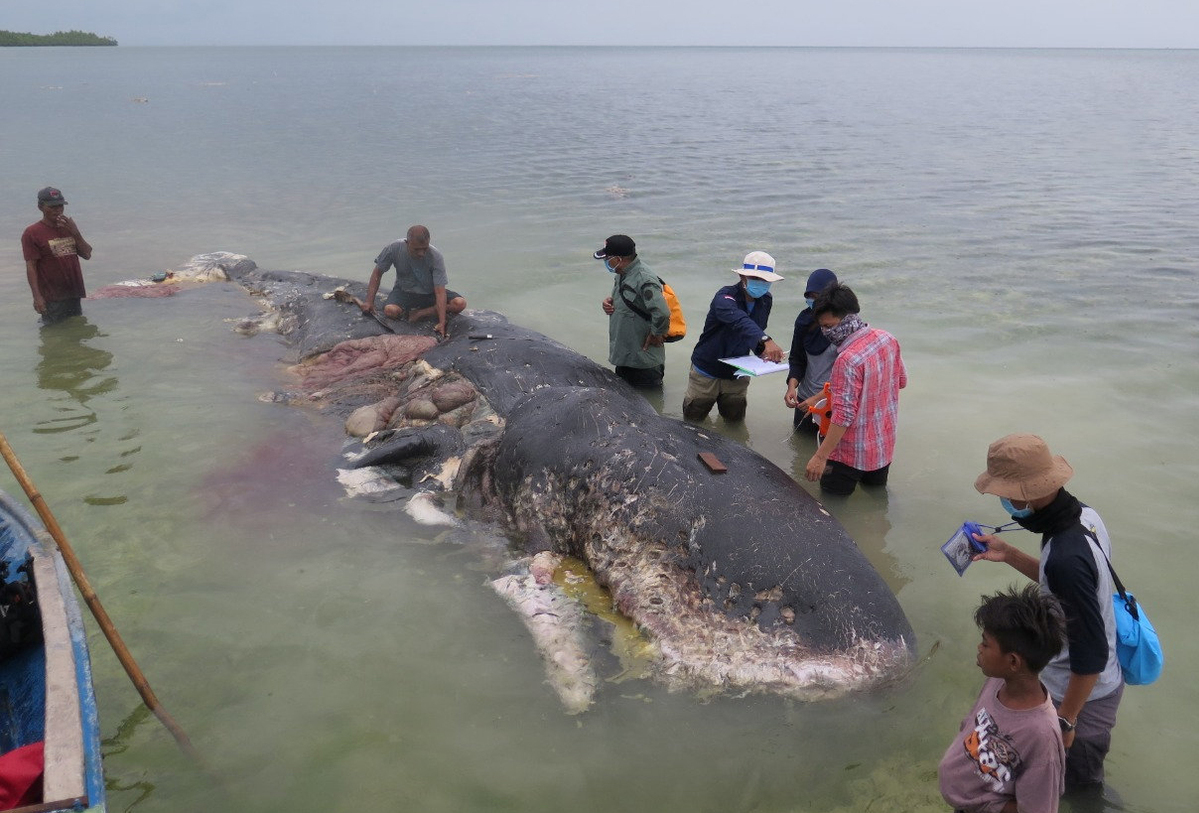
Late last year, the carcass of a sperm whale that washed ashore in eastern Indonesia was found to contain a huge lump of plastic waste-including bags and cups.
The discovery came six months after an autopsy of a pilot whale was spotted in a southern Thai province canal, with plastic bags and other trash in its stomach.
The death of the two whales best illustrates the massive plastic waste problem in Asia. The news raised concern among environmentalists and government officials in the region. More importantly, environmental analysts believe it is high time for Asian policymakers to implement a stronger and more systemic way of reducing the consumption of plastic bags and other single-use plastic containers.
"The fundamental changes which are needed have not yet occurred. There is a need for fundamental reforms in single-plastic consumption and Asian countries' waste management," said Danny Marks, assistant professor of environmental studies at the department of Asian and international studies, City University of Hong Kong.
Marks told China Daily that while the banning of single-use plastic containers has led to "small, cosmetic changes for the better" in some Southeast Asian cities, a more sustainable solution is to implement national waste management programs that can solve the region's plastic waste pollution.
Beau Baconguis, a campaigner for the Manila-based Global Alliance for Incinerator Alternatives environmental alliance, saw another aspect of the issue. "Private companies should also be made accountable as they are the ones which produce all these plastic packaging," she said.
With no options available, most consumers end up buying these products, contributing to the plastic waste problem, Baconguis said.
Despite the challenges, Asian governments have continued to make efforts to solve the problem. For example, delegates from the 10-member Association of Southeast Asian Nations, or ASEAN, held a meeting from Jan 28-31 in Phuket, Thailand, with the outcome forming part of a major environmental strategic plan.
Similarly, Indian Prime Minister Narendra Modi announced in 2018 that the country will eliminate all single-use plastics in the country by 2022. Sri Lanka is also taking green measures.
Baconguis welcomed such government-led initiatives but said that individual consumers themselves need to find more eco-friendly alternatives to plastic bags and containers. She pointed to the time before plastic bags became common, when people had reusable baskets made from woven dried leaves to carry items.
"We have to unlearn what we have learned in modern society. We need to return to practices that are more attuned to nature and ecology," she said.
Economic cost
Rapid economic growth in the region has spurred consumption and increased usage of plastic goods, according to the United Nations Environment Programme, with the higher consumption in turn causing both environmental and health problems.
Plastic bags can clog sewers and create breeding grounds for mosquitoes and other pests. Plastic containers that end up in the ocean are often eaten by turtles, whales and dolphins mistaking them for food.
Plastic waste also has an economic cost. The trash in the Asia-Pacific alone costs its tourism, fishing and shipping industries $1.3 billion a year, according to the UN agency. The problem is not just the amount of plastic waste generated-most emerging Asian economies cannot properly manage the waste they generate, in comparison with the United States, Japan and many European countries, it said.
For example, Japan generates more than 10 million kilograms of plastic waste each day but little of that ends up as pollutants thanks to an effective waste management program. In contrast, India generates less than 2 million kg of plastic waste a day but more than 80 percent of that is mismanaged. Hence, plastic bags and containers end up polluting the country's sewers and rivers.
The UN agency noted that most Asian countries have attempted to control the production and use of plastic bags through levies and plastic bag bans. But poor enforcement has kept these policies from making a dent in plastic consumption.
That can be attributed to the lack of political will and the absence of a more institutional way of collecting and managing solid waste, according to Marks from the City University of Hong Kong.