Scientists give mice the power to see in the dark







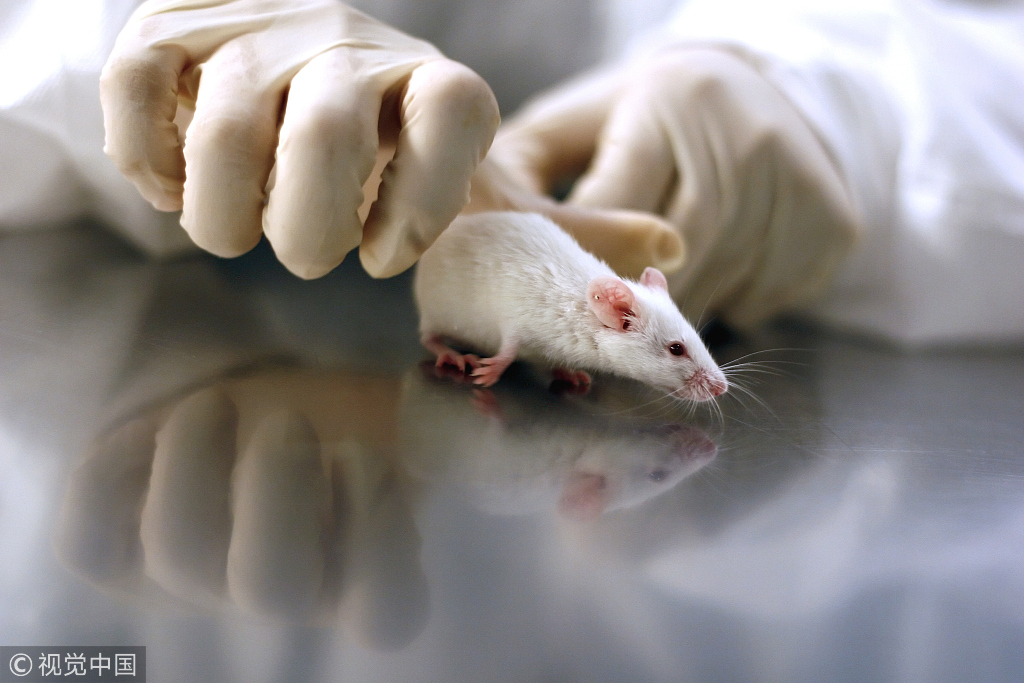
Chinese scientists have found a way to give mice the ability to see infrared waves - potentially opening the door for people to be able to see in the dark.
The technology is expected to enjoy a wide range of applications, including military operations, civilian security, and medical treatment for visual defects such as a color blindness, said Xue Tian, a neuroscientist from the University of Science and Technology of China.
A multidisciplinary group of scientists led by Xue and his colleagues, as well as scientists from the University of Massachusetts Medical School, said they bestowed infrared vision on mice for up to 10 weeks without obvious side effects. They achieved this through a new nanotechnology that worked with the eye's existing structure, according to a paper published recently by the scientific journal Cell.
Xue said humans and other mammals can only see light waves within very small fraction of the electromagnetic spectrum.
Infrared wavelengths, which are emitted by people, animals and objects as they give off heat, are too large for the human eye to detect.
The team injected droplets containing a nanoparticle into the eyes of mice. The nanoparticles absorbed infrared light and converted it into wavelengths that could be detected.
The team observed that the mice injected with the nanoparticles were able to obtain real image information in the dark as well as daylight, Xue said.
"We are prepared to do the experiment on larger animals, though a lot of research has to be done before that," he said.
The scientists said there are hurdles before any use in humans can be tested, partly because the nanoparticles used on mice contained nondegradable heavy metals and they want to find a version with organic nanoparticles that are biodegradable and that would result in even brighter infrared vision.
The team also hopes to adapt the nanoparticles to carry drugs for later release in the eye to help cure diseases.





- Fujian intangible cultural heritage draws visitors at Kaohsiung travel fair in Taiwan
- Innovative app launched to strengthen nationwide HIV prevention efforts
- Experts urge stronger collaboration on global health
- Millions vie for civil?service jobs
- Hong Kong police confirm safety of 159 residents previously reported missing after major fire
- China recording rapid increase in flu cases