Kung fu master - China dream








It was an emotional moment for me on a blistery February day as I approached the tomb of Huo Yuanjia together with my film studio chief cinematographer Dou Yan. We will be making a film series on Chinese martial arts in the latter part of 2019. Right after Chinese New Year as the first preparatory steps, we went to pay our respects at the tomb of Huo Yuanjia. For every martial artist, paying respects at the tombs of Bruce Lee, Huo Yuanjia and Ip Man are transcendental moments. Martial arts are not just sports. They are art. They are the Way.
In kung fu practice halls across China, one will frequently see photographs of these three great masters: Bruce Lee, Huo Yuanjia, Ip Man. While China has had many kung fu masters, these three names have caught the imagination of not only Chinese but martial arts practitioners across the world, as they represent the spirit of overcoming the odds.
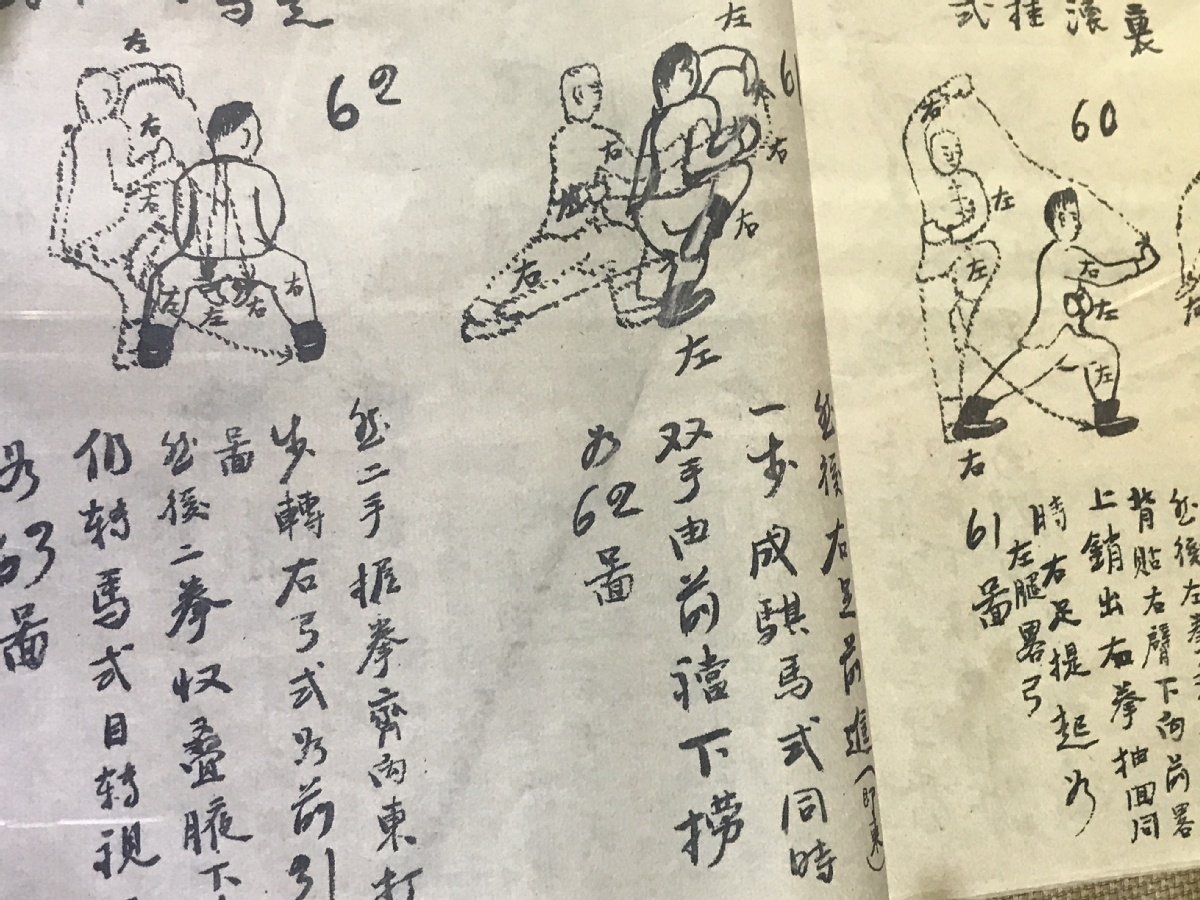
Huo Yuanjia (1868 - 1910) was a symbol of the internal power (neigong) that lies in Chinese martial arts. Martial arts film director Wang Jiawei has repeatedly observed that the late Qing Dynasty and the early Republican Period was the golden age of Chinese martial arts. Many different families had individual styles. With colonial invasion and the internal disintegration, protecting oneself and the village became a way of life. During this period, Huo Yuanjia demonstrated kung fu publicly and defeated one Western boxing champion after another in the Shanghai ring. He became the pride of the Chinese people and a symbol of China's standing up to Western colonialism and the imperial interference that had scarred the psychology of Chinese people since the Opium Wars.
Following Japan's incursions into China, he was challenged by Japanese martial artists who he also summarily defeated. However, unlike Westerners who saw boxing as a sport, the defeat of Japan's martial artists was a loss of face for the rise of imperial Japan. In the end, he was poisoned at a dinner hosted by his Japanese counterparts who were, at the time, (honorably) respecting his victory by hosting a dinner, at the end of which they poisoned him.
Fist of Fury, the premiere film that brought Bruce Lee on the world stage, actually tells the story of Huo Yuanjia's favorite student who avenges his death after the Japanese poisoned him. It is in this movie that Bruce Lee takes a sign outside a colonial park reserved for Westerners and their poodles in Shanghai, one that forbids Chinese from entering, and breaks it into smithereens in a single kick. One cinema analyst described the scene as sending shock waves globally, as it represented a moment when the "Third World stood up against the West." As for Ip Man, he was Bruce Lee's actual respected teacher in Hong Kong.
Huo Yuanjia came from a village on the outskirts of Tianjin called Jing Wu Zhen (精武鎮(zhèn)). His style of martial arts was practiced in the village for more than 10 generations before him. His father was a grandmaster. However, Huo Yuanjia was the youngest son, physically weak, and therefore his father refused to teach him kung fu, feeling that he should be a scholar instead. Huo Yuanjia, determined to learn martial arts, secretly spied on the classes taught by his father to his other brothers. Then he practiced alone in a nearby forest. In the end, he became the greatest martial artist in the family. In fact, he was so good that his father sent him to Shanghai to establish the Jing Wu School, where he went on to become a legend defeating Western boxers and Japanese karate experts alike.

A visit to Jing Wu Zhen today is a celebration of the kung fu spirit that has been rephrased as the China Dream in popular parlance today. There is a huge museum where exhibits recall the story of Huo Yuanjia. One walks through an almost surreal forest exhibit idealizing where he practiced alone secretly. There is a school of 1,700 students learning martial arts, and retaining the Jing Wu style of Huo Yuanjia. The students and their teachers are preserving more than a martial arts style. They are incubating a spirit that will take China through the next stages of globalization in the decades ahead.
The story of Huo Yuanjia is not just about a national populist hero. It is about the principle of self-determination and dedicated hard work with focus, which has become an attribute of Chinese people to this day. It is the reason for the Chinese economy ascending from poverty to prosperity, and from backwardness to high-tech.
Laurence Brahm is the founding director of the Himalayan Consensus and a senior international fellow at the Center for China and Globalization.
The opinions expressed here are those of the writer and do not necessarily represent the views of China Daily and China Daily website.