Tariffs hurting, not helping the US







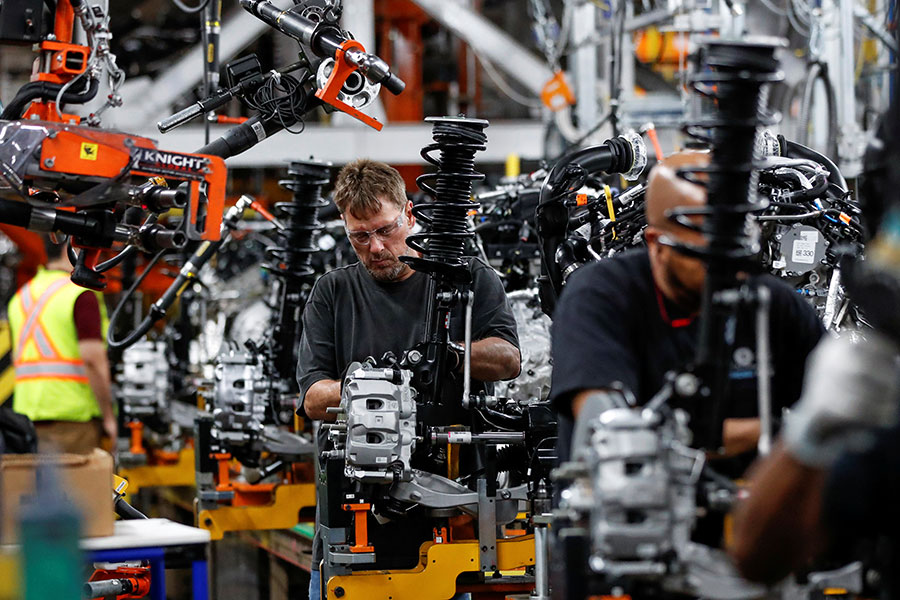
The escalating tariffs on Chinese imports by the United States which were supposed to help revive the US manufacturing sector appear to be having the opposite effect.
US factory activity contracted for the first time in three years as the Institute for Supply Management's purchasing managers index-a closely watched gauge of the US manufacturing sector-fell unexpectedly in August to 49.1 from July's 51.2.
The ISM measure of new orders for manufactured goods also declined to 47.2 while the production gauge sank to 49.5.
The contraction was seen as the latest warning sign that the record expansion of the US economy may not be sustainable.
While the slump of the manufacturing gauge is not necessarily an indication the US economy is heading for a recession, it is clearly a reflection that trade conflicts are hurting business confidence and investment, and this could eventually spill over into the consumer and labor markets.
The ISM manufacturing gauge was based on data collected from more than 300 purchasing and supply-chain executives who saw trade as their "most significant issue", with some saying in the survey that US trade tensions with China were their top concern at this time.
If we look at major economic indicators, the US economy appears to be doing well. The economy expanded at a 3.1 percent clip in the first quarter although growth slowed to 2 percent in the second quarter.
Consumer spending rose by 4.7 percent in the second quarter, the biggest gain since 2014 and beating all forecasts on the number. Unemployment remains around 3.7 percent and near a 50-year low.
But the economic landscape could change rapidly and some economists believe a deteriorating outlook is on the horizon. A growing sense of unease is emerging as people start to wonder whether the US economic expansion could even continue or how long it could last.
Those nerves could be seen in the jittery US stock market along with an inversion in the yields of short and long-term bonds that are often harbingers of a possible recession.
Washington's imposition of higher tariffs has led to higher costs for several US manufacturers as a number of their inputs are imported from China and this could squeeze margins for many businesses.
The tariffs have led to higher prices which could in turn dampen consumer spending, one of the main drivers of the US economy.
A stronger US dollar amidst the trade dispute also means that US exports have become more expensive, reducing demand for US manufactured goods. Economists worry that if manufacturing activity continues to weaken, it could prompt companies to lay off workers or offer fewer jobs, which would further erode consumer confidence.
In a globalized world, countries and markets are closely linked and intertwined. No one could do well while others are suffering.
The adverse impact of the trade tensions is already being felt in Asia and Europe as it has led to a slowdown in global trade and a contraction in factory activity.
It seems the manufacturing slowdown has now reached the United States.
US Federal Reserve Chairman Jerome Powell expressed worries about the consequences of the trade tensions and weaker global growth, which he said is having an effect on the US economy.
This raises the possibility of future rate cuts by the Federal Reserve, the US central bank.
But some economists doubt if further rate cuts could effectively bolster the US economy when borrowing costs are already at a very low level.
The good news is that US and Chinese officials have agreed to go back to the negotiating table in October. But it is still uncertain if the two countries could close in on a meaningful trade deal.
What is certain is that existing tariffs have exerted pressure on the global economy. Until the tariffs are removed and tensions are resolved, companies and consumers are likely to continue to bear the brunt of this dispute.