New sci-tech board spearheads reform of China's capital market







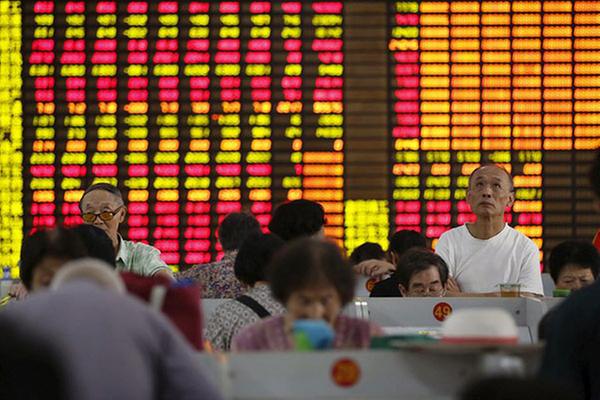
BEIJING - The short-term performance of individual stocks is not a proper gauge to evaluate the ongoing capital market reform advanced by the science and technology innovation board (which is known as the STAR Market), the head of the market regulator said.
Yi Huiman, chairman of the China Securities Regulatory Commission, said confidence, patience and a long-term perspective are key to assessing the performance of the Nasdaq-style high-tech board.
The board was launched on the Shanghai Stock Exchange on July 22.
Leveraging capital to transform the Chinese economy into an innovative one and exploring ways to make institutional improvements in the capital market were the dual missions the board had been tasked with, he said.
Regulators use certain criteria to keep the tempo and intensity of the reform in the STAR market. They mainly relate to how well the dual missions are being carried out: the incubation of leading science and innovation enterprises and the progress made in institutional innovation.
"The ongoing reform can be described as meeting expectations with stable performance," Yi said.
By the end of October, the first batch of 25 stocks debuting in the market had seen their prices rise by about 90 percent. The share price increases tend to be more rational compared to the average rise of 150 percent on the first trading day, SSE data showed.
The market has attracted more than 4.4 million eligible investors and seen fairly active trading as its daily turnover has reached 14.2 billion yuan ($2.03 billion) on average, accounting for 3 percent of the total Shanghai and Shenzhen bourses.
On top of the numbers, major achievements of the new board were reflected in its institutional innovations, while the implementation of the registration-based initial public offering system was key, said Zhang Anyuan, chief economist of China Securities Corporation.
The STAR Market embraced a registration-based IPO system that required strict information disclosures but did not need approval from the CSRC, a step viewed as its "biggest institutional innovation".
Over the past few months, the new IPO system has proved effective and won wide recognition from the market. As its information disclosure mechanism forced relevant parties to undertake responsibilities for their work, it boosted the openness and transparency of all links. Under the new system, the process of registration was shortened to less than four months.
"It has also facilitated the listing of a batch of qualified sci-tech companies," Yi said. "I'm confident that over time, the new board will be the cradle of great tech disruptors."
Although the registration-based IPO system was taken as the bellwether of the broader capital market reform, Yi said it was not wise to simply copy what had been done in the STAR Market.
"We will factor in the different functions of the markets at various levels as well as their market realities to steadily advance reform on the premise of thorough planning and market stability," Yi said.
First and foremost, the registration-based IPO system will be steadily advanced to let the market choose and to significantly improve the efficiency of resource allocation in the capital market, he said.
Revisions to the Securities Law will facilitate the reform of the growth enterprises market and the broader experiment of registration-based IPOs, Yi said.
Institutional improvements based on the experiences of the STAR Market will be made to optimize the primary rules of the capital market, including those concerning stock issuance, underwriting, trading, supervision and delisting.
In September, China's securities regulator specified 12 priorities for upgrading the country's capital market, including providing stronger safeguards for investors, attracting medium - and long-term capital and further opening up the capital market.
Apart from a series of reform measures already released, the CSRC is stepping up efforts to form an action plan to improve the quality of listed firms.
Rules for spin-off listings will be released as soon as possible while the protection of investors and the streamlining of the CSRC's roles will be strengthened, he said.
For policymakers, challenges will be how to deliver certainty amid uncertainty by creating the proper conditions to advance reform and setting a reform timetable at the top level, according to Yi.
The principles they use to figure out solutions include "making steady progress, doing a good job in coordination and being as fast as possible".





Today's Top News
- Inclusivity critical for AI governance
- Massive response to latest bonds issue
- Control of precursor chemical exports tightened
- Xi greets Ouattara on reelection as Cote d'Ivoire president
- CIIE displays innovation, global confidence in China
- Nation set to sharpen focus on key sectors