Sweet or savory purple root







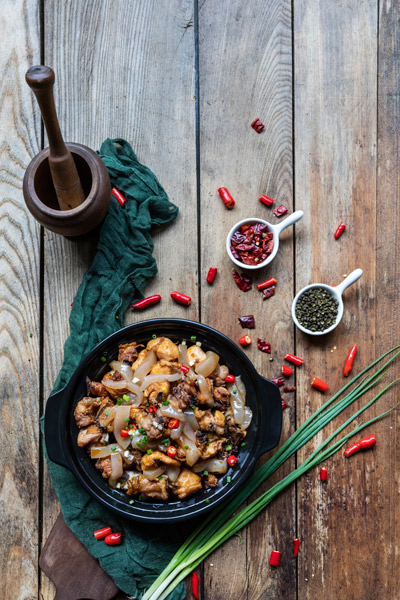
As the weather cools, home chefs are planning heartier meals to warm up the body, and to prepare for the cold frosty evenings. Besides the necessary meats like mutton and beef, the stews are often propped up by root vegetables.
Radishes, potatoes, turnips are popular choices, but some prefer the yam, also known as taro.
It is an amazingly versatile ingredient, adapting well to both sweet and savory recipes.
It comes into its own in the later lunar months and are piled high on market counters right up to the end of the year.
The small yams, little tubers hardly bigger than a chicken egg, are first steamed or boiled and laid out to dry. A soggy skin is hard to remove cleanly, and drying it off ensures an easier peeling.
The meat inside is soft and slightly flaky and truly delicious dipped in a little soy sauce, or a saucer heaped with sugar.
The parent tuber, larger and much more robust is usually cooked. It is a common filling in moon cakes, especially in the flaky pastries made in the Chaozhou area of Guangdong province.
The Chaozhou region is known for its yam harvests, and the region is equally well known for its yam delicacies, both sweet and savory.
For instance, the master chefs here steam and mash up yam, and flavor it with Chinese five-spice powder. The fragrant savory yam is then applied to the bottom of a boned duck and carefully deep fried, thus combining two favorite ingredients.
The duck with yam is then cut into pieces for the banquet table.
I have also eaten a prawn with yam paste filling. Only in this case, the yam mash is sweetened. The prawn is split down the middle to wrap around the yam filling. A wafer-thin piece of bean curd skin then goes around the prawn wrapped morsel, and deep-fried.
Not only is this dish a beautiful contrast in textures, with the crisp prawn, soft yam and crunchy bean curd skin, it also offers a spectrum of flavors from salty to sweet.
The Chaozhou chefs are experts in combining sweet and savory, but the most famous yam dish is pure sweetness. This is the well-loved dessert served at the end of every respectable banquet-orr nee, or yam puree.
The best quality yam is first steamed till very tender. Then it is mashed and sifted to ensure a velvety texture. Next, the yam puree is stir fried with lard and sugar, a laborious process that must be carefully tended to.
The end result is a gleaning bowl of sweet yam paste, under a very thin layer of lard that keeps it smoking hot. You have to be careful eating this.
Often, sweetened ginkgo in a syrup are spooned on top of the servings, and the slightly bitter notes of the ginkgo complete the dish.
Yam is also used in the savory steamed cakes that the Chaozhou people are so good at making.
Cubes of yam, cured salted meats, dried shrimps, are combined into a rice flour batter. The whole pan is then steamed for about an hour. The yam cake is cut up and served, or reheated by pan frying till the edges are golden brown.
The savory yam pudding is most often made and served for the long Spring Festival holidays.
Yam is also used in desserts, apart from the famous orr nee.
The little tubers are often cut into chips and deep fried in shallot-scented oil. Then the chips are tossed into a wok full of saturated sugar syrup, and slowly stir-fried till the syrup dries up and forms a frosty crust on the yam.
As you can already tell, they love their yam, but they love their sugar even more.
The best yams are tinged with purple, somewhat like the flecked flesh of a betel nut. That's why the Chinese call these "betel nut yams". These pretty purple tubers are also known as taro, or ube.