Dropout remains a problem in secondary vocational schools







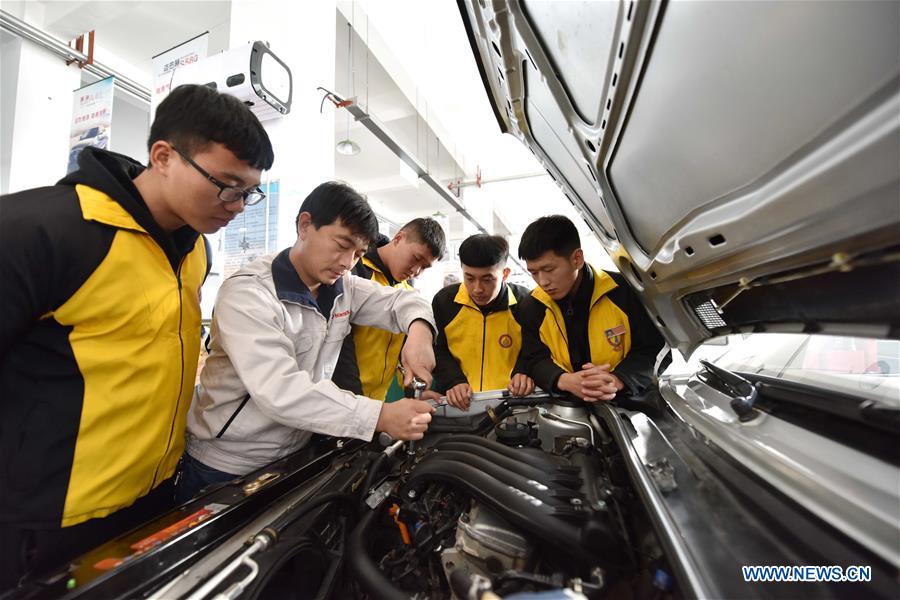
The dropout problem in secondary vocational schools in China is yet to be solved, newly released papers on vocational education from Shanghai Academy of Educational Sciences said.
The academy published two reports on China's secondary and higher vocational education, respectively, the second time it has published such reports since 2017.
The number of dropout students in secondary vocational schools surpassed 600,000 over the past three years, according to the papers.
There are several reasons behind this problem. There is still bias against vocational education from society. Some regions and schools are poor in management after enrolment and neglect the quality of education and teaching, the papers said.
Progress has been made in vocational education in various aspects, the paper added.
Vocational schools have deepened school-enterprise cooperation. There were 166,800 off-campus bases for internship and training jointly established by higher vocational schools and local companies and over 90 percent of secondary vocational schools have set up such off-campus bases, over 60 percent have employed part-time teachers from local enterprises in 2017, according to the reports.
Vocational school graduates are also becoming a potent new force in educational poverty alleviation.
In 2017, the total number of students in higher vocational schools in deeply poverty-stricken areas topped 180,000, and 46 percent of the graduates found jobs locally; 142,000 graduates from secondary vocational schools in these areas were employed, achieving an employment rate of more than 90 percent.
Higher vocational schools are playing an important role in serving regional economic and social development. Their revenue of social training and technical services in 2017 reached more than 5 billion yuan ($711.39 million), or 4 million yuan per higher vocational school. 58.3 percent of higher vocational school graduates were locally employed in 2017, six percentage points higher than that of 2015.
The academy also pointed out in the reports other problems vocational schools are facing, including poor school-running conditions, inadequate funding, shortage of qualified teachers. For example, 1,400 secondary vocational schools fail to meet a student-teacher ratio of 20:1, the standard set by the Ministry of Education.





- Exhibition highlighting the 'Two Airlines Incident' opens in Tianjin
- Average life expectancy in Beijing rises to 83.93 years
- Energy drink overdose sends delivery worker to hospital
- GBA and Hainan deepening cooperation to boost innovation and sustainable growth
- Beijing mulls including the costs of embryo freezing and preservation in medical insurance
- Rocket developed by private Chinese firm fails, loses three satellites