Sellers of rogues and revisionists, the makers of risk







At an international security conference in Munich, Germany, on Saturday, United States Defense Secretary Mark Esper said that China tops the Pentagon's list of potential adversaries, followed by Russia, and rogue states like the Democratic People's Republic of Korea and Iran, and continuing threats from extremist groups.
His list of the supposedly top five threats that should be feared and loathed by the international community followed hot on the heels of the claim by leading spokesman for Washington's "America First" strategy, US Secretary of State Mike Pompeo, that Russia and China had "desires for empire".
But as Chinese Foreign Minister and State Councilor Wang Yi told the conference later,"All these accusations against China are lies. They are not based on facts".
Esper and Pompeo "say the same thing about China wherever they go", Wang pointed out. He suggested that if people wanted a clearer picture of what is going on, they should put the US as the subject of the lie rather than China, then "maybe those lies become facts".
Indeed the US is well versed in constructing such narratives of risk, as they are habitually employed by the country's national security elites, policymakers and advisers in order to sell desired policy actions that are to their own advantage.
For decades during the Cold War, those with vested interests exaggerated the threat from the Soviet Union to justify the country's huge military spending, with the development of US military capabilities and the spending on it directly linked to deliberately inflated capabilities of what was portrayed as "The Evil Empire", with such actions justified on the grounds of supposedly identified ill-intent on the part of the US' erstwhile opponent.
After the break-up of the Soviet Union, advocates of US militarization-whether for profit, status or ideology-were faced with the possibility of substantial cuts to military spending that would severely damage their interests. This required a new threat narrative, which the conservative think tank the Center for Strategic and International Studies duly obliged with, advising the Ronald Reagan administration in 1988 that the US should be prepared for potential hostilities with "maverick regimes" possessing weapons of mass destruction.
This allowed new sources of risks to be presented to enable continued large-scale military spending and new justifications for military and other interventions in sovereign countries.
This risk narrative, of course, has now evolved to include China, which in official policy documents such as the National Security Strategy released by the Trump administration at the end of 2017 is listed alongside previously established "rogue states" and jihadist terrorist groups as a "revisionist "threat to the post-World War II global order.
"We want China to behave like a normal country," Esper said. Which to the US defense establishment "means the Chinese government needs to change its policies and behaviors."
By this of course, he meant China should be accommodative of what the US desires.
Fundamentally, Wang observed:"The root cause of all these problems and issues is that the US does not want to see the rapid development and rejuvenation of China, and still less would they want to accept the success of a socialist country."
Rather than the "rogue states" and "revisionist powers" that the US administration claims are threats, the real risk-makers are those who distort security narratives for their own purposes, for they are prepared to go to any lengths to attach any infamy or threat to the actions of others. And having been very successful with this particular method in the past-at least in terms of their own objectives-it is hard to convince them that it is to their advantage to try another.
Nonetheless, needs must.
"The most important task for China and the US is to sit down together to have a serious dialogue and find a way for two major countries with different social systems to live in harmony and interact in peace," Wang said.
"China's ready," he said. The problem is that so far the US is not.
The author is a senior editor with China Daily: hannayrichards@chinadaily.com.cn The views don't necessarily represent those of China Daily.


Today's Top News
- China-Cambodia-Thailand foreign ministers' meeting held, press communique issued
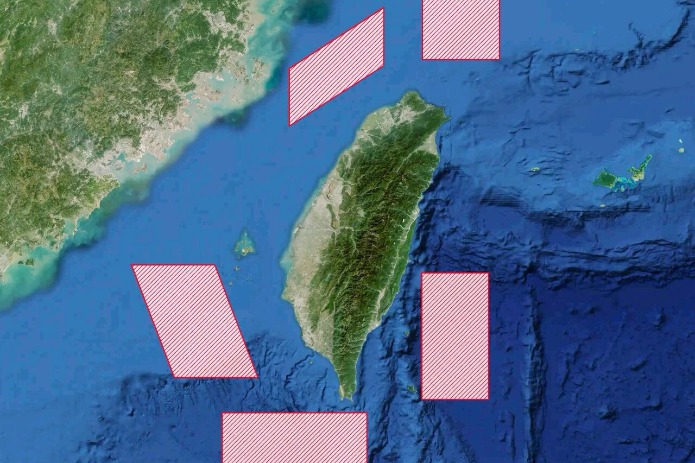
- Drills demonstrate China's resolve to defend sovereignty against external interference
- Trump says 'a lot closer' to Ukraine peace deal
- China pilots L3 vehicles on roads
- PLA conducts 'Justice Mission 2025' drills around Taiwan
- Partnership becomes pressure for Europe