As US tightens scrutiny of IPOs, Chinese companies must tread carefully







Over the past two years, the US-China trade conflict has spilled over into other arenas spanning geopolitical concerns, global leadership and technology supremacy. One area that has been largely spared thus far has been finance, but that may be about to change.
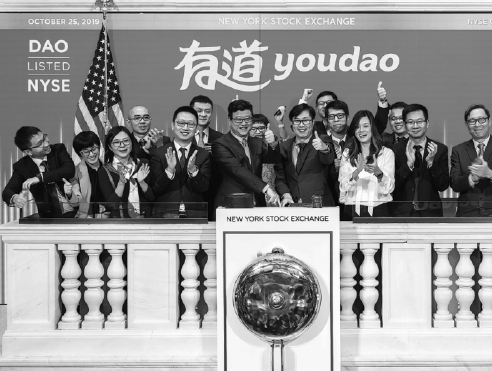
The contentious relationship between both countries has cast doubt and prompted a "wait and see" attitude from Chinese executives and investors who have visions of taking their companies public on Nasdaq or the New York Stock Exchange.
Additional rumblings from lawmakers in Washington DC that Chinese firms may be barred from future listings on US bourses only adds to the anxiety. Nevertheless, in this climate of uncertainty, there are numerous actions Chinese companies can undertake to chart a smoother IPO journey.
Ambiguity aside, Chinese firms still consider listing on a US exchange highly attractive and as vindication of years of toiling and perfecting a commercially viable business model and product. The US still possesses the broadest and deepest capital markets in the world, which allows firms to access a truly diversified investor base.
The approval process is faster than that of Hong Kong or the Chinese mainland, and profitability rules are generally less strict. The rigorous due diligence listing process conducted by auditors, bankers, consultants, lawyers and regulators adds legitimacy and bolsters a company's reputation, if it can pass the test.
Despite Nasdaq's success in attracting Chinese firms, the exchange has been carefully studying the post-IPO performance of these listings, as a considerable number are trading below their IPO prices or are plagued with illiquidity.
The analysis reveals that many small cap firms have obtained capital overwhelmingly from Chinese investors rather than tapping a broader international investor base. Most of the shares are controlled by insiders and early investors and therefore generate low trading volumes.
Nasdaq is caught in a conundrum. It is a magnet for small cap Chinese companies, but due to their lackluster post-IPO performance, they are unwanted by institutional investors.
Despite the greater scrutiny by the market and regulators, there are several actions that Chinese IPO candidates can take to map a smoother listing process.
First, Chinese companies should be realistic about valuations. These are not the heady days of 2016-18 when companies could command top dollar. The year 2019 saw a number of firms revise their estimates downward for fundraising. This trend will extend into the foreseeable future.
Second, a concern directed at IPO candidates is their lack of a US footprint yet still wanting to list there. Last year, I posed the question to a number of CEOs and CFOs: "You have no clients, sales, offices, business partners or executives in America. Why do you want to list on Nasdaq?"
After countering with the obvious response about the attractiveness of the US capital markets, they acknowledged their desire for adding American executives on their board of directors to establish that linkage to the United States.
In addition, recruiting US citizens facilitates introductions to potential business partners and expedites the search for further investment, joint ventures and product licensing agreements. As many Chinese firms have goals of competing successfully in the US market, it would behoove them to lay the groundwork early on.
Third, diversify the investor base. This is an often-cited concern by the exchanges. Companies rely on bankers to mobilize potential investors and build the book.
In today's market, IPO candidates are increasingly asked to do more of the burden-sharing and amass potential investors through personal connections tapping family, friends and other personal/professional relationships.
Many senior Chinese executives have studied in the United States and Europe, and drawing on an international network of contacts is not a difficult exercise. It is common for company executives to reach out to university alumni, contract third-party consultants to spread the message and raise additional capital.
This is crucial because the reality of today's climate is forcing some IPOs to be pulled back at the last minute in order for both bankers and management to conduct additional institutional and retail roadshows that demonstrate to the marketplace the strength of the listing, which will aid in having greater liquidity.
There are numerous lessons to be learned from previous listings that future IPO hopefuls can apply.
US exchanges should recall that there is a fine line between implementing effective regulations that will be conducive to the long-term success of companies after they list from comments by Washington lawmakers calling for restricting capital market access for Chinese firms.
Although listing on US exchanges is seen as a trophy prize, the launching of the Shanghai Science and Technology Innovation Board (STAR Market)-China's Nasdaq style market-undoubtedly will increase competition for future listings.
Greater call for restrictions on Chinese IPOs will serve to divert deal flow to local bourses on the Chinese mainland and Hong Kong.
For companies all over the world, an IPO is an exciting yet complex and time-consuming process that represents a monumental achievement.
However, in today's uncertain climate, with greater scrutiny placed on foreign-sourced IPOs, the watchword for 2020 is to tread carefully. This is compelling firms to take on an increasingly active role in their market readiness-possess a diversified investor base, proactively fundraise and have realistic valuation expectations.
Times have changed. Firms who take on a more hands-on approach will experience a smoother IPO journey.
The author is the CEO of Columbia China League Business Advisory Co.



Today's Top News
- China-Cambodia-Thailand foreign ministers' meeting held, press communique issued
- Drills demonstrate China's resolve to defend sovereignty against external interference
- Trump says 'a lot closer' to Ukraine peace deal following talks with Zelensky
- China pilots L3 vehicles on roads
- PLA conducts 'Justice Mission 2025' drills around Taiwan
- Partnership becomes pressure for Europe