Preventing global food security crisis under COVID-19 emergency







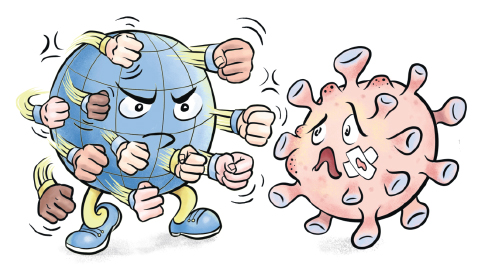
The COVID-19 outbreak is showing a new trend. While the situation in China has improved dramatically, several countries, especially the Republic of Korea, Japan, Italy and Iran, have been reporting more new cases. In fact, these countries have reported more new confirmed cases than China.
That the first case was reported from Nigeria on Feb 28, the day when the World Health Organization raised its alert level against the epidemic to "very high", is particularly worrying as the continent is also fighting another threat from the desert locusts that could affect food security of millions in the region.
Global Food Security already faces challenges
COVID-19 is a health crisis. But it could also lead to a food security crisis if proper measures are not taken. The world is already facing food and nutrition security challenges. According to the United Nations Food and Agriculture Organization, more than 820 million people across the globe are already suffering from hunger, although the Chinese number reported by FAO is grossly overestimated.
Close to 150 million children in countries around the world are stunted because of lack of proper nutrition. And in many countries, hunger and malnutrition have been on the rise for the past three years due to conflicts and the refugee crisis, climate change and worsening inequality, with the Middle East and Sub-Saharan regions being particularly vulnerable.
Epidemics like HIV/AIDS, Ebola and the Middle East respiratory syndrome (MERS) have had negative impacts on food and nutrition security — particularly for vulnerable populations including children, women, the elderly and the poor. For example, when the Ebola epidemic hit Guinea, Liberia and Sierra Leone in 2014, rice prices in those countries increased by more than 30 percent and the price of cassava, a staple in Liberia, skyrocketed by 150 percent.
In China, however, despite the severe acute respiratory syndrome (SARS) outbreak in 2002-03 delaying the winter wheat harvest by two weeks and triggering panic in Guangdong and Zhejiang provinces, didn’t affect production and prices on a large scale in the rest of the country.
Need to learn from previous epidemics
The SARS and MERS outbreaks had relatively little impact on the economy and food and nutrition security of China, including Hong Kong and Taiwan, largely due to the country’s resilience and ability to cope with emergencies. Countries such as Singapore, Vietnam and Canada, too, showed such resilience, because they have enough food reserves and boast of vibrant value chains linking the domestic and international markets.
But Ebola had a huge impact on the economies of some African countries’ agricultural production, marketing and trade. On the production side, due to road blockages, farmers had limited access to inputs such as seeds, fertilizers and insecticides. And many of the regions faced acute labor shortage.
All this resulted in more than 40 percent of the agricultural land not being cultivated. As for marketing, farmers could not transport fresh produce to local and urban markets. In addition, day meal programs in schools were disrupted because food aid could not be delivered to the schools. And trade was disrupted as international shipping services were either delayed or cancelled because crew members of cargo vessels refused to travel to those countries for fear of being infected.
Food prices will shoot up if nations panic again
The 2008 food price crisis, too, taught us a valuable lesson. The crisis was caused by droughts in Australia and Argentina, increasing oil prices, rising use of food grains for biofuel production and trade policy failures. These prompted many countries to impose various export policies to restrict the export of food products.
For example, there was no shortage of rice supply, but due to panic behavior, many countries imposed higher taxes on rice exports or banned rice exports altogether. Rice prices doubled in the global market in six months, causing severe disruptions in rice trade leading to a food price crisis. If countries panic this time too, food trade and markets could be disrupted, albeit on a much larger scale.
Act now to prevent food security crisis
The novel coronavirus is still spreading and it is difficult to say when it would be contained. So to ensure food security for all, we need to take urgent actions at the global and country levels.
First, there is a need to closely monitor food prices and markets. Transparent dissemination of information will strengthen government management over the food market, prevent people from panicking, and guide farmers to make rational production decisions. And to nip market speculation over supply in the bud, the government should strengthen market regulation.
Second, it is necessary to ensure international and national agricultural and food supply chains function normally. China has set a good example of how to ensure food security during the current epidemic by, for instance, opening a "green channel" for fresh agricultural products, and banning unauthorized roadblocks.
Innovative methods to keep sales growing
E-commerce and delivery companies can also play a key logistical role. For example, as lockdown measures have increased the demand for home delivery of groceries, e-commerce companies have come up with an in-app feature for contactless delivery, allowing the couriers to leave a parcel at a convenient spot for the customers to pick up, which rules out person-to-person interaction.
Third, social safety nets are needed to protect those who are the worst affected and most vulnerable. These safety nets, which could be in the form of cash or in-kind transfers (context-specificity is important here), should be accompanied by intervention by health and nutrition officials, because investing in the health and nutrition of vulnerable populations could lower the mortality rate of diseases such as COVID-19 — as nutritional level and mortality rates are intricately linked. Social safety nets are also crucial in the post-epidemic period to drive "reconstruction" efforts.
Fourth, more investment is needed to build an even more resilient food system. Such investment must come from national governments as well as the international community, as enhancing the capacity of developing countries to prevent or contain a food security crisis is a collective effort. In today’s highly interconnected world, contagious diseases such as SARS, Ebola, avian flu and COVID-19 could easily travel across borders.
Vital to have safeguards against zoonotic diseases
There is also a need to build safeguards for the prevention and control of zoonotic diseases. The international community needs to do more to prevent future outbreaks of zoonotic diseases such as Ebola, SARS and avian flu, including regulating meat, seafood and wildlife markets. Many zoonotic diseases originate in wildlife — HIV, Ebola, MERS, SARS, and possibly COVID-19 too, all originated in wildlife and jumped to humans.
Critical to keep global trade open
Moreover, it is important to ensure the smooth flow of global trade and make full use of the international market as a vital tool to secure food supply. And global institutions such as the World Trade Organization, FAO, World Bank and the International Monetary Fund must ask countries to not use COVID-19 as an excuse to issue trade protectionist policies.
The author is chair professor at Beijing-based China Agricultural University and former director-general of Washington-headquartered International Food Policy Research Institute. The views don’t necessarily reflect those of China Daily.