US urged to target tasks that save lives







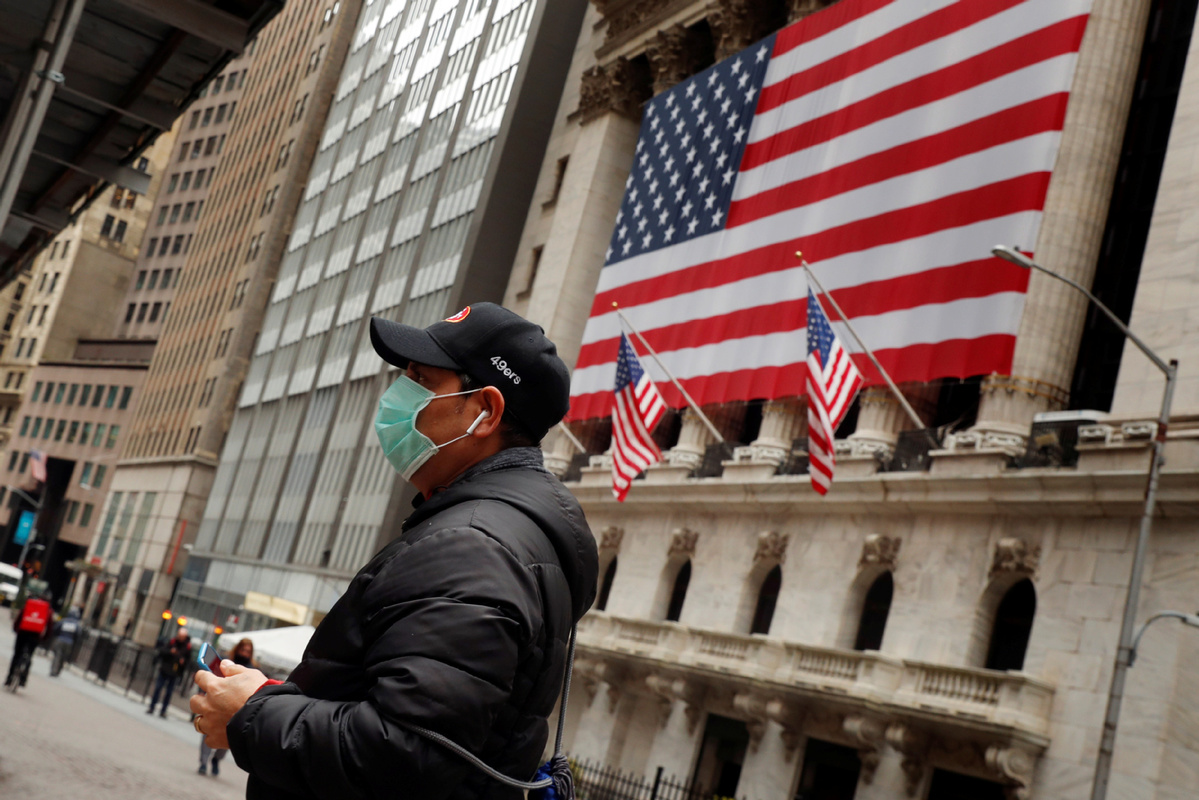
Stigmatizing disease does no good to solving crisis and scientific research
As COVID-19 rampages across the globe, Chinese scientists have opposed some United States politicians hijacking vital collaborative scientific undertakings-such as finding the origin of the virus-to rekindle xenophobia and stigmatization against China and its people.
They urged US officials to focus on disease mitigation and saving lives, and to air sensitive issues in a rational, objective manner to avoid undermining the international cooperation critical for tackling a global health crisis.
Understanding the origin of the virus will provide crucial clues to arresting the disease that has sickened about 210,000 people in over 140 countries, according to the World Health Organization.
However, scientists have yet to reach a verdict on the origin and mode of transmission due to it being a new pathogen.
Before the disease was officially named COVID-19 by the WHO last month, foreign media used a variety of sensationalist and misleading names including Wuhan SARS and Wu Flu. The virus was often referred to as the "China Virus" in headlines, a title that hearkens back to the xenophobic "Yellow Peril" slur used during the colonial era.
US officials, including President Donald Trump, have recently rekindled stigmatization against China by calling the novel coronavirus a "Chinese virus" on multiple occasions, despite the WHO being explicitly opposed to connecting the virus with a certain country or region.
Huang Yu, deputy director of the Department of Medical Genetics at Peking University, said it is common sense that a new virus should be named without the stigma of attaching it to a place, region or individual, as history is full of poorly named diseases bringing devastating consequences.
In the early days of AIDS, researchers called the disease GRID, or gay-related immunodeficiency, creating stigma among the already marginalized gay community. During the early 20th century, Irish people in the US were ostracized when media dubbed Irish woman Mary Mallon as "Typhoid Mary" for her being one of the first asymptomatic carriers that led to a typhoid outbreak in New York City.
"Such anti-intellectual rhetoric will inevitably stir up hatred toward the Chinese people, and we should firmly oppose and condemn these actions," Huang said.
"The scientific communities from China and the US have upheld the principle that scientific knowledge knows no borders, and we are constantly sharing new information on basic research and clinical results related to COVID-19," he added.
Huang said US politicians' anti-China rhetoric will not directly affect scientists' work, but geopolitics can interfere with international scientific cooperation.
"We hope the scientific communities from both countries can better communicate knowledge to the public and officials, and work together to curb xenophobia and misunderstanding," he said.
A Beijing biologist who spoke on condition of anonymity said finding the source of the virus is an important scientific question that could shed light on how the virus jumped species, thus allowing health authorities to cut off the route of transmission and prevent future outbreaks.
However, this mystery often requires years of rigorous research to solve, and that knowledge may be too late or too irrelevant for saving lives now, which should be the top priority, he said.
"Politicians discussing the origin of the virus serves no practical purpose against the pandemic other than assigning blame, and through contrast, defining their own innocence and defending their incompetence," he said.
"Current information regarding the origin of the virus is very limited and difficult for non-experts to digest," he said.
"It is impossible for the public, let alone politicians with agendas, to have an honest discussion on this topic without it disintegrating into a shouting match of misinformation and conspiracy theories."
More research needed
The WHO said the novel coronavirus may have originated from bats, which are natural carriers of many types of coronaviruses including the one that causes SARS. Experts also noted that it is rare for coronaviruses to jump directly from bats to humans, so intermediate hosts are likely necessary to make the transmission.
However, consensus starts to break when scientists argue over what the hosts are. Snakes, pangolins and even domestic pets have been considered potential candidates, but all current studies proved inconclusive.
To further complicate matters, scientists have discovered through clinical records and genetic tracing that the Huanan Seafood Market in Wuhan, Hubei province, may not be the source of the virus after all, according to the journal Lancet and other follow-up studies.
The market might just have served as the jumping off point where the virus emerged and began infecting a wider public, but who or what brought the virus to the market in the first place remained unknown, scientists said.
Shi Zhengli, a researcher from the Institute of Virology of the Chinese Academy of Sciences, said in a recent public lecture that closing the market shortly after the outbreak began had made it difficult for scientists to collect samples directly from the wild animals sold there-an approach that allowed scientists to quickly identify civets as the intermediate host for the SARS epidemic in 2003.
But the intermediate host is only one piece of the puzzle. Locating the actual viral origin is so difficult that it wasn't until 2016 that Chinese scientists said they had traced the natural carrier of the SARS virus to horseshoe bats in a cave from Yunnan province. Shi said scientists might need to do the same time-consuming field work to find the source for the new virus.
Moreover, Shi said SARS-like coronaviruses, which include the novel coronavirus, are the most infectious of the 12 types of bat-carrying coronaviruses that her team has studied.
There is a chance that a similar SARS-like coronavirus from bats would jump species and possibly infect humans, and scientists, along with public health authorities, should prepare in advance, she said.
"Mankind has the ability to nip new diseases from wild animals in the bud. It is not a question of whether we can, but a question of whether we want to," she said.