Outbreak sets stage for better health ties







Sooner or later, the pandemic will be brought under control across the globe. The question is how much pain people, countries, economies and the world will have to go through.
Eliminating borders to the sharing of knowledge could help to minimize the pain.
COVID-19 has already spurred the movement toward even greater sharing of information across borders. This helps counter one of the scariest things about the outbreak: uncertainty.
China's experience and willingness to share knowledge could now come in handy for the rest of the world. The pandemic is picking up speed in Europe and North America just as it slows down in China, where most new cases are imported.
China has something of a lead in understanding what has to be done to contain this virus as well as a head start in developing treatments, isolating the virus and building up a knowledge bank that could prove instrumental in bringing the pandemic under control.
The pandemic could help China tap into international research partnerships, while also helping the rest of the world to tap into Chinese expertise.
A case in point is the development of a vaccine and treatments for the coronavirus.
Developing more effective treatments should become easier, since the sharing of knowledge among countries, regulators and researchers would speed up these processes.
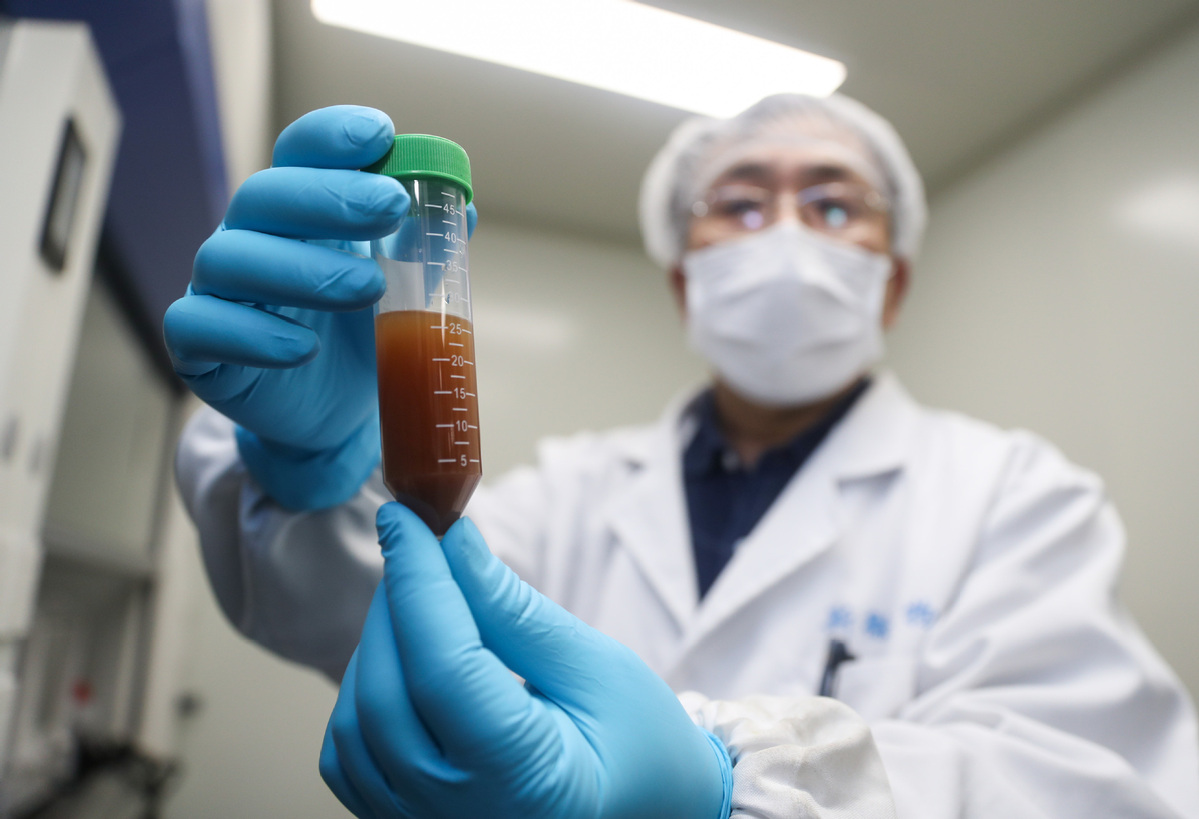
For instance, Chengdu-based Clover Biopharmaceuticals had produced an early vaccine candidate for COVID-19 by mid-February. The company quickly set out to look for partners to speed up the development of its vaccine and is working with GlaxoSmithKline, a London-
based pharmaceutical company.
Another company, Beijing Advaccine Biotechnology, is working with Inovio Pharmaceuticals of the United States on a vaccine that is moving into early stage trials, perhaps as early as next month.
Since early February, multinational pharmaceutical company Gilead has been working with Chinese authorities to speed up the testing process for remdesivir to treat COVID-19. Remdesivir was originally developed to treat Ebola and is not yet approved anywhere in the world.
These collaborative efforts could pave the way for the kind of knowledge sharing that makes the world a better place.
Just as companies like Clover and Advaccine have come together quickly to develop vaccines, researchers are also building on the urgency created by the pandemic to set the stage for long-term research partnerships.
One such effort is between the Harvard Medical School and the Guangzhou Institute of Respiratory Disease. The focus of the partnership will be research for the next five years, thanks to $115 million in funding.
The World Health Organization put its stamp of approval on Chinese regulators' ability to oversee vaccine development in 2011. Since then, international agencies have been able to source quality products from China. In October 2013, the WHO pre-qualified the first Chinese vaccine for international use-for encephalitis.
China has several dozen vaccine manufacturers, many of which are part of international joint ventures. China produces vaccines for a range of viral diseases, including influenza, measles, rabies and hepatitis A and B, as well as rotavirus.
China's research expertise builds on the fact that the country is already the biggest supplier of raw materials to make most medicines, materials known as active pharmaceutical ingredients.
China is also deploying its artificial intelligence capabilities. Shenzhen XtalPi Technology used an AI engine to quickly sort through almost 13,000 compounds, filtering those with the potential to treat the coronavirus. The company found 183 potential ones and shared the list widely, speeding up the development of treatments and vaccines.
Huawei Cloud, Huazhong University of Science and Technology, Xi'an Jiaotong University and the Beijing Institute of Genomics of the Chinese Academy of Sciences have worked together to screen more than 8,500 drug candidates and share the results.
The pandemic has set the stage for many more such relationships, which could help bring down barriers in the long term.
Ultimately, the pandemic could lead to greater collaboration between institutions and companies in different countries, as well as the development of new products to address other pressing global healthcare needs.
The author is managing director of Bahati Ltd, a Hong Kong-based editorial services company. The views do not necessarily reflect those of China Daily.