Threats can't stop national security decision







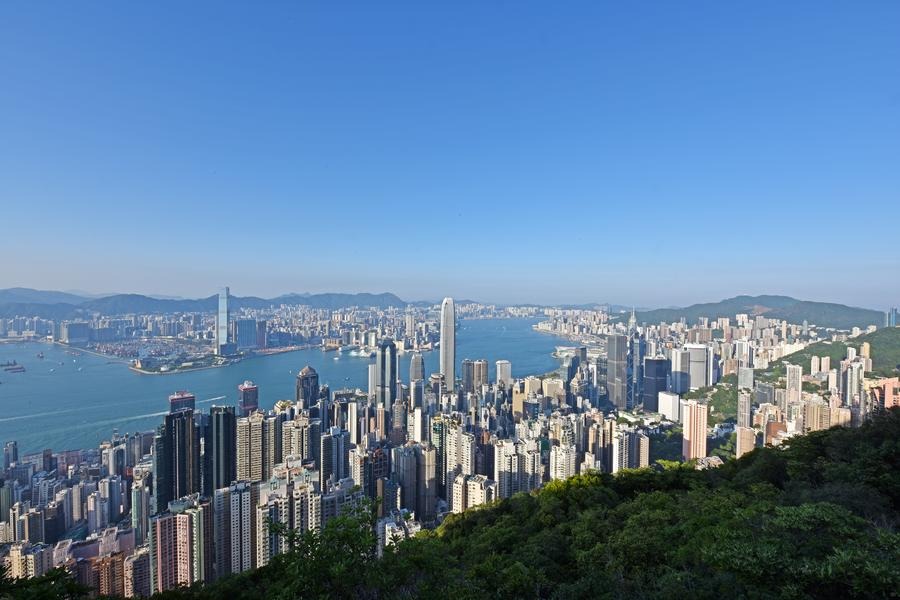
US Secretary of State Mike Pompeo notified Congress on Wednesday that the US administration no longer regards Hong Kong as "autonomous", threatening to withdraw Hong Kong's preferential trade and financial status that it has enjoyed.
Pompeo's move is the latest addition to the list of threats the US administration has issued against China.
On Sunday, White House national security adviser Robert O'Brien said that China's proposed national security legislation for Hong Kong could lead to US sanctions and jeopardize Hong Kong's status as a financial hub. "It looks like, with this national security law, they're going to basically take over Hong Kong," O'Brien said.
Such remarks are most strange. What exactly does O'Brien mean? China resumed its sovereignty over Hong Kong in 1997. Beijing has always maintained that, even though the United Kingdom had ruled over Hong Kong since 1841, Hong Kong has always been part of China. The Sino-British Joint Declaration in 1984 stipulates:"The Government of the People's Republic of China declares that to recover the Hong Kong area (including Hong Kong Island, Kowloon and the New Territories, hereinafter referred to as Hong Kong) is the common aspiration of the entire Chinese people, and that it has decided to resume the exercise of sovereignty over Hong Kong with effect from July 1, 1997."
O'Brien went on: "And if they do,...Secretary (of State Mike) Pompeo will likely be unable to certify that Hong Kong maintains a high degree of autonomy, and if that happens, there will be sanctions that will be imposed on Hong Kong and China." This could, then, jeopardize the territory's special status under US law, which would hurt Hong Kong's status as a global financial center.
O'Brien and Pompeo certainly know that the high degree of autonomy is built on the principle of "one country, two systems", and that this must stand on the foundation of the Basic Law of the Hong Kong Special Administrative Region.
The Basic Law is a contract. The Basic Law had gone through years of consultation before its enactment in 1990, and went into effect on July 1, 1997. Article 1 of the Basic Law stipulates that the Hong Kong Special Administrative Region is an inalienable part of the People's Republic of China. Article 23 says:"The Hong Kong Special Administrative Region shall enact laws on its own to prohibit any act of treason, secession, sedition, subversion against the Central People's Government, or theft of state secrets, to prohibit foreign political organizations or bodies from conducting political activities in the Region, and to prohibit political organizations or bodies of the Region from establishing ties with foreign political organizations or bodies."
Beijing has waited 23 years. Hong Kong has not enacted the national security laws it had committed to enact, but also is confronted with blatant advocacy of separatism. Beijing has been patient with Hong Kong, but the secessionists have been not only raising secessionist slogans but also have rampaged the city with riots, petrol bombs, corrosive acids, and TATP (triacetone triperoxide), a highly unstable explosive.
May I ask O'Brien: Does China have any choice other than to pass a version of the national security law to fit Hong Kong's circumstances?
Steven Mosher, a member of the "Committee on the Present Danger: China" that was launched in the US last year, has talked about "misrule" by the Communist Party of China. May I ask: In what sense? China has lifted over 800 million people out of poverty, increased immensely the personal freedoms of people in the country, enacted laws to protect private property and intellectual property rights, significantly improved its social safety net, significantly improved and enforced ecological and environmental laws, and has engaged with international organizations responsibly and actively. And China has not waged any war against any country since 1949.
O'Brien and Pompeo have threatened China with sanctions. But the US is imposing sanctions anyway. Take the example of Huawei. The US has not presented any evidence that Huawei has done anything wrong, yet it has imposed sanctions on the Chinese telecommunications company. It appears the sanctions are motivated by Huawei's success.
But sanctions or no sanctions, China needs to do what is necessary. There is nothing China can do to alter the US'behavior or thinking. But China can do much to safeguard national security. With national security, Hong Kong will manage to survive. Without national security, Hong Kong is nothing.
The author is a senior fellow at the Pan Sutong Shanghai-Hong Kong Economic Policy Research Institute, Lingnan University. The views do not necessarily reflect those of China Daily.