Mountain village casts off poverty







Nurturing industries
The resettlement plan also required local authorities to nurture and develop industries near the newly built residential communities. Job opportunities had to be created so that residents could have a stable income.
Wen got the job of a pigeon raiser after she moved into her new home. The breeding center is just 5 kilometers from her home.
The pigeon shed belongs to Fuping Selenium Pigeon Industry Co, a Beijing-based company which breeds pigeons for meat.
"I received three months of training initially, when I was paid 2,500 yuan, 2,700 yuan and 3,000 yuan each month." After the training, she was made in charge of a shed that held 1,800 pairs of pigeons.
She earns about 1.6 yuan for producing one squab-unfledged bird or a bird without sufficient feathers for flight. Her pigeons can produce about 2,500 unfledged pigeons each month, which earns her 4,000 yuan.
"I can make more money in future with my skills gradually improving," she said.
The company, which was set up in 2018, has hired more than 600 local residents as pigeon raisers, each of whom earn about 50,000 yuan annually.
It has also rented 156 hectares of land from 1,500 households, who receive 15,000 yuan as rent for each hectare.
Poultry farming, including raising of pigeons, pigs and chickens, is one of the six industries that Fuping has developed in recent years to lift the villagers out of poverty, according to the county's Party secretary Liu Jing.
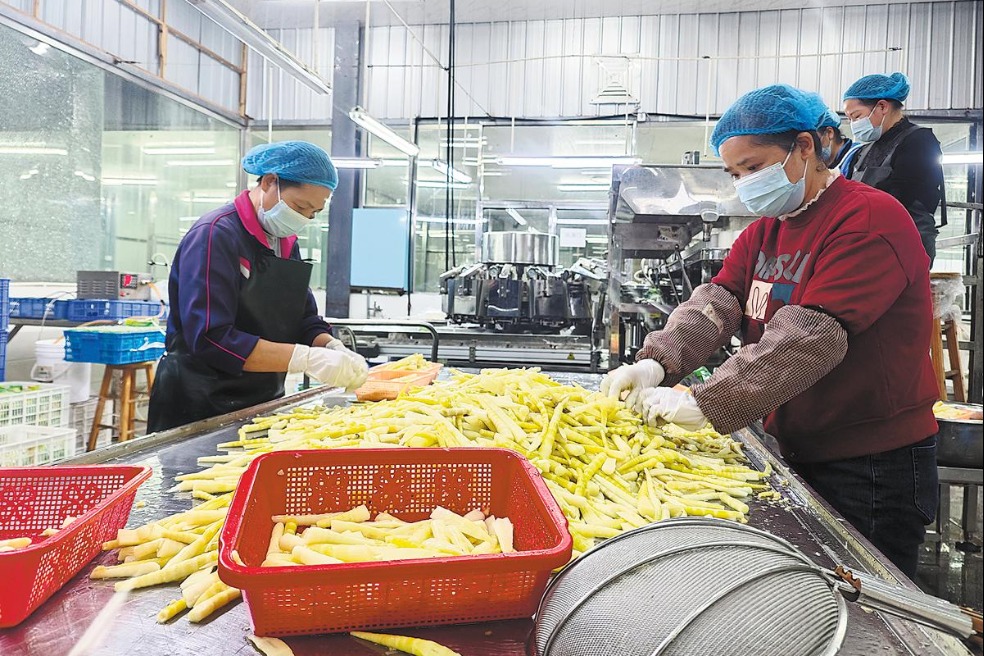
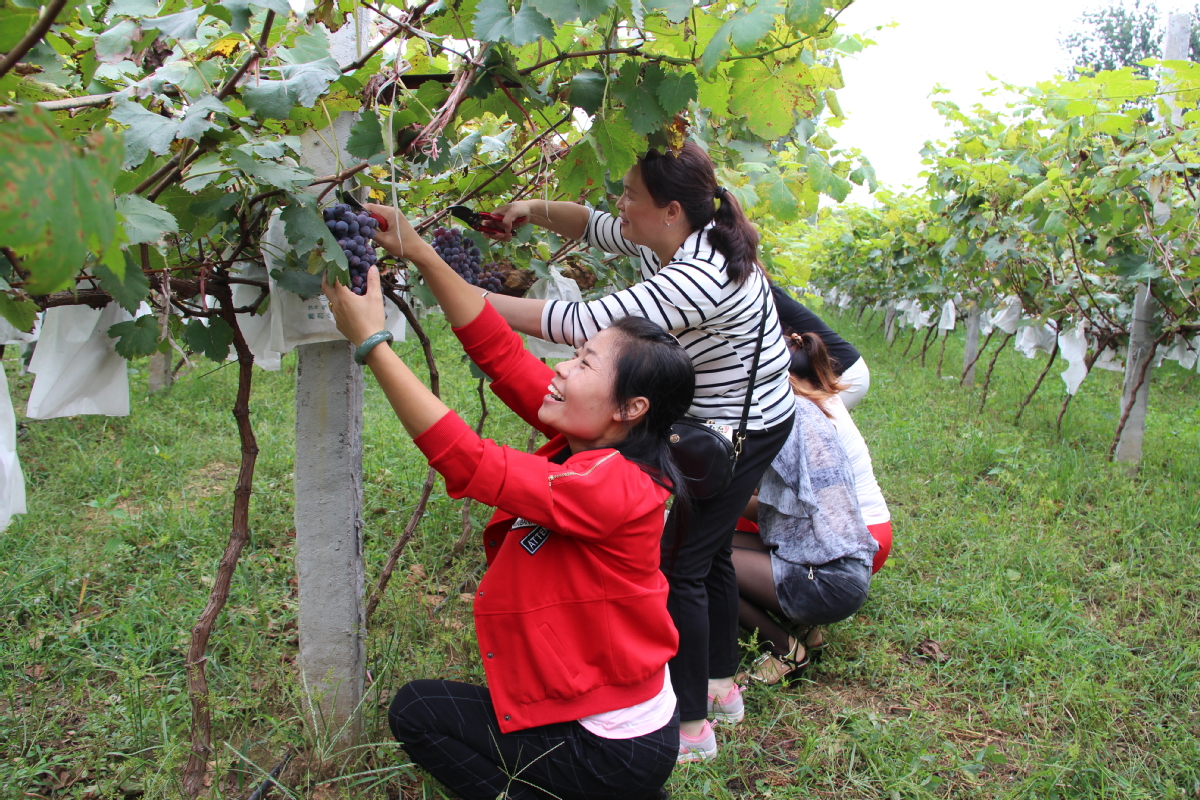
Planting of edible fungus, fruits and Chinese medical herbs, and promotion of cottage industries and ecological tourism has also helped the villagers.
Cottage industry is labor-intensive and it can generate numerous jobs for residents of Fuping who have little education.
Liu Jing said that 70 edible fungus planting centers, 27 orchards, 70 livestock breeding centers and 34 handicraft workshops have been established near the 41 resettlement communities to ensure at least one person in each family has a stable job near their home.
With the industries developing, Fuping has gradually overcome poverty. Last year, the number of registered impoverished people in the country fell to 832, accounting for just 0.45 percent of the population.
By the end of June, the remaining poor rose up above the national poverty line of about 4,000 yuan. No one in the county is now living below the poverty line.
The average annual per capita disposable income of the rural residents rose from 3,262 yuan in 2012 to 9,844 yuan last year.
Young people return
After the new developments, Fuping has seen nearly 5,000 young people coming back. They would go to big cities in search of work since the county had fewer opportunities.
Zhang Xiaoliang, 35, for instance, returned in 2016 from Beijing, where he worked for three years as a construction worker. "It's too hard for people like us to live in Beijing," Zhang said, adding that he used to earn about 20,000 yuan a year.
"The rent and daily expenses are too high in Beijing, so I could save little money at the end of every year," he said.
After hearing about a company planting shiitake mushrooms-a kind of mushroom widely used in Chinese cooking-in the Tianshengqiao town of Fuping was hiring people to manage the plantations, Zhang decided to go back home.
As a contractor for the company, he began to take care of two greenhouses, where shiitake mushrooms were grown. According to Zhang, these greenhouses fetched him 80,000 yuan a year on average, four times of what he was earning in Beijing.
"I could save most of the money I earned and spend time with family every day," he said, adding that contractors like him only had to take care of their mushrooms.
The rest of the work, including making mushroom sticks (made of materials such as wood chips and fungus seeds that aid the growth of mushrooms), and promoting and selling mushrooms was the responsibility of Fuping Jiaxin Planting Co, which was set up in 2015 as part of the poverty alleviation measure.
The company has more than 2,000 greenhouses in eight towns of Fuping with more than 1,000 contractors like Zhang, according to Qi Jianli, general manager of the company.
Hundreds of local residents work for the company, earning about 5,000 yuan every month, Qi said.
"The edible fungus grows well in the county, thanks to the cool weather, clean air and water," the manager said.
"The poverty alleviation industries have enhanced people's incomes and injected new vitality to the county's overall economic development," said Liu Jing.
Meanwhile, Zhang's brother too is taking care of two greenhouses for the company. "My entire family has come together, and we all depend on it (mushrooms)," his brother said.