


Together in harmony
Teaching music takes on a different approach as the Kodaly method is utilized, hitting the right note with children in poverty-stricken regions who give it a chorus of approval, Wang Kaihao reports.







[Photo provided to China Daily]
Children. Circle. Warmup exercises. This is not physical education, nor the prelude to a demanding workout. This is a music class. Though not as you know it, children shake their bodies and clap looking for the right rhythm. Unconventional? Perhaps. Successful? Yes.
Specifically, this is the Kodaly method. It stems from Hungarian composer Zoltan Kodaly (1882-1967). In August, a group of children in Anren county, Chenzhou, Hunan province, gave it a try.
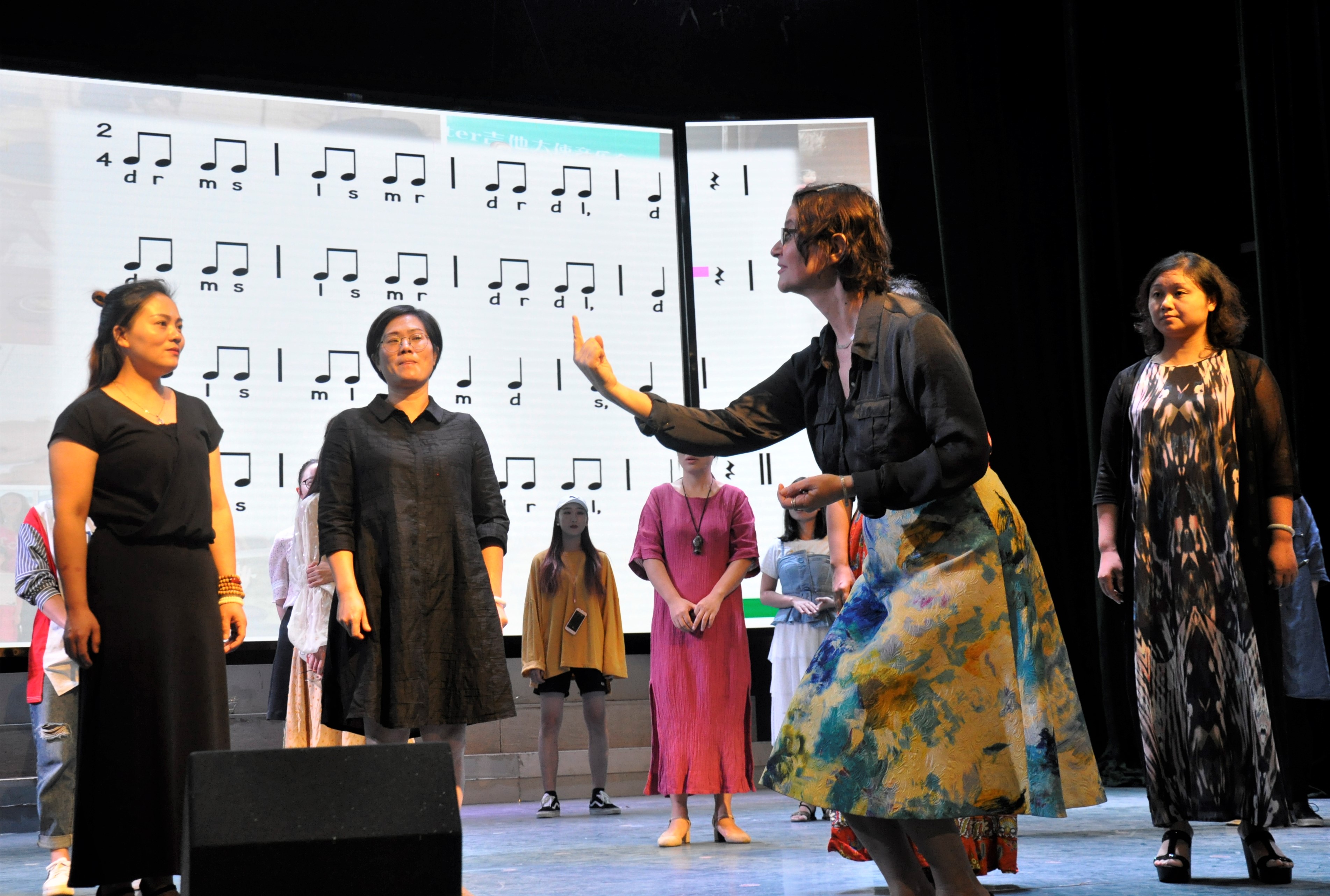
Edit Lanczky, a music teacher with the Beijing Hungarian Cultural Institute, came to China last year. She and her colleagues, including Nora Guncz, have a romantic nickname to introduce that methodology around China: "Backpackers of music".
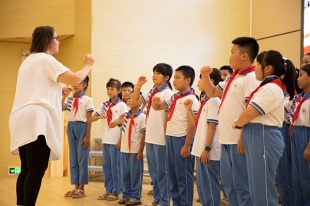
In Anren she rehearsed daily with a chorus of primary school students.
"I'm excited to join the mission of taking part in the education of children from poverty-hit regions," Lanczky recalls in an exclusive interview with China Daily.
"The children are very disciplined and passionate, but I want to prove to them that chorus is not only about good discipline. It can be full of fun."
The Kodaly method is known for its inspirational approach to developing children's musical talent and getting them to express it through games and body movements, rather than spoon-feeding them complicated theories.
It became the dominating music methodology in Hungary after World War II. The method was inscribed on the UNESCO Intangible Cultural Heritage list in 2016.
Anren county, where the economy relies on agriculture, got rid of the title of "national-level impoverished county" just last year. Like many other such regions, where people are still struggling to improve their livelihood, music education seems like an unaffordable luxury.
Thanks to Beijing Deqing Foundation, a charity group devoted to improving education in poverty-stricken areas, 14 counties in Hubei and Hunan provinces have benefited from a music program since 2015.Chorus groups have mushroomed in these places under the sponsorship of the foundation.
Nevertheless, some facilities and musical instruments, like the piano, still seem out of reach for every school. However, after the Beijing Hungarian Cultural Institute joined the program in 2017, the Kodaly method offered alternatives.
According to Lanczky, in Kodaly's time, pianos were not commonly available to Hungarian families. Consequently, a cappella-singing without instrumental accompaniment-was utilized. Many ancient Hungarian ballads were passed down through generations, unaccompanied by music.
"For children, the vocalized sound is natural, but using musical instruments isn't," she explains. "That's why the Kodaly method isn't restricted by spaces and conditions."
Wang Qiong, a primary school student from Anren, recalls: "I am really relaxed when I join in during Mrs Lanczky's class because I'm playing and learning. Sometimes, we have a role-playing game to get a better understanding of sound. It is interesting to set my imagination free. I once played the part of a 'mountain'."