Economist: 'Dual-circulation' to aid opening-up







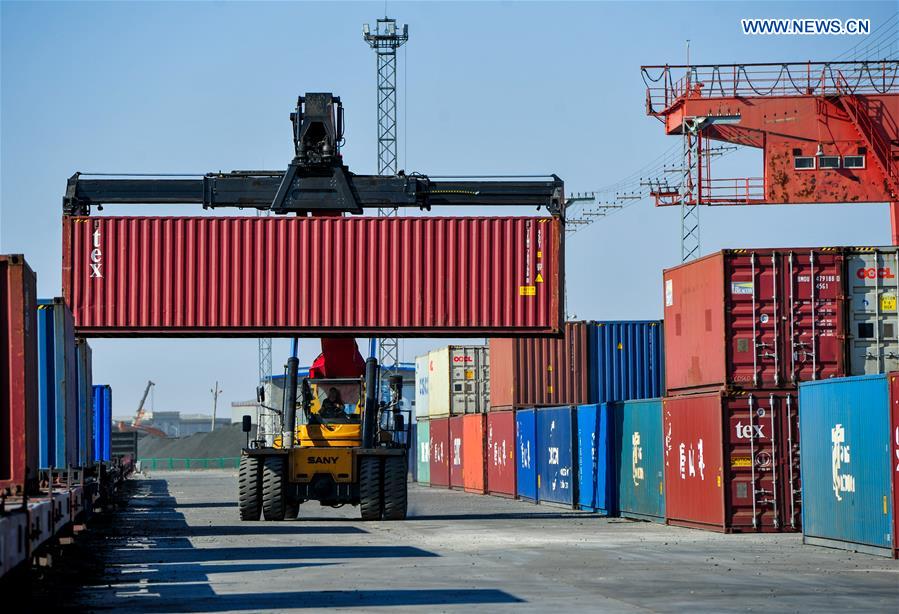
China's new "dual-circulation" development pattern does not mean seclusion, but rather is aimed at a higher-level of opening-up with better utilization of the country's comparative advantages related to international value chains, regional developments and the domestic market, a senior economist said.
Cai Fang, vice-president of the Chinese Academy of Social Sciences, said the new development pattern efficiently "combines opening-up and domestic development" in response to changing international and domestic situations.
"China used to have comparative advantages in developing labor-intensive industries with its abundant and cheap labor to export goods to the international market and benefit from globalization," he said.
"It is time for China to upgrade its development pattern, as the world economy has entered a long period of stagnation and is bothered by protectionism and an anti-globalization movement while, at the same time, China's labor costs are soaring and the domestic market is growing."
Cai's remarks came after China floated the dual-circulation economic development pattern that positions the domestic market as the mainstay while letting internal and external markets boost each other.
Analysts said the pattern is a viable solution for China to build up resilience against external uncertainties and share its opportunities for development with the rest of the world.
They said the pattern underscores a message of rebalancing the Chinese economy from an export-and investment-driven one to one more focused on domestic demand as a continuation of the government's stated goals in the past.
"The international division of labor is going deeper into global value chains, from the trade of simple goods," Cai said.
"As a manufacturing powerhouse for the world, China has comparative advantages not only in exporting goods, but also in some links of the international value chains, which can help further spur opening-up."
In addition, when one country loses its comparative advantage in labor-intensive industries, such industries will move to other economies. But with China, there is a second chance to keep those industries, according to Cai.
Due to its massive size, unbalanced regional development and various resource locations, the country is able to move industries in which its coastal areas no longer have comparative advantages to the inland regions, where labor is cheaper, he said.
He added that such relocations will give China more time to adjust to new situations while upgrading its economy. Moreover, China's growing domestic market is becoming its source of advantage on the demand side, Cai said.
"China has a population of 1.4 billion, of which 400 million are considered as middle-income, which means there's a huge domestic consumer market with rapid growth potential," he said. Therefore, he added, China's foreign trade partners and investors have attached more importance to the Chinese market.
Official data show China's consumer spending contributed 57.8 percent to GDP growth last year.
In 2019, China's GDP per capita exceeded $10,000 for the first time in history, indicating a huge consumer scale and growing supply capacities.
Cai said it is crucial to tap domestic market potential. Advisable ways to do that include increasing people's incomes, improving income distribution and enhancing basic public services, he said.
In particular, he suggested further reforms in the country's household registration system to ease restrictions for rural residents applying for urban hukou, or household registration status.
Such reforms will help boost a new type of urbanization and further unleash the country's consumer market potential, he said.
Currently, more than 60 percent of China's population lives in cities, but only about 44 percent of the total population has an urban hukou.
Migrant workers living in cities do not enjoy the same public services in terms of pension, healthcare, education and housing as those who hold an urban hukou, which makes them reluctant to spend. When they reach the ages of 40 or 50, they are likely to move back to their hometowns, where they can only acquire lower paying jobs, Cai explained.
With an urban hukou, migrant workers will live and work longer in cities and enjoy more disposable incomes, he added.