Trio of sightseeing roads lead to treasures in Shanxi
Tourists to be given easier access to Great Wall, Yellow River and Taihang Mountains







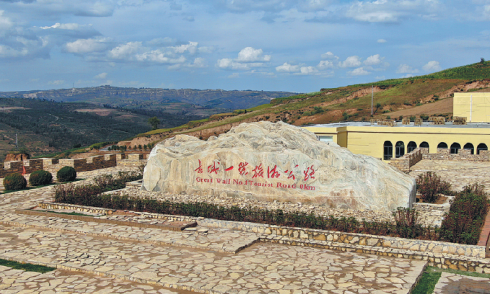
Luo Yangsheng, Party secretary of Shanxi, announced on Sept 23 the launch of zero-kilometer signs for three major sightseeing highways in the province, further highlighting the importance of three top local destinations of the Yellow River, the Great Wall and the Taihang Mountains.
The three 0-km signs are located at Qiankun Bay in Yonghe county by the Yellow River, Laoniuwan at the intersection of the Great Wall and the Yellow River and Wangmangling at the heart of Taihang Mountains. The three sites are among the landmark attractions in Shanxi province.
Shanxi began construction on the three sightseeing highways, ending or beginning at these signs-which are called Yellow River No 1, Great Wall No 1 and Taihang No 1 roads-in 2018. With a combined investment of 59.8 billion yuan ($8.76 billion), the highways will cover a total length of 6,143 kilometers and will be completed in five years.
Three tourist service centers have been built surrounding the 0-km signs, combining such facilities as caravan parks, campsites, viewing areas, galleries and museums.
According to the provincial transport authorities, a total of 4,250 km highways of the three routes are either under construction or had been completed as of this month. The highways will connect more than 170 tourist destinations in Shanxi.
At the launch ceremony of the 0-km signs, Party secretary Lou said:"As Shanxi is one of the cradles of the Chinese civilization and boasts a great number of cultural heritage sites, a tour of Shanxi is a great opportunity to study the long history of China."
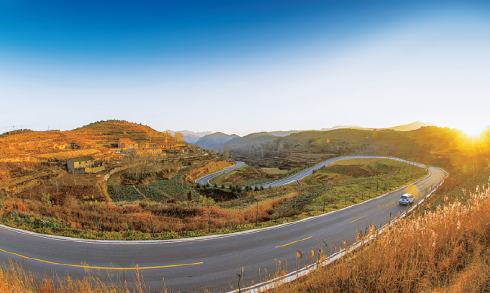
He noted that, with rich tourism resources in terms of both culture and nature, the Yellow River, the Great Wall and the Taihang Mountains are the top three representatives of all the attractions in Shanxi.
The Yellow River, for instance, is the mother river of China as it has nurtured the culture and economy of the nation for thousands of years.
As the Yellow River flows about 3,500 kilometers from its source in Qinghai province through Togtoh county in the Inner Mongolia autonomous region, it enters Shanxi province in the village of Laoniuwan in Pianguan county.
From Laoniuwan, which means "old ox bay", the Yellow River has left its most gorgeous feature, the Shanxi-Shaanxi Grand Gorge, which serves as the border of the two provinces.
For millennia, Shanxi's residents along the river have used its water to irrigate their farmlands. However, the river sometimes destroyed their land and properties and even took their lives when severe flooding happened.
Historical documents said the river was sometimes praised as the hope and glory of Shanxi as well as the nation, and sometimes cursed when it brought disaster and despair.
The Great Wall has brought similar feelings to the Chinese people.
In times of peace, the Great Wall passes were the venues of exchange between the Han people and the nomads in the north. When wars took place, high hopes were pinned on the wall in defense against invaders. And if the wall was overcome by the enemies, it was always disastrous to the nation.
Shanxi is home a number of strategic strongholds of the walls, where storied events relating to war and peace, trade and cultural exchanges happened frequently.
With a total length of more than 3,500 km in Shanxi, the Great Wall runs through nine cities and about 40 counties. More than 1,500 km of walls and other relics remain relatively intact.
Extending more than 400 km from north to south, the Taihang Mountains are one of the largest mountain ranges in North China and is where the name of Shanxi province comes from.
Shanxi-which means "to the west of the mountains"-is so called because it is located to the west of Taihang.
One of the most imposing sights in the mountains are the cliffs rising perpendicularly from the valleys. The cliffs are often called the "iron walls of Taihang".
In the eyes of the locals, the term "iron walls of Taihang" is not only a description of the landscape, but also a tribute to the heroes who protected the nation by fighting the Japanese invaders seven decades ago.
During the War of Resistance Against Japanese Aggression, the Taihang Mountains were an important base for the Chinese army.
General Zuo Quan (1905-42), one of the top officers of the army, honored the promise by sacrificing his life during a battle in the county of Liaoxian in 1942. To pay homage to this great hero, the local people changed the name of the county to Zuoquan in the same year of his death.
The three highways that connect these three top destinations will not only bring convenience to tourists, but also offer ease of transport and business for residents along the roads, local officials said.
"The roads will offer more convenience for the flow of cargo, especially farm produce, between Yonghe county and the rest of Shanxi," said Gao Yongxian, Party secretary of Yonghe county.
Guo Yanjie contributed to this story.



- Symphony of life in Yellow River Delta
- China unveils 2025-style police uniforms after 20 years
- Xi stresses strategic importance of work to raise minors' moral standards
- Verdict on Jimmy Lai is reached strictly in accordance with law and evidence: HKSAR govt
- Taiwan's Lai Ching-te slammed for selling war anxiety
- US urged to recalibrate its strategic perception of China