Dual-circulation to help secure raw materials for steel industry







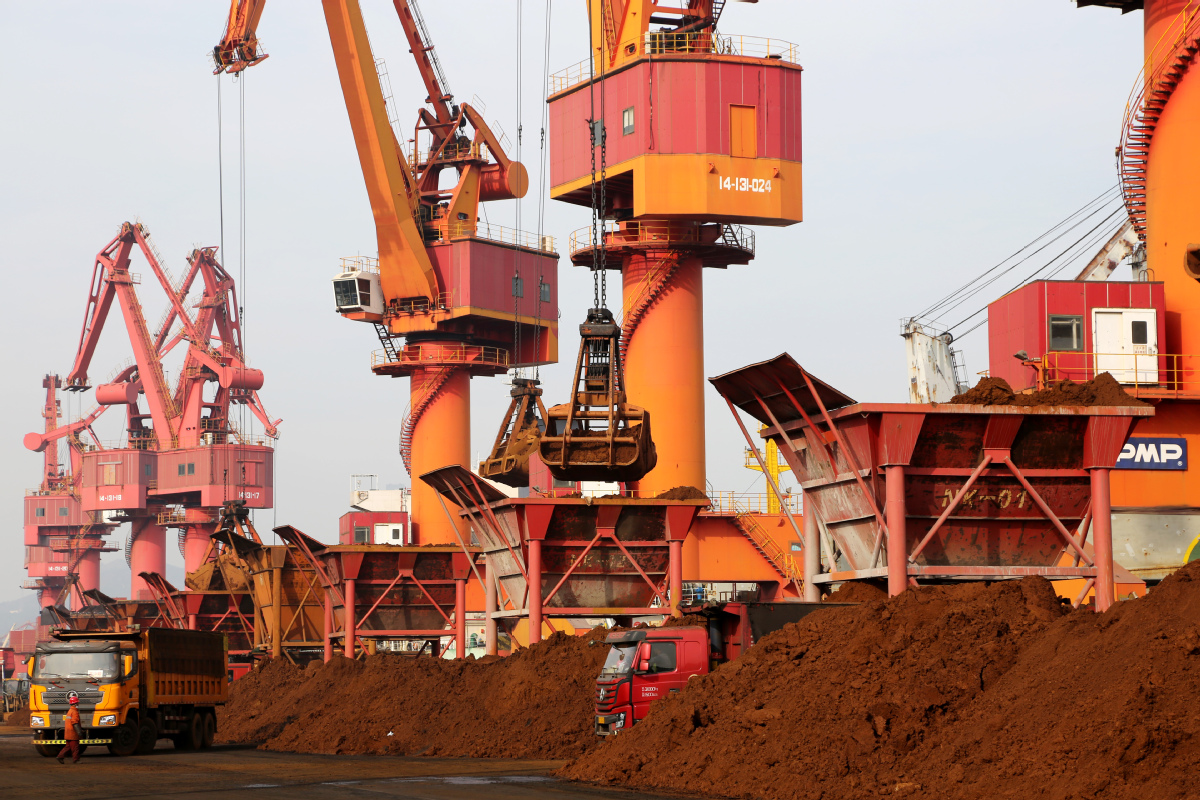
China's steel industry should adhere to the dual-circulation development pattern and accelerate the establishment of a stable and efficient supply system for raw materials, industry experts said.
Stable, green and sustainable raw material supply is important for the Chinese steel industry to improve competitiveness, but external uncertainties such as the COVID-19 pandemic and rising protectionism have combined to exert strong pressure on the already vulnerable raw materials supply chain, they said.
"It is critical for the Chinese steel industry to efficiently use both domestic and foreign resources, forming a dual-circulation development pattern, to ensure high-quality raw material supplies," said Li Xinchuang, Party chief of the China Metallurgical Industry Planning and Research Institute.
China has limited production capacity to supply raw materials for steel production, and more than 80 percent of iron, manganese and nickel ores are imports, while almost all chrome ores are imported, with import sources highly concentrated in a few countries, according to Li, who is also deputy head of the China Iron and Steel Association.
Overseas mining assets of Chinese companies produce and export to China a limited amount of mineral ores used in steel production. But, prices fluctuate significantly at the same time as no substantial progress has been made in improving the pricing mechanisms of the raw materials.
Moreover, since scrap metal imports are banned, imports of the important alternative to iron ores have also slumped heavily since 2018.
The raw material trading network also needs improvement, Li said, referring to the weakness in transportation channels and lack of financial products.
Xu Xiangchun, information director and analyst with Mysteel, an iron and steel consultancy, said iron ore is the most important raw material for steel production.
But China has very limited proven reserves of iron ores. A long time span, a vast amount of investments and a predictable and stable business environment are needed to successfully tap overseas iron ore resources.
The fluctuations in iron ore import prices at high levels often squeeze the profitability of domestic steel mills, he said.
According to the General Administration of Customs, China imported 868.46 million metric tons of iron ore from January to September, up 10.8 percent year-on-year. Monthly imports exceeded 100 million tons from June to September.
At the end of September, steel price increased 9.7 percent from the lowest point at the end of April, yet the price of iron ore imports surged 39.8 percent, becoming the main factor that hampered domestic steel companies' profitability for the year, despite the likelihood of China's crude steel output exceeding 1 billion tons, the China Iron and Steel Association said.
Xu also suggested strengthening domestic scrap metal utilization to offset demand pressure for iron ore imports, because 1 ton of scrap metal can replace 1.5 tons of iron ore.
Apart from tapping raw material resources in both domestic and foreign markets to ensure high-quality raw material supplies, improving the pricing mechanisms and financial system related to raw material trade to reduce the impact of their price fluctuations is needed, Li said.
Technological innovation, diversified supplies of alternative materials, and establishment of a strategic resource reserve system of raw materials are also important, he said, adding it is also advisable to use digitalization and artificial intelligence technologies to promote high-quality development of mines.